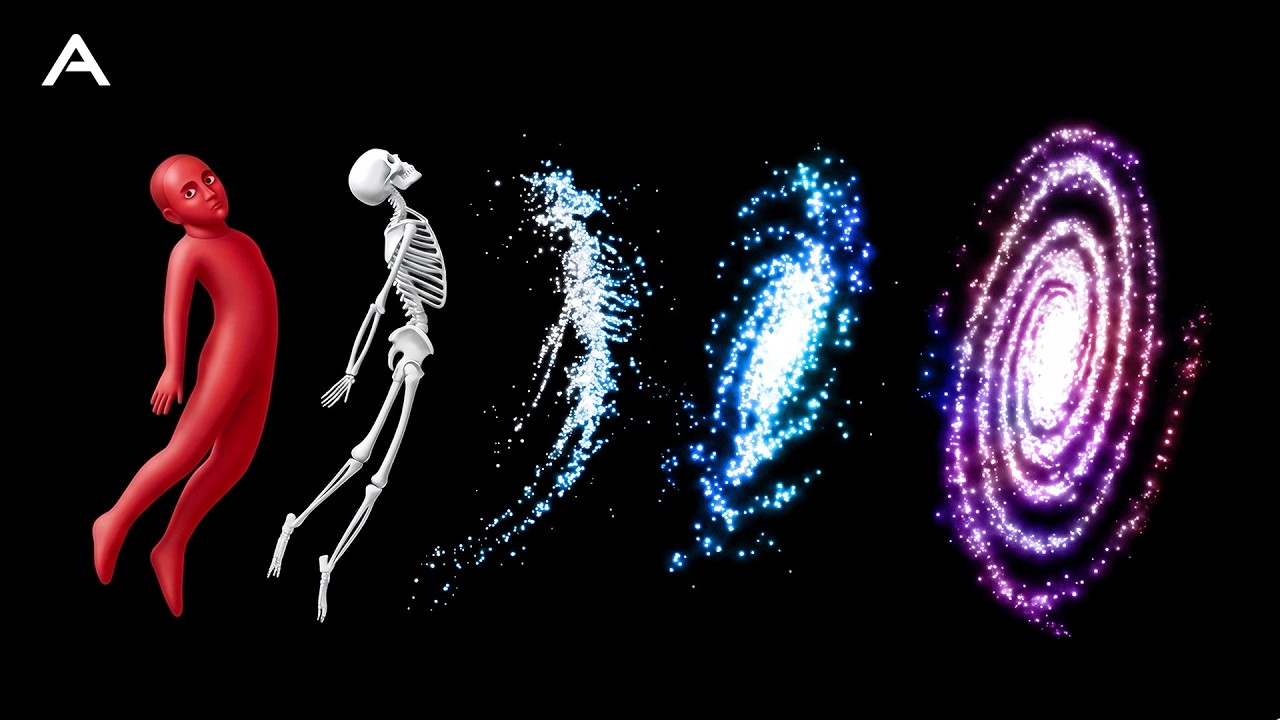
At a glance
Tyler is a project manager. He describes himself as left brain, type A, not a spiritual person, not a psychedelics person, someone who does not like the Grateful Dead and who two years ago would have watched this exact interview and thought "this guy is hallucinating." Then he took DMT, and over roughly eighteen months he has taken it more than two hundred times. On The Paradigm Experience he sits down to describe, in careful order, what happened.
The interview has a spine, and it is not the wild breakthrough trips. Those, Tyler says, are chaos you cannot bring anything back from. The spine is what happened when he got scared by one bad experience, cut his dose down to ten or twelve milligrams, and left his eyes open. A semi translucent framework appeared in the space in front of his desk, mechanical, in motion, and it did not distort when he stared at it. It came back the next night. It has now come back roughly a hundred times in a row. When he went looking for anybody else describing the same thing he found Danny Goler, the researcher behind the DMT laser experiment, saying it almost word for word in an interview recorded two days earlier, and through Goler's partner he found a small group of high count users who all report the same graduated arc. Two months before this recording the framework resolved into something Tyler called an interface. The partner did not let him finish the description. He said: that is the console.
The back half of the episode leaves drugs entirely. The host pushes Tyler toward the Monroe Institute, and Tyler tells the story of his first out of body experience three months earlier, which happened by accident on a morning off, terrified him, and which he had the presence of mind to try to falsify by walking into his own living room and memorizing the sleeping positions of his two small dogs before returning to his body to check.
This page rebuilds the whole conversation in the order it happened, with the specifics kept: the dose numbers, the trip counts, the hyper slap at thirty percent processing power, the host's own bad night in college, the advice both men land on, and the dogs. What is established, what is speculation, and what the pair themselves flag as speculation are all here in their own words. An honest look at where any of this stands sits at the end of the page, where it belongs.
Chapters
Timestamps are clickable. Click one and the player jumps there and keeps playing while you read. These are the video's own eighteen chapter titles, verbatim.
- 0:00 Intro
- 1:33 Why early breakthrough DMT experiences are so chaotic and hard to explain
- 5:28 Inside a terrifying DMT hyper slap and the simulation theory reality glitch
- 10:09 JS shares a dark college DMT trip and bad trip anxiety
- 14:38 Mushroom trips vs DMT breakthroughs and the fear of mentally "snapping"
- 16:12 The most important advice for a safe psychedelic experience
- 18:15 Danny Goeller's DMT laser experiment and shared psychedelic trip reports
- 21:46 Open-eye DMT visuals and the translucent machine framework
- 29:53 Connecting with the Code of Reality research team
- 38:00 What does this all mean beyond the trip itself?
- 40:30 Tyler describes seeing the "console" during DMT
- 43:41 The Monroe Institute, Gateway Voyage, and consciousness without substances
- 45:31 Why out of body experiences can feel even more shocking than DMT
- 48:20 Why DMT feels more technological than mushrooms
- 52:14 Why this audience understands experiences most people dismiss
- 53:12 Tyler shares his first out of body experience
- 1:01:50 Tyler tests the OBE by checking where his dogs are sleeping
- 1:03:48 Monroe Institute recommendations and closing thoughts
The cold open: "I promise I am just a regular dude"
The episode front loads its own punchline. Before a word of the interview proper, the video cuts a montage of the lines it is building toward, and they are all Tyler's.
"Dude, I know this sounds crazy, and I promise I am just a regular, a regular dude. I called it an interface when I was describing it." Then the reply he got from the researcher he had sent it to: "he was like instantly like, oh, that's the console. That's the console. You're experiencing the console."
Then the shape of the thing: "It almost, it looks like a screen go like, like folds up and then out." Then the part that matters most and that the rest of the hour circles: "There's like four or five other people. They get presented with the console every single time now, too. It's like clockwork."
The host's question cuts in over the top of it, and it is the question the whole episode is really about. Not what is it. What does it mean. "Beyond just like what you think it is, what do you think it means on a broader sense?" Tyler's answer, previewed here and unpacked at 38:00: "this is a learning experience. This wanting, it's like a, it's trying to teach or show us something. Is this the control board for this game? Or this, the reality is we're experiencing it right now, is it some type of technology?"
Then the disclaimer he keeps returning to, unprompted, all hour: "Two years ago, I would have been one of those people that are like, this is crazy. This guy is hallucinating. This is your brain on drugs."
And finally a snatch of the story that closes the episode, which has nothing to do with drugs at all: "I'm having all the thoughts of like, oh my god, like I'm out. I'm out. What if I can't get back? You know, what if I can't go back to my body? I saw Duke and Zoe. I'm like, oh my god. Oh my god." The host, off camera: "Dude, that's it, that's impressive, like for your first one to be able to walk around, that's impressive."
Duke and Zoe are his dogs. Hold that thought for fifty minutes.
- 2 yrs ago Tyler is a project manager, self described left brain and type A, with no spiritual interest of any kind. He has been reading about consciousness and out of body experiences for a decade, but as science, not spirituality. He has taken mushrooms exactly twice in his life, once at 19 and once about three years ago. He has never taken LSD.
- ~18 mo The DMT starts. Early sessions are full breakthrough doses with eyes closed, which he describes as chaos: too fast, too intense, and almost nothing survives the trip back.
- Trip ~52 The hyper slap. Reality comes back looking like a low resolution copy of itself, objects depopulating and repopulating around his room. The only trip report he has ever written down, out of more than two hundred experiences.
- Next 4 to 5 mo He stops chasing breakthroughs and moves to low doses, still with his eyes closed. Similar experiences every time.
- ~Trip 150 One session at roughly 10 to 15 mg he leaves his eyes open. A semi translucent mechanical framework becomes visible in the space in front of his desk. Two pine cone shaped objects rotate slowly across his field of view.
- Next night He reloads a low dose specifically to test it. It comes back. Same glistening onset at the first hit, same resolution by the end of the dose.
- +10 times Repeatable enough that he decides he has to tell somebody. He goes looking online and finds Danny Goler describing translucent machines entering the room, in an interview recorded two days earlier.
- Weeks later Through a Reddit message he reaches Goler's partner at Code of Reality and learns that several other high count users report the identical graduated arc.
- ~3 mo ago His first out of body experience, with no substance involved, on a morning he had off work.
- ~2 mo ago The framework resolves into a structure he calls an interface. The reply comes back: that is the console.
- Now Roughly a hundred consecutive open eye sessions producing the framework, and more than 200 experiences total.
Why the breakthroughs are the part he cannot explain
The host's first question is the fair one: can you explain what you see for those who have not heard about it. Or is it hard to explain.
It is hard to explain, Tyler says, but the difficulty is not evenly distributed. "Once we get to the point, the current, it gets a lot easier to explain. What I'm like seeing, because it's like really repeatable and it's reliable. It's happening every time." The current thing has structure, so language grabs it. The early stuff does not.
"On like early breakthrough experiences with your, you know, closed eyes, and just out there, it's, dude, it's just, it's chaos, honestly. It's really, it's so fast and so intense and you bring so little of it back."
That last clause is the whole problem with breakthrough reports and Tyler states it without being asked. The bandwidth of the return trip is tiny. Whatever the experience was, what arrives back in a person who can talk is a fragment, and the fragment is what everyone argues about.
Which sets up the first thing that genuinely separates him from most people who have done this. He cannot understand the common reaction. "You always read like people are like, they do it once and they're like, man, I could, I'm good. Like I never need to do that again." He circles it twice, visibly puzzled by it. "How could anybody want to do this like one time or a few times and just be like, I'm good? Like how could you possibly not? It's so novel. And it's so real. It feels so, it just, all I could think after those first few times was like, yeah, how could anybody only do this a few times and be done with it or be good with it and never want to have that experience again? Because I feel like you're barely scratching the surface of what's going on."
That is the sentence that explains the number two hundred. He did not go back two hundred times because it felt good. He went back because he read the first few as an incomplete measurement.
He also lays out his prior, which he returns to repeatedly because he knows how the story sounds. He has never been a spiritual person until the last year and a half. But he has been "very very interested in consciousness" and in out of body experiences and lucid dreaming for far longer, and specifically from a science angle: "what is actually going on? What is reality? How are we interacting with this thing? Like what's really going on here kind of thing, but not in a spiritual sense."
He had already tried and failed at the drug free version. Several years ago he spent three or four months trying to learn to lucid dream and to have out of body experiences and got, in his words, zero success. One time he did trigger a lucid dream and "I got so excited I like woke up immediately. I was super bummed about it."
And then the detail that quietly seeds the last twenty minutes of the episode. Since the DMT experiences began, the drug free stuff has started working. He has had several recent lucid dreams where he stayed lucid and held the dream together. One time he went out of body simultaneously, which he calls extremely weird. "It does feel like there's a lot of crossover with this stuff, man. If it's a Venn diagram, they're overlapping, you know? Something about what DMT's doing to your brain."
The hyper slap: reality running at thirty percent
Then, in his words, "I had like a really intense negative experience." The host asks if he can talk about it. He can, and this is the most specific piece of description in the entire hour.
It started with a physical cue. "It was like this whoosh feeling and, or whoosh sound, like a whooshing sound." When his vision came back and he could make out his surroundings again, he looked around the room and everything looked wrong.
This is the only trip he has ever written a trip report about. More than two hundred experiences, one written record, and it is this one. In the report he reached for a computing metaphor and stayed inside it, which is worth noticing given where the rest of the episode goes.
"It felt like my surroundings, reality as I was perceiving it, looked like the, if say this is a computer, right, we're in a program, and normally your perception is at 100% processing power, like everything's running fine, right? Well, it felt like the processing was dialed back like 30%."
What that meant in practice was resolution loss and object culling. "Everything looked like low resolution copies of itself." He scanned the room, and the room could not keep up. "I'm literally seeing things like depopulate and repopulate, like objects like the remote on my desk or something, like depopulate, repopulate. It was almost like in this 30% processing power it could only render like, you know, 10 objects or 20 objects in my field of view or something like that." Everything looked, in his phrase, like a pale comparison of reality.
Then the observation that turned an odd visual into a genuine emergency. The degradation was not confined to the room. "I started to realize that my thinking, like my thought process, was doing the same thing. Like I wasn't processing information the same way. And I started to panic."
He is hard on himself about the panic even while explaining exactly why it happened. "I think this is like probably the worst thing to do, but it was the first time I'd ever had a negative experience, so it was just natural, you know." He lay back down and tried to talk himself out of it: "Dude, it's fine. You're having a bad trip. Everything's good. It's just a time thing. Just wait it out. It's going to be okay." And, flatly: "it just was not working, man."
What the panic did was hand him two conclusions, and both of them are the kind of thought that is very difficult to argue with from the inside.
"I was hit with this like very very very strong sense that either I had died and this was like purgatory or something, just like this low resolution purgatory to like help me with the transition. Or I was like a conscious copy of myself in some kind of program."
He interrupts himself here to be responsible about it, which he does more than once in the episode. "I don't want to scare people out of these experiences, giving you this by telling you about this, but it just is what it is, right? This is like one out of 52, by the way."
Then he did the only thing available, which was to go and check the world manually. "I get up and I check outside. I'm like, is outside still outside? I look outside, everything's fine." Then inside, to verify his family. "I go inside, my family's inside, my wife's in bed, everything's fine. I go to sleep, finally wake up, everything's cool."
And the summary: "But it scared the hell out of me. They call it a hyper slap, I think, is like the terminology in the community. But yeah, dude, it was a significant hyper slap."
The video then runs its one and only ad break, in which the host tells the audience the episode is brought to you by "me, myself, and I. That's it," and asks for a like, a comment, or a subscribe on the grounds that it is the free thing and it helps him a ton.
The host's turn: a bad night in college
At 10:09 the host takes the microphone off Tyler and tells his own story, and it is the most cautionary stretch of the episode precisely because he tells it without polish.
His first DMT experience had been good. Frightening at first, then it settled. "The whole room, like the first one, it freaked me out and it got to the point where I almost couldn't handle it and then it became normal." Geometric shapes. And the beings, which he describes and then immediately says he is describing badly: "I saw those little elf gnome beings that, you know, they're like little jesters. They were like laughing at me." He got through it, and it turned positive. "I felt overwhelming love."
There is one detail in that first trip that he drops in passing and never returns to. "I remember I spoke to my friend who was there and he said things that he told me after the fact that he did not say to me, right? He's like, I didn't talk at all. But he definitely talked to me during that trip."
The second one was the problem, and he is precise about why. The state he was in going into it was, by his own account, a mess. He was in college and out at the bars. He was taking a lot of Adderall, at high doses and consistently, and then taking downers to balance it out because he could not sleep. "It definitely bums you out. I mean, it leaves like this really gnarly emotional hangover kind of. And whenever I start feeling that, I hate it." So he went out and drank, and on that combination "you could drink a lot more than you normally can." He had a bag of pills with him: painkillers, Xanax. "It's just like not a time I'm super proud of, but that's just kind of where I was."
Somewhere in the bar hopping, the kind where "you don't really know how you're getting to the next bar," he ran into a man he had worked with, the same person he had taken DMT with the first time, who lived on that street. "He's like, let's, you want to hit it again? And I was like, let's do it." Late at night, five of them: the host, his best friend, the man with the DMT, and two girls.
And then the honest part: "again, I did not respect it. I rushed into it, because the first time I did it, it was a really good experience." He came in, in his words, cocky. "All right, that was a good experience. Let's run it."
It went bad fast, and the setting did the work. He was on a balcony overlooking a dark alleyway with a street light. "It just freaked me out and I remember saying it like, I don't like this. Like pretty quickly." His best friend saw his face and asked the one question you should never ask.
"He said, are you okay? And every time he said okay, his voice became very demonic. He was like, are you okay? Like really gnarly. And I was like, dude, stop asking me that. And he kept asking me. And I freaked out and I yelled at the top of my lungs, stop asking me that."
Tyler cuts in with the agreement of somebody who has been on the other side of it: "That's like the worst thing anybody can ask you on those, with those experiences. That's the worst."
The two girls left. "Those poor poor girls left after that because they were like, whoa, this guy's losing his mind. But like literally I just wanted people to stop asking me if I'm okay." He shook out of it eventually and does not remember much more of the night, other than that he got a tattoo shortly afterward. "Anyways, it was not great."
Tyler's read on it is the one that generalizes: "It's like once you have that initial thought of, oh, things are going kind of weird, or this isn't going how I was expecting it to, it's funny how quickly it can run away on you."
Mushrooms creep, DMT slaps, and the feeling of something snapping
At 14:38 the conversation turns comparative, and this is where the two men build the clearest working distinction in the episode.
The host has had beautiful experiences on mushrooms, but almost every time there is a stretch he dreads. "It's hard to explain if you've never done it, but there's a period where mushrooms kind of sneak up on you a little bit." Tyler gives the compressed version: "So DMT slaps you in the face, right? It's pretty instant. Mushrooms is like a weird thing because it kind of creeps up on you. Like all of a sudden, hmm, something feels off. And it's kind of a slow roll."
The bad stretch, for the host, is the transition itself. "There's always a period in that where it's like when I'm separating from what's real, like reality, and kind of going into this place. This other part of my brain is turning on and it can be uncomfortable a little bit if you fight it. And my brain always fights it in the beginning."
And then the line that gives the chapter its title, delivered as an act of retroactive empathy rather than as a scare story.
"It made me respect, you know, like when people talk about, oh, like mentally that person broke. Like I never understood what that means, but in those situations, it's the first time I've ever felt like, oh, close to something snapping in my mind. Like I remember being like, oh, that's what they're talking about. Because it's like you can't control it. And you're on the verge of, it feels like going crazy."
Tyler does not argue with the framing or soften it. He just says "Totally. I know exactly what you" and lets him finish.
| DMT | Mushrooms | Out of body | |
|---|---|---|---|
| Onset | "Slaps you in the face. It's pretty instant." | "Creeps up on you." A slow roll, "something feels off." | A vibrational state that builds while you lie still at the edge of sleep. |
| Where it puts you | Eyes closed, it is external: "you come out of yourself, you come out of your body and experience something somewhere else." Eyes open, it is insular: it alters the room you are already in. | Separating from what is real and going "into this place." | Your own bedroom, then your own living room. Ordinary geography, wrong vantage point. |
| Texture | technological, interactive, scientific, entity encounters that feel like examinations. | nature and earth based, gentle, oneness with the universe. | No aesthetic at all. The shock is that nothing was taken. |
| The hard part | A breakthrough is chaos you bring almost nothing back from. Worst case is the hyper slap. | The stretch where your brain fights the turn, close to "something snapping." | "Absolute terror." What if I cannot get back in. |
| Cost of entry | You took a substance. | You took a substance. | "It's also one that you can achieve without taking anything." |
The one piece of advice: it is a house you cannot leave
The host arrives at the resolution of his own story almost by accident. The way through the bad stretch is not force. "When you push through it, that's when the, it's not even a pushing. It's almost like a letting go. You have to just kind of let, you can't fight it."
Tyler's response is the emotional center of the first half of the episode, because he is fully aware that he is about to say the most repeated sentence in the entire subject and he says it anyway.
"Dude, that is the most cliche thing that you read and you see whenever you're trying to prepare for one of these experiences, or you're seeing other people talk about these experiences online when you're doing your research. But it is the most important piece of advice that anybody can possibly give you, or that you have to actually take seriously. You have to let go. Like you cannot try to fight it. You can't resist it."
The mechanism he offers for how to actually do that is not mystical, it is a reminder of consent: "You just have to remember, I chose to, I'm choosing to do this. Like I did this thing. I took this thing and this is the experience I was looking for. So there's no point in holding on to it."
And then a diagnosis he states as a universal, which is worth flagging as the strong claim it is: "That is where, every time anybody has a bad time, that's always the culprit. It's always resistance or trying to steer it in the direction you want to take it in."
That leads into the one piece of expectation management he wants on record, aimed squarely at the optimization crowd. "The point is not, oh, I want to do this thing so I can do better at my job, or be better at this, or have better relationships. It's like, that's not how it works. It's going to tell you what you need to fix, or it's going to fix the thing that you need, not the thing that you want it to, or you're trying to guide it to."
The host closes the section with the image that sticks, and it doubles as the honest safety warning that the episode never states in a warning voice.
"You open a door, right? And you go into a house you can't leave. And so I think a lot of us, when you start freaking out, you're trying to find the window, and that's what gets you in trouble. It's a house you can't leave, a party you can't leave. You open the door, you're there now. And there is nothing that's going to get you out of it. You have to let go. Sit on the couch, dude, because it's going to be a ride."
The laser guy, and why shared reports change the question
At 18:15 the host steers back: you went from nothing to something, that is brave, and you said there is a repeatable experience. Tyler takes the handoff by first explaining why repeatability across different people is the thing worth caring about.
"I don't know if you've heard of this Danny Goler guy. The laser guy, right? He found out that at a certain dosage level of DMT, if you shine a laser on a wall, you kind of see this very specific thing. And seven or eight out of ten people who do it, which I think there's in the thousands of people that have done it now, everybody has this exact same experience. They see the exact same thing."
Goler's group published a pilot study describing the protocol formally, as a recurring visual phenomenon reported under N,N-DMT while observing a diffracted 650 nanometer laser pattern. Tyler does not cite the paper. He cites the shape of the result, and why it bothers him.
"For psychedelics, that's really something. Shared experiences, there's something going on very strange there, because the typical belief, what everybody has always kind of thought, is that you take the substance and your brain, your consciousness in your brain, is creating something. Is independent, right? Novel to you, like it's coming from you."
He then does the honest bookkeeping on the counterargument before anyone raises it. Archetypes are already known and they are not the same thing. "Obviously there's a lot of archetypal things with lots of different psychedelics, mushrooms, DMT, there's all these things that lots of people kind of say they see often, like the little jesters and things."
That sends the host back to his own first trip, and to the frustration of describing entities. "That's not even the right term. They're not jesters in that they're like geometrical beings. I just remember distinctly being like, okay, I saw shapes I'd never seen before, and then they were like they were alive, they felt like. They didn't feel like shapes." He adds two qualities that both men agree on: they were playful, and they seemed "kind of like interested that I could see them almost is what it felt like. And I'm like, what are they?"
Tyler: "Yeah, it's like they want to show you things. They want to impress you."
Then he draws the line that makes the laser result different in kind rather than degree. "It's not the same as, you line up a line of ten people, everybody does DMT, they walk into another room and look into a laser shine on the wall and they see the exact same thing in this laser, right? So that is interesting."
Dialing it back, opening his eyes, and the framework
At 21:46 the story arrives at its real subject, and it starts with a retreat rather than an escalation.
After the hyper slap, Tyler reconsidered the whole approach. "I was like, okay, man, maybe breakthrough doses every single time isn't necessary." He had seen other people say that sub breakthrough doses are their own thing, that "there's something to be brought back and kind of learned at every level." So for four or five months he took lower doses. Same as always, he kept his eyes closed.
That distinction turns out to be the hinge of the episode, and he explains it plainly. "Usually when you do a closed eye session with DMT, it's more external. You kind of come out of yourself, you come out of your body and experience something somewhere else. And when you leave your eyes open, it's more, it kind of alters your current surroundings in certain ways. It's more of a visual trip in the space that you're in. It's more insular."
Then the accident. One session at a small dose, maybe ten to fifteen milligrams, he left his eyes open, and he cannot fully reconstruct why. The setup matters, because it is his normal setup: he sits at his desk with a big monitor in front of him, some kind of visuals playing on the screen, and low chanting or something droning underneath. "For whatever reason this time I took the hits and then the visuals that were going on the screen kind of started looking really strange, and it just whatever it was kind of triggered me to keep my eyes open."
"And so I'm sitting there and I've got my eyes open and all of a sudden it was real, dude."
What appeared, in the space just off to one side of him, was a semi transparent structure. He hunts for a word and settles on framework. "It almost kind of looked like the inner workings of like an engine or something. It was like mechanisms, right? Just kind of moving in sync with one another."
The specific detail that caught his attention, and the one he repeats later as the thing that made it undeniable, was a pair of objects. "There were these two almost pine cone shaped looking objects spinning slowly across my field of view, kind of up out about right up about here. Kind of like slowly spinning side by side and just moving across my field of view."
Then he describes the optics of the thing, which is the most technically interesting passage in the interview because it is the kind of detail nobody invents to sound impressive.
"It usually fills your field of view, and you can kind of see that there is something occupying all of that space, like individual things occupying the entire space, but you can only really make out in high detail what you focus on. You can only focus in like maybe a cubic foot, right? So if you see something and you focus on that thing, you can easily focus right in, see it, make out its complete shape. You see everything else kind of moving, but it's not clear. It's not like you're standing back looking at a car and you can see the whole car, the shape of the car and everything. It's like you can only clearly see a small space, but you know that there's stuff filling that area around it."
At this point he stops the story to establish who is telling it, because he can hear how it sounds.
"At this point, by the way, I'm like maybe 150 trips in. I'm experienced at this point. I don't call myself a psychonaut. The only drugs I've ever done are, I've had two trips on mushrooms, one when I was 19 and then one like three or four years ago, and DMT. Like I've never done LSD or acid or any of the other things."
Then the self portrait, which is the reason this interview is interesting rather than routine: "I'm not a psychedelics guy. I don't like the Grateful Dead. I'm not into that. I'm just not one of those people that are, I'm not what you would think of as somebody who is into all that stuff, right? I'm a project manager by trade. Like I'm very left brain, type A."
Testing it: the next night, and the hundred nights after
What he did next is the part that separates his account from a single anecdote. He went back and tried to reproduce it, deliberately, the very next evening.
The reason was that he could not put it down. "I come out of it, it wears off, and it's all I can think about for the rest of that evening. I go to sleep, I wake up and I'm like, dude, that felt too real. Like I could see this, it was right there."
So: "the next evening, load up a low dose, and it's like I just know that when I do this low dose and I sit here with my eyes open, I'm going to see this again."
He describes the onset with a precision that reads like someone who has now watched it happen a hundred times, because he has. At about ten to twelve milligrams, "slowly after about the first hit, I start to see this kind of glistening. It's like I start seeing this glistening of almost like the edges of things. And then about second hit, as I finish the dose, it becomes much more clear."
Then the count, and the claim: "And dude, I'm like a hundred times this has happened. And it's every single time now."
He is careful about what exactly repeats. It is not a fixed image. "It's never like the exact replicable same thing, but it's always some type of framework that is semi translucent." The content varies, the tone or appearance varies, the category does not.
For what semi translucent means he reaches for the best available reference and the host gets there with him.
"You know the Predator movies? So, you know, like he can cloak himself. There's this thing where in those movies he pushes a button on his little control thing and he goes like." The host finishes it: you can kind of see it, but you can't. "Exactly. If you got closer to him though, you'd be able to make out the shapes and the outline of him. But yeah, it's exactly like that. It shows up semi transparent, but it's right there and it's every single time."
Going looking for other people, and finding them
At 29:53 the story stops being private. "After this happens maybe ten times, I'm like, dude, I got to tell somebody. This is really weird."
So he did what a project manager does with an anomaly. He went looking for a matching report. "I start looking into, is there anybody that's having similar experiences? Listening to people that are prominent in the DMT space talk about their experiences."
The coincidence he lands on is the sort of thing that would strain a script. He found an interview Danny Goler had given, and by his account it had been recorded two days before he started searching. The interviewer asked Goler the plainest possible question: explain what a DMT experience is like for you. If you took some right now, what would you see.
"And he said, the first thing that would happen is I would see this kind of translucent, he was like, I don't know if it's beings or like machines or something, kind of come into the room."
Tyler's reaction, verbatim: "And I was like, what? Like no way, like that's crazy. Impossible, right?"
He emailed Goler, who is a busy man and did not answer. So he went to Reddit, where he had been reading about the laser experiment, and messaged somebody who had said they were on the team. That turned out to be Goler's partner at Code of Reality, a man who goes by Eric online and whose name Tyler gives as David Carter. Tyler names the project on air and asks the audience to use it: "It's code of reality dot com for anybody that's interested in this stuff and wants to go check it out, or is having similar experiences, please go check that out and leave your experiences there."
The reply came a few days later, and the reason he got a reply at all is the most quietly instructive part of the episode. Carter apologized for the delay and explained the volume they deal with: "you wouldn't believe the torrent of weird shit that he gets sent all the time, with people telling them they've found the code of the universe or they figured out reality."
Then the filter that got Tyler through it. "One thing that kind of stands out and always makes a difference is that you weren't saying you had some answers, you were basically just asking questions. Like, I'm having this experience and I have no idea what's going on. I just wanted to discuss it, see if anybody else is having the same experience."
They talked, more than once. And what Tyler learned is the load bearing claim of the whole interview.
"It turns out that there are several people that have this exact same experience, where they do a low dose and they leave their eyes open and then there's this framework. Sometimes it looks biological, sometimes it looks mechanical, but something 100% of the time shows up in their field of view and is almost interactive."
Crucially, it is not something that happens to newcomers. "It seems to be a graduated experience. It's usually people who have had lots of experiences over a period of, it's not something that anybody sees early on or the first few times, or even the first, you know, what, 50 times."
He then flags his own epistemic position without being asked to, twice. "This is all speculative at this point. Unfortunately." And on who is working on it: Code of Reality plus "some other small startups that are also getting into actually studying this stuff. Trying to figure out what is going on, what's happening, why it's happening, and how, why and how it's so repeatable."
The remote test
The single best passage in the interview is Tyler explaining how he tried to break it, and it turns on a property that anybody who has lucid dreamed will recognize.
Psychedelic and dream imagery is malleable. You can push on it. "With a lot of psychedelic experiences, they're very chaotic and you can kind of impose your will. Or you've had a lucid dream, right? You can look at something and cause things, things aren't right always. It's like things kind of shift and morph."
The host supplies the word: malleable. "You can look at something and put your direct attention on it and like the shape will hold for a moment, but it'll kind of go wonky."
That is exactly the test Tyler ran, over and over, and it is exactly what he says does not happen here.
"With this, it's not, dude. It's like remote. I'm looking at the remote. It's right there. The fucking remote is right there, dude. It's not moving. It's not, I can't make it distort. It's not distorting. It's right there. It's the same experience."
He has, in his words, tested it so many times, putting his direct scrutiny on it, trying to force it to behave like the malleable stuff. It refuses.
And then the honest limit, stated as clearly as the claim. "I don't know if it's pulling some veil back and allowing you to see something that's already there, or if it's putting out a signal and calling something to you. I don't know. That we don't know yet."
What he does insist on is narrower and harder to dismiss: "The bottom line is that there is something happening repeatably, reliably, with many people."
His closing statement of the section is the one he clearly came on the show to make. "All I want your audience or anybody else who's interested in this stuff to understand is that, I don't know what's happening. These people that are studying this stuff don't know what's happening. But it is happening. It is real. It's actually happening. There is something going on when your consciousness interacts with this molecule. It is doing something."
What does it mean, beyond what it is
At 38:00 the host asks the question the cold open promised. A lot of people are seeing it. People are trying to run tests on it. It is as real as real can be, multiple times. So what do you think it means, on a broader sense? What are your theories?
Tyler prefaces the answer with the same caution he has been using all hour: "So again, so much in this is speculation, almost all of it at this point."
Then he gives credit rather than taking it. The framing he uses came from David Carter, and it reorganized how he thought about the whole thing. "He nailed it when he said that he gets a very strong sense, and other people around him get a very strong sense, that this is a school. Like this is a learning experience. It's trying to teach or show us something."
He immediately declines to fill in the curriculum. "It's very early, so I don't know what. But it does feel like it's almost inviting you to interact with it."
That word, inviting, is doing specific work. Everything up to this point in the interview has been a passive report: a thing appears, it does not distort, it repeats. The school framing is the first time the relationship is described as two way, and it is the setup for what he says next.
The console
At 40:30 Tyler tells the part he has clearly been building toward, and he opens it with an apology.
For a long stretch the appearances varied. "Something would always appear, this translucent form would always appear and kind of be in motion there in my field of view, but it was almost always something different, or it had a kind of a different tone or a different appearance."
Then, roughly two months before this recording, and, as he notes, right before he sent the show its first email, that changed.
"Dude, I know this sounds crazy and I promise I am just a regular dude. But basically it looked like, to me, I called it an interface when I was describing it."
He took the description to David Carter, who did not need to hear the end of it. "He was like instantly like, oh, that's the console. That's the console. You're experiencing the console."
The sequencing he gives is that of a threshold cleared. "After a certain period of time, it's like, okay, I'm able to see these things now. They're becoming visible. I've had whatever graduation I had to get to to start seeing this stuff." Then the console shows up.
His actual description is halting, and one of the reasons it is worth taking seriously as testimony is that he interrupts himself to avoid borrowing anybody else's vocabulary. "I see this kind of half spherical, I don't want to use the same words that I've heard other people use because I don't want it to sound like, so anyway, I'm sorry."
Assembled, what he reports is three moving parts.
"I'd take the hit and it looks like a literal console basically. Raises up in my field of view. Again, this is all translucent though. Nothing's ever solid, like filled in textures and everything. It's always this transparent form. I see this kind of half spherical thing kind of raises up, and it almost looks like a screen go like folds out, like folds up and then out. And then there's another kind of off to the right of it, a slowly articulating kind of spinning, not coat rack but kind of like a coat rack."
He runs out of language, and says so: "It's strange, dude. It's hard to describe a lot of this stuff because there's not really, you know." The host lets him off the hook: "I got it. They're novel experiences. I got it."
Substances as one door, not the only door
The host's response to the console is to reach for the simulation argument, lightly: "some of the smartest people in the world are convinced that we are in some kind of simulation, right?" And then, immediately, to hedge it himself. "This is just take this for what it's worth at all. I mean, grain of salt, big grain of salt."
His actual position on psychedelics turns out to be strikingly unromantic, and it is the pivot into the entire back half of the episode. He puts them in the same category as anything else you put in your body. "I think it's no different than like you take vitamin D or something. There's obvious that you could take things and your body reacts to it and it has benefits and all these things. I think psychedelics are part of that."
What he thinks they do: "They help you escape from the normal day to day that your brain is locked into, right? And they remind you again that, whoa. Maybe a little more on the why we're here, but they force you to think about things. There's a lot of gratitude that comes from them."
And then the recommendation he clearly invited Tyler on to make. At 43:41 he tells him to go do it without the molecule.
"So Monroe just released a new thing about 30 days ago. I'm going to do it. I think they're calling it the Gateway Voyage, but it's their program where if you went to the Monroe Institute and you took their program, they put it online, and they have something called Monroe Sound Science. It's a more advanced version of their binaural beats."
His credential for saying so is his own history, which mirrors Tyler's in one respect and inverts it in another. "You're talking to the guy who's very similar to you in that, maybe I'm not so type A, but I'm very like, didn't take anything my whole life. The very first thing I did take was not beer, was not a cigarette. The very first thing I took was salvia."
That first experience was, by his description, an unintentional out of body. "That's pretty extreme for your first thing and it knocked me out, and I remember falling below my body and I remember looking at my hands and being, who am I? I didn't know who I was and it really upset me. So in a way that was like my first out of body. I didn't know that's what it was at the time."
He then describes one he had a few nights before the recording, the first in two years, and the description is a small clinic in how these are reported to begin. He had been half watching a show with his wife, drifting in and out, then got up, stayed awake a while, and lay back down. "As I started to fall asleep I felt myself in a weird state where my body was starting to fall asleep, because I would feel myself get really heavy, and I know this, right, because I've done this now before. I'm like, oh, here's the feeling again. And then sure enough I got the vibration feeling."
Which is where Tyler drops the fact that reframes his entire hour: "So yeah, I did. I've had one OBE and it was only been like three months ago and it completely freaked me out. Like scared the shit out of me."
Why an out of body experience can hit harder than DMT
At 45:31 the host makes the case that the drug free version is the more shocking of the two, and his reason is the absence of a cause.
"Dude, to me that is even more gnarly, because DMT, it blasts you into this world and it's fascinating, but the out of body one, the vibration is so intense, and then you know you're not taking anything. So it's like very strange. It's like, what is happening?"
The sales pitch follows: "I think you'd really enjoy exploring that world because it's also one that you can achieve without taking anything, and it also has layers of weirdness to it, right, where you start talking to different beings and you go further and further and further."
Then he brings in something from another interview he had done, and it becomes the closest thing the episode has to a cosmology. A woman had described a meditation that took her somewhere with nothing in it. "It was just complete blackness." He notes that many cultures and a lot of people who have out of body experiences describe the same place. "There's this realm and then there's this other place where you go and it's nothing. And they say that's your truest form. It's not black, but it's just nothingness, true nothingness. And that's where you often feel super at peace. You're just like, wow, you don't want to leave it, because you are everything and everything is you."
Her analogy is a pool. "That's the black space. We're all in it right now. And at the same time we're all connected because we're all in that water. So we're all one in that way. But it's almost like we have this bubble around us and it's projecting at all times. And when you go in and out of body, you're still in that bubble. You're just at a different layer of it. But when you get beyond the bubble, you're in the nothingness."
The host then connects it to Tyler's console himself, and does it in the form of a question rather than a claim. "It's interesting to think about the thing you're talking about, the console. It's almost like, what if that is some advanced thing that you're almost seeing the actual technology of it that's putting this all around us? It just makes me think about that. I'm like, whoa, what if that's what's happening?"
Tyler's answer is careful and complete: "I would be lying if I said that I have not thought something similar."
Why DMT feels technological and mushrooms do not
At 48:20 Tyler makes the distinction that, more than the console itself, is the actual thesis of his account. It is not that DMT is more intense. It is that it has the wrong aesthetic.
Mushrooms, in the shared experience of both men, have a consistent flavor. "There's this very nature, earth based," Tyler says, and the host finishes it: "It's gentle." A vibe, both agree.
"DMT specifically is very technological, which is very different and very strange and novel and unique for a psychedelics experience, because usually it is more like a spiritual oneness with the universe and nature kind of thing. You can get that in some ways out of DMT, but DMT is much more described as feeling very technological and, not sterile, but technological. And interactive with almost things that feel scientific and from somewhere else."
He backs it with the reported entity encounters, which he notes are not his own but are widely enough reported to have a shape. "There's a common experience that a lot of people have and have had maybe three or four times where they feel like they wake up, or they find themselves on like an examining table in a highly technological, almost like future ER or something. A hyper technological examining room with usually some type of mantis, or some type of scientists or doctors over them, doing some kind of examination."
Which sets up the sentence that most cleanly states what he is and is not claiming, including his reluctance about the word everyone reaches for.
"I've definitely considered that, hey, is this console, are these headsets in this console, is this the game? Or the reality as we're experiencing it right now, is it some type of technology? Is it the simulation thing? I hate to use that. But you can only present what you're experiencing as you're experiencing it, and if it lines up with some passe theory of reality, it is what it is. You can't dismiss it because it's been discussed so much recently."
Then, unprompted, he gives the competing explanation as fairly as he gives his own, which is the single most credible thing he does in the hour.
"Of course it can start to feel like, okay, am I seeing the controls here for some reason? Am I, have I just soaked my brain with enough of this molecule that it's able to, under these certain conditions, experience something that is there just right beyond view, or right beyond our regular perception?"
Two readings, stated in one breath: a control interface belonging to the world, or a brain saturated enough with a specific molecule to render something under specific conditions. He does not pick.
What he does insist on is the pattern that makes the question worth asking at all: "when you're presented with some type of control interface and it's every single time after a certain number of graduated experiences, other people with similar high count experiences as you start to experience the exact same thing in the exact same ways without talking to one another about it."
And then, once more, the disclaimer he cannot stop making: "I know, trust me. I get how crazy all of this sounds to you. 99% of people. Two years ago, I would have been one of those people that are like, this is crazy, this guy is hallucinating, this is your brain on drugs. And just dismiss it."
The audience, and the wife
At 52:14 the host cuts him off to tell him he can stop apologizing. "You're on a podcast where my whole audience doesn't think it's weird, dude." Tyler, relieved: "Well, good. You're not going to have a bunch of people saying like, this guy is tripping."
"Like we all have had out of bodies," the host says.
And then the most human stretch of the episode, which is about neither drugs nor consciousness. It is about what happens when one person in a marriage starts reporting things the other person has no way to check.
"My own wife knows that I've had them, but she's just kind of like, all right. She doesn't quite understand, and that's fine. I don't need her to be as into it as me. But in my head I'm like, no, this isn't just, I'm not tripping. This is real."
Tyler recognizes it exactly. "My wife is exactly like I was two years ago. It's like all of a sudden I'm a different person." He describes calling her after his out of body experience, before he had even told her he was trying to have one. "The first thing I did was call her and try to tell her about it, and she's just like, okay, dude."
Neither man makes a complaint out of it. Both just note it and move on, which is somehow more telling than a complaint would have been.
The out of body experience, told properly
At 53:12 the host asks the direct question: so what happened in your OBE?
Tyler starts by lowering expectations, which is a good sign in a story of this kind. "I wish it was more interesting. I wish I went to some crazy liminal space, but I haven't made it that far yet."
The setup takes a minute, and it is worth having, because it explains why he was trying at all. His interest in consciousness predates everything. He offers a specific memory as evidence: "I remember when the D-Wave computer came out, that was like the first quantum computer. It's probably been a decade or more ago. This guy, I think his name's David Rose, gave a talk. He was the guy who created this first quantum computer. I remember showing my wife this video of him doing this talk like 10 or 12 years ago, and she was just like, you're interested in this stuff?"
What the DMT changed was not the interest, it was the sense that the subject was reachable. "It wasn't until having these DMT experiences where I realized, oh, you can interact with this stuff. There is a way to actually have some tangible experiences you can either learn from or try to confirm some things, or just kind of play with it a little bit."
So he tried, deliberately, for two or three months, doing the standard practices. He got to the vibrational stage maybe twice.
"I'd made it to the point of having very very strong pulsing. It would start at my head and kind of wash down my body to my feet, and it felt like it was pulsing up and down my body. Really, really strong vibrations, to the point of almost feeling like I was going to explode. Like feel like I was just going to pop."
And then nothing. "It's like I would get to that point and think, okay, surely this is the point where I'm supposed to try to sit up or roll over. And I would do it and I would just sit up, you know. I wasn't, I wouldn't make it out of body." He was getting, in his careful phrasing, "not going to say frustrated, a little bit frustrated, but kind of like, this is not going to happen for me. I keep getting to this certain point and I can't seal the deal."
Then it happened on a morning when he was not trying at all.
He had the day off work. He got up around six in the morning to get his son ready for school, sent him on his way, and went back to bed for a few hours. He notes in passing that this is a known lucid dreaming technique, sleeping about six hours, getting up for thirty minutes, then going back down. "Well, something about this specific time, I wasn't, that's not the intention. I just so happened to get up and be up for like 30 minutes and go back to bed."
His wife had already left for work. He was alone in the house with the two dogs. He was on his back in bed, in what he calls the liminal space, in and out of sleep.
"And I start to feel the vibrational state coming on. And I'm definitely not asleep."
The host jumps in on that point because it is the point everybody outside gets wrong. "You're conscious when you're asleep. You're thinking your thoughts. You're like, whoa, what's happening?" Tyler: "That is one of those things you can only understand if you've been there. So many people just dismiss it. It's like, oh, you probably fell asleep or something. It's like, dude, you just don't know unless you know."
This time he did not fight for it. "I feel the vibrations start happening. I'm like, oh, shit. Like, okay. All right. This is happening. It's coming on naturally. I just start letting it happen and really trying to focus on just letting go and just kind of being there in myself, and waiting for that vibrational state to reach the right point."
"I kind of start hearing this kind of hum, and the vibrations are very very strong. I feel it kind of reach my head. I just went for it and I sat up."
He sat up, turned sideways on the bed, and put his feet on the floor. He was not sure yet whether he was in or out.
Then he looked back at the bed.
"There I am on the pillow with my, not a flattering vision of myself. I'm laying there on the pillow with like my mouth open, like drooling on the pillow, not looking attractive at all."
This is the detail that does the most work in the whole story, and he knows it, because he immediately explains why. "When you think of yourself, you reflect yourself in your best possible state. Like I would have been laying there perfect, my hair's perfect, no drool coming out of my mouth. But I'm like almost jarred, like, ah, dude, is that what I look like when I'm asleep?"
And then the fear arrived. "I got really really scared. It kind of freaked me out. I'd read people say like it can be really scary because it's a novel experience. It's totally new. I'm having all the thoughts of like, oh my god, like I'm out. I'm out. What if I can't get back? What if I can't go back in my body?"
"It is absolute terror. But I get it under control to the point of just holding it together."
The dog test
At 1:01:50 the story becomes an experiment, and it becomes one because of a decision Tyler had made months earlier, on the ground, in advance.
"I'm like, okay, while I'm here, let's test this. I remember specifically thinking, and I thought a thousand times before, when I'm trying to have these experiences, I'm like, I have to figure out a way to test if it's really happening. Like I need to find something I can look at and then go and test and see if it's the same."
His verdict on that piece of preparation: "Thank god I had that thought."
He calmed himself down and picked his target. Two dogs, a little dachshund and a Chihuahua, who hang out in the living room. Their sleeping positions are arbitrary, they change constantly, and nobody was awake in the house to move them. As an ad hoc control it is genuinely well chosen.
"I get up, I walk into the living room, and my little weenie dog is at the end of the couch, under the two throw pillows, on his back. And literally all you can see of my little weenie dog is the bottom half of his body, with his little, he's on his back with his little legs kind of sprawled out, and he's sleeping on his back covered by the pillows. And my little Chihuahua is over in her little bed in a little tiny little ball tucked into the corner of her bed."
Then he took the reading. "And I'm like, okay, all right. Mental note. Weenie dog on his back. Chihuahua in the bed in a ball. Got it."
Going back was a matter of doing everything he had read at once. "I do what I'd always heard everybody say. You just literally just lay back down in your body, or go back in your body, or just think, I want to go back in my body. And I kind of did all of them simultaneously. Like I laid back down where I was laying and I just kind of thought, I want to be back in my body. And I'm back in my body."
"I open my eyes, wake up, and I'm back in my body. I'm like, oh my god. Oh my god. Oh my god, that's crazy. I can't believe that just happened. Get up, walk in the living room."
And the result: "Weenie dog is on his back exactly how I just saw it. The dogs are exactly where they were when I got up and went and looked, right? My mind is completely blown. Can't believe this just happened."
Then the phone call, to a wife who did not know any of this was going on. "I hadn't even told her that I'm trying to have these out of body experiences or anything, and I just dump all this on her. Like, you would not believe what just happened. I just had an out of body experience. I've been trying to do this. I was vibrating. I popped out of my body. Freaked me out. I saw Duke and Zoe."
"And she's just like, what are you talking about, dude?"
His own verdict is one sentence, and it is the sentence the episode ends up resting on: "But yeah, man, that was my out of body experience. It 100% happened. It was real."
Closing: weenie brothers
At 1:03:48 the host closes on the recommendation he has been making since the middle of the hour. Tyler's first attempt impresses him on technical grounds: "That's impressive. Like for your first one to be able to walk around, that's impressive."
So, once more, Monroe. "I think you should look into the Monroe one. I'm going to do it here soon. I just hear a lot of good positive reviews on it. They got some cool stuff and I'm going to give it a go. So definitely you should try it, too."
And then the actual last exchange of the episode, which after an hour of consoles and translucent machinery is about dachshunds.
"And on a side note, before we go, I got two wiener dogs, too, dude."
"They're so great, man. I love them so much."
"Weenie brothers, man."
Then thanks both ways, an agreement to stay in touch, and out.
Key takeaways
- The interesting claim is not the breakthrough, it is the repeat. Tyler explicitly sets aside the chaotic high dose experiences as things you cannot bring anything back from. His whole case rests on a low dose, eyes open state he says he has now produced roughly a hundred times in a row.
- Two accidents produced it. A frightening trip made him lower the dose. A random session made him leave his eyes open. Neither was a plan.
- The dose he names is small. Ten to fifteen milligrams, described by him as sub breakthrough, taken over two hits, with a glistening at the edges of objects at the first hit and resolution by the end of the dose.
- The phenomenology has structure. A fully occupied visual field with a narrow window of high detail that follows attention, semi translucent forms with no filled textures, and mechanisms moving in sync.
- His own test is rigidity. Lucid dream and psychedelic imagery can be pushed around by attention. He says this cannot: he stares at it, tries to force it to distort, and it stays put.
- The shared reports are what convinced him, and they arrived after his own sightings. He saw the framework first, then found Danny Goler describing translucent machines in an interview recorded two days before he went looking.
- He got a reply because he brought a question, not an answer. Code of Reality's inbox is full of people announcing they have solved reality. The thing that got Tyler a conversation was saying he had no idea what was happening.
- The graduated arc is part of the claim. Nobody reports this in their first few sessions, or even the first fifty. That is testable in principle and nobody in the video has tested it.
- He offers the deflationary explanation himself. A saturated brain rendering something under specific conditions is one of the two readings he gives, in the same breath as the other one.
- The back half of the episode is drug free. The out of body experience happened on a morning off, with nothing taken, after two or three months of failed attempts and one accidental success.
- The one piece of advice both men land on is identical. Let go. Every bad experience either of them describes traces to resistance, expectation, or a wrecked starting state.
- The verification attempt is the most interesting thing a first timer did here. Tyler had decided in advance that if he ever got out, he would look at something checkable. He picked the sleeping positions of two dogs, memorized them, went back, and compared.
Notable quotes
"It's so fast and so intense and you bring so little of it back." (1:33, Tyler, on breakthrough doses)
"How could anybody only do this a few times and be done with it? Because I feel like you're barely scratching the surface of what's going on." (1:33, Tyler)
"It felt like the processing was dialed back like 30%. Everything looked like low resolution copies of itself." (5:28, Tyler, on the hyper slap)
"I'm literally seeing things like depopulate and repopulate." (5:28, Tyler)
"Every time he said okay, his voice became very demonic. And I freaked out and I yelled at the top of my lungs, stop asking me that." (10:09, the host, on his second DMT experience)
"It's the first time I've ever felt like, oh, close to something snapping in my mind. Like I remember being like, oh, that's what they're talking about." (14:38, the host, on mushrooms)
"It is the most important piece of advice that anybody can possibly give you. You have to let go. Like you cannot try to fight it." (16:12, Tyler)
"It's a house you can't leave, a party you can't leave. You open the door, you're there now. Sit on the couch, dude, because it's going to be a ride." (16:12, the host)
"Seven or eight out of ten people who do it, which I think there's in the thousands of people that have done it now, everybody has this exact same experience." (18:15, Tyler, on the laser protocol)
"And so I'm sitting there and I've got my eyes open and all of a sudden it was real, dude." (21:46, Tyler)
"You can only really make out in high detail what you focus on. It's not like you're standing back looking at a car and you can see the whole car." (21:46, Tyler)
"I'm not a psychedelics guy. I don't like the Grateful Dead. I'm a project manager by trade. Like I'm very left brain, type A." (21:46, Tyler)
"The fucking remote is right there, dude. It's not moving. I can't make it distort." (29:53, Tyler, on why this is not like lucid dream imagery)
"You weren't saying you had some answers, you were basically just asking questions." (29:53, David Carter's reply, quoted by Tyler)
"It is happening. It is real. It's actually happening. There is something going on when your consciousness interacts with this molecule." (29:53, Tyler)
"He gets a very strong sense that this is a school. Like this is a learning experience. It's trying to teach or show us something." (38:00, Tyler, quoting David Carter)
"He was like instantly like, oh, that's the console. That's the console. You're experiencing the console." (40:30, Tyler)
"Have I just soaked my brain with enough of this molecule that it's able to, under these certain conditions, experience something that is there just right beyond view?" (48:20, Tyler, giving the other explanation)
"Two years ago, I would have been one of those people that are like, this is crazy. This guy is hallucinating. This is your brain on drugs." (52:14, Tyler)
"There I am on the pillow with my, not a flattering vision of myself, laying there with my mouth open, like drooling on the pillow." (53:12, Tyler, on seeing his own body)
"I have to figure out a way to test if it's really happening. Thank god I had that thought." (1:01:50, Tyler)
"Mental note. Weenie dog on his back. Chihuahua in the bed in a ball. Got it." (1:01:50, Tyler)
"But yeah, man, that was my out of body experience. It 100% happened. It was real." (1:01:50, Tyler)
Resources mentioned
Named in the episode:
- The Paradigm Experience, the channel this interview appears on, and its tip jar on Ko-fi, the only sponsor the episode has.
- Code of Reality, the research effort behind the DMT laser experiment. Tyler names it on air as code of reality dot com, which now redirects to the dot org address, and asks anyone having similar experiences to leave a report there.
- Danny Goler, the researcher Tyler calls "the laser guy", whose interview describing translucent beings or machines entering the room is the match Tyler went looking for. The chapter titles spell the name Goeller.
- The Code of Reality pilot study, the group's own written account of the protocol, using a diffracted 650 nanometer laser pattern.
- David Carter, who goes by Eric online, Goler's partner at Code of Reality, and the person who told Tyler he was describing the console.
- Reddit's DMT community, where Tyler found somebody who said they were on the team after his email went unanswered.
- The Monroe Institute, and specifically Gateway Voyage Online, the home version of its flagship program that the host says launched about thirty days before the recording and that he recommends twice.
- Monroe Sound Science, the institute's audio technology, described in the episode as a more advanced version of binaural beats.
- D-Wave, the quantum computing company whose founder gave the talk Tyler watched a decade or more ago. Tyler says "I think his name's David Rose"; the founder who gave the widely circulated talks is Geordie Rose.
- Predator, used as the reference for what semi translucent means: the cloaking effect you can almost see.
- The Grateful Dead, invoked by Tyler as the thing he is not.
Substances and states named in the episode:
- N,N-DMT, the subject of the interview.
- Psilocybin mushrooms, which both men use as the point of comparison.
- Salvia divinorum, the host's first ever substance and, by his account, his first out of body experience.
- Adderall and alprazolam, the stimulant and benzodiazepine the host says he was cycling through in college on the night of his bad trip.
- Out of body experience and lucid dreaming, the drug free states that take over the back half of the episode.
- DMT entity encounters, the "little jesters" and the mantis figures over the examining table.
- The simulation argument, the framing the host reaches for and Tyler says he hates using.
Where it stands
The episode is a first person report, and it is an unusually careful one. Tyler labels his speculation as speculation at least four separate times, credits other people for the framings he uses, and volunteers the deflationary explanation for his own experience without being pushed. That is worth saying plainly before anything else. Here is where the various claims actually sit.
The pharmacology is not in dispute. DMT reliably produces short, extremely intense visual and experiential states, and the recurrence of certain content across users is documented rather than fringe: Rick Strassman's clinical work in the 1990s and Chris Timmermann's neuroimaging work at Imperial College both catalogue entity encounters and structured visual environments as common features. That people report similar things is established. What that similarity implies is the whole argument.
The laser protocol has a written pilot study, not a controlled trial. The Code of Reality paper describes a striking convergence in what participants report, but it is posted rather than peer reviewed, participants know the protocol going in, and the expected content circulates freely in the community before anybody doses. Expectancy is a very large confound for any perceptual report, and it is the specific confound this design does the least to control. A blinded version, where naive participants describe what they see before they are exposed to anybody else's description, and independent raters score the matches, is a study somebody could actually run. Nobody in this episode claims it has been run.
Tyler's own sequence is better than the average anecdote on exactly one axis, and worse on another. By his account the open eye framework appeared before he had ever heard Goler describe it, which is the right order for a report to be interesting. But the console arrived after months of conversation with Goler's partner, in a vocabulary supplied by that partner, which is the wrong order. Both facts are in the interview and both belong in any honest reading of it.
Rigidity is a phenomenological observation, not an ontological one. "I can't make it distort" is a genuinely interesting property and it is the kind of thing an experienced user is well placed to notice. It does not establish that the object is external. Stable percepts that resist volitional modification are a known feature of several altered states, and stability under scrutiny is a fact about the visual system's output as much as about the thing being looked at.
The dog test is the strongest and the weakest thing in the episode at once. Deciding in advance to look for something checkable is genuinely good instinct, and most out of body reports do not include even that much. But the test as run has no independent observer, the target was recalled after returning rather than recorded at the time, and the answer space is small: sleeping dogs occupy a handful of habitual spots and postures, and a person who lives with them has strong priors about all of them. Attempts to run this properly have a long history, from Charles Tart's laboratory sessions in the 1960s to the AWARE study placing hidden targets in hospital resuscitation rooms, and none of them have produced results that survive scrutiny. That is the context Tyler's morning sits in. It does not make his experience less vivid or less real to him, and he never claims it proves anything beyond itself.
On safety, the episode is more honest than most. Nothing here is a recommendation, and the doses named are reported, not endorsed. DMT is a Schedule I controlled substance in the United States and illegal in most jurisdictions. The two worst experiences described in the episode both have obvious antecedents that the men name themselves: the host went in on a night of alcohol, high dose stimulants, benzodiazepines and painkillers, having rushed it and, in his words, not respected it, and Tyler's hyper slap resolved into a panic loop he could not talk himself out of. Both of them land on the same advice, and it is the advice that matters more than any of the metaphysics: do not do it in a bad state, do not do it to fix something specific, do not resist it once it starts, and do not ask somebody in the middle of one whether they are okay.
What would move this from testimony to evidence is narrow and stated by the participants themselves. Tyler says nobody knows what is happening, including the people studying it. He says the graduated arc means low count users do not report the framework at all. Both of those are structured, falsifiable claims. If a blinded protocol found high count users converging on descriptions that naive users never produce, that would be a real result and an interesting one. Until then, what the episode delivers is a careful, self aware, internally consistent account from someone who did not want to be the guy telling this story, and who spends a good deal of the hour saying so.