At a glance
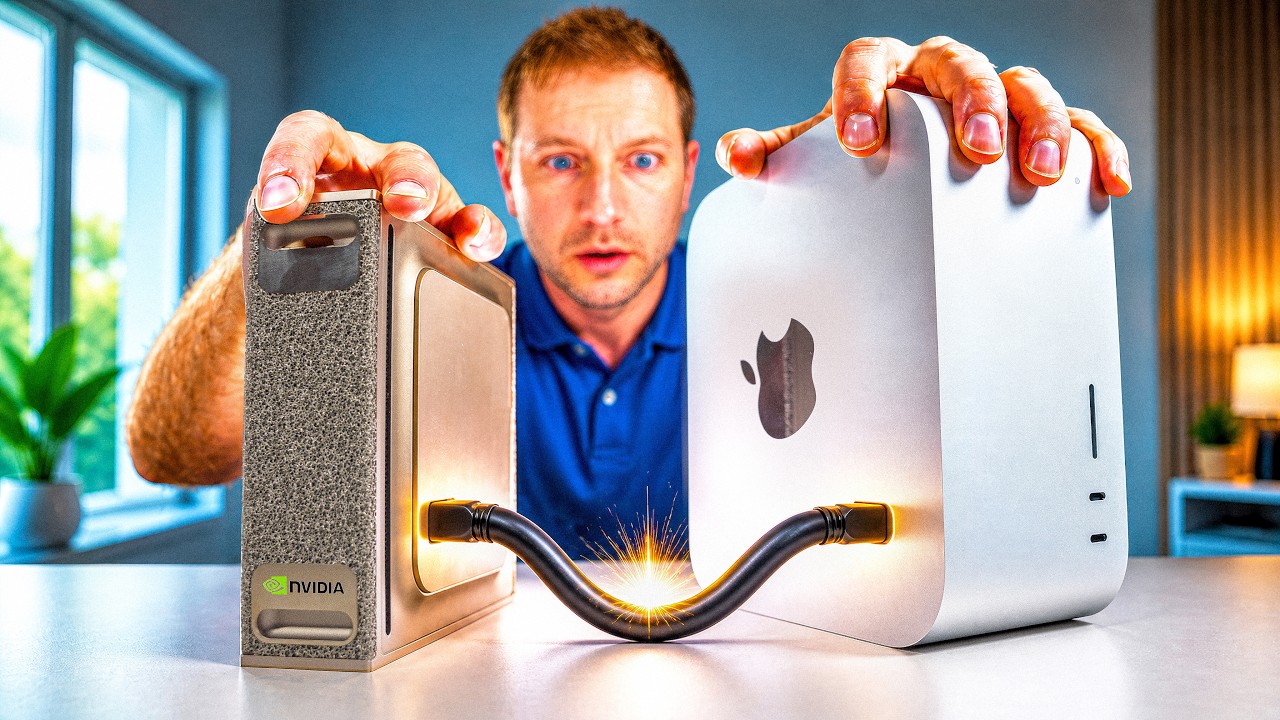
JCristina opens with a number: $31.6 billion, the combined amount Elon Musk and Jeff Bezos have now committed to moving the cell tower off the ground and into orbit. The trigger for the video is that Bezos finally entered the fight: Amazon paid $11.6 billion for Globalstar, the satellite operator whose network sits behind the SOS icon on your iPhone, and then filed with the FCC for 5,105 direct to cell satellites of its own.
The argument runs on physics and on money. On the physics side he walks through why connecting an unmodified phone to a satellite is hard: the phone transmits at roughly 200 milliwatts because of SAR exposure rules, higher frequencies carry more data but stop at walls, and signal strength falls off hard with distance. Then he explains the two moves that get around it. SpaceX is dropping its direct to cell satellites from about 550 km to about 330 to 340 km, which he says more than doubles the power arriving at the handset, and SpaceX bought its own 65 MHz block of spectrum from 1800 to 2200 MHz so it no longer has to piggyback on T-Mobile in the United States or Rogers in Canada.
On the money side he lays out why AT&T, Verizon and T-Mobile are in trouble: a combined capital expenditure he puts around $32 to $35 billion a year just to keep towers running, plus $2,000 or more a month in land lease per site, plus trenching fiber to every one of them, against a reusable Falcon 9 that has flown the same booster more than thirty times and a single satellite that covers roughly a thousand square miles. His prediction, stated flatly and asked to be held against him: at least one of the big three goes bankrupt or gets bought inside a year or two.
He also names the piece nobody has solved. Getting the downlink into a basement is manageable because the satellite can transmit hard. Getting the uplink back out from a phone whispering at 200 milliwatts is not, and the answer he teases and refuses to unpack ("that is for a whole other video") is microcells, plus reusing the Starlink dish, the Echo speakers and the Eero routers already sitting in people's homes as high power relays.
The deep explanation
The cold open
The framing arrives before anything else, in one sentence: SpaceX Starlink versus Amazon, the $31 billion iPhone war. Musk and Bezos have spent $31 billion to move cell towers into orbit, "demoting Verizon, AT&T, and T-Mobile to glorified Wi-Fi routers." He calls it the iPhone space wars and then backs up to explain how he got here.
What prompted the video was a pile of reader email. People had been writing in about DTC and about how much better it gets once the version 3 satellites are up. Then new events landed: Bezos got into direct to cell. That is the news hook, and everything else builds off it.
What DTC actually is
He defines it plainly for anyone new: direct to cell means communication between your unmodified phone and a satellite in space. Not a satellite phone. Not a terminal. Not an accessory. The phone in your pocket, unchanged, talking to something in orbit. That single constraint is what makes the engineering hard, and the rest of the video is essentially a tour of the consequences.
Bezos gets in, and the scoreboard is ugly
Bezos wants in because he wants to compete with Musk. He is already competing with Musk, and JCristina cannot even say the word competing without flinching at it, because of the numbers. Project Kuiper, now rebranded Amazon Leo, has 392 satellites on orbit. Starlink has almost 11,000.
"So it is really not a competition, but let us just say that it is."
That gap is the load bearing fact for the whole second half of the video. Every Amazon plan he describes afterward gets measured against it.
| SpaceX Starlink | Amazon Leo (Kuiper) | AT&T / Verizon / T-Mobile | |
|---|---|---|---|
| Satellites on orbit | ~11,000 | 392 | Not applicable |
| Dedicated DTC satellites | ~670 to 690, working today | 0 flying, 5,105 requested at the FCC | Not applicable |
| Spectrum position | Owns a 65 MHz block, 1800 to 2200 MHz | 1.6 GHz, acquired with Globalstar for $11.6B | Licensed terrestrial bands, being lobbied for |
| DTC orbit altitude | Dropping from ~550 km to ~330 to 340 km | Not yet flying | Tower height, measured in metres |
| What the phone has to do | Nothing. Walk outside, no pointing | Globalstar style: go outside, aim, hold still | Be in range of a tower with power and fiber |
| What you can actually send | Text, WhatsApp, VoIP, rough video calls | Emergency SOS text | Everything, where there is coverage |
| Throughput | 2 to 5 Mbps now, 150 Mbps promised | Emergency messaging only | Full LTE and 5G rates |
| Coverage per node | ~1,000 square miles per satellite | Same physics once flying | One tower, one small cell radius |
| Annual cost of the network | Reused Falcon 9, some launches near fuel cost | Five years of launches to reach 392 | $32 to $35B combined CapEx per year |
2G to 6G is iteration, orbit is innovation
Before going further he takes a swing at the roadmap the carriers sell. For twenty years we have been watching what he calls an illusion of moving forward: 2G to 3G to 4G to 5G, and now the industry wants to start selling 6G.
"Just stop already. They are just iterative. It is not something revolutionary."
His distinction is between iteration and innovation. The generational G upgrades are iteration. The innovation, the actual discontinuity, is bringing the cell tower to orbit, and $31.6 billion has now been spent doing exactly that. He notes T-Mobile, Verizon and AT&T are not happy about it, then adds the line that tells you where his sympathies sit: "hopefully they go bankrupt in the not so distant future." He justifies it as customer resentment rather than malice, addressed to anyone who has paid hundreds of dollars a month for what he considers basically nothing.
The $11.6 billion Globalstar buy
Bezos paid $11.6 billion for Globalstar. If you own an iPhone, you have already used Globalstar without knowing the name: it is the network behind the SOS indicator at the top of the screen, the emergency service mode where the phone tells you to go outside and then walks you through aiming it.
He performs the experience rather than describing it, and it is the funniest stretch of the video:
"Oh, we are going to communicate with a satellite. Go a little bit to the left. Wait a second. Wait, wait. A little bit to the right. Hold it. Stay. Stay there. Stay there. Okay, text."
The comparison he draws immediately afterward is the entire product difference. With Starlink DTC you walk outside, anywhere, and you do not point the phone at anything. You start texting, and not only texting: WhatsApp works, and you can make a video call. Not a great one right now, because throughput is only around two to five megabits, but it happens, and he flags that the number is climbing and promises to return to it.
Why Apple sold, and what it cost them
Globalstar was, in his telling, held up by Apple for years. Apple injected hundreds and hundreds of millions of dollars into the company because Globalstar was the partner they chose. And the reason they chose Globalstar is the part he does not soften: instead of going with Musk, they went with Globalstar, because they did not like Elon.
"A lot of companies, a lot of people, they do not. And then they cut off their nose despite their face, and that is exactly what Apple did."
Then Apple ran the numbers on what came next. Building out real DTC infrastructure themselves would have meant billions, maybe ten billion plus, and Apple decided it did not want to be in that business. So they sold. Twenty percent of Globalstar was Apple owned, and all of it went to Bezos.
He did not buy satellites, he bought spectrum
The obvious question is whether Bezos bought Globalstar for its satellites. The answer is no, and JCristina is blunt about the reason: "they are garbage. He has got his own satellites."
He bought the company for the spectrum. And that is exactly what Musk did in 2025, at what JCristina places at the end of 2025, when SpaceX bought spectrum and then bought more from EchoStar. What Musk ended up with was around 65 MHz of premium frequency running from 1800 to 2200 MHz, which is 1.8 GHz to 2.2 GHz.
The detail he wants you to appreciate is that it is consecutive. An entire contiguous block. He interrupts himself to say so:
"That is. That is rare, all right? Just trust me, that is rare, but he got it."
Globalstar's holding sits at 1.6 GHz. Lower. Which, as he explains a few minutes later, is a genuine trade rather than a straight loss.
"A cell tower in the sky"
Musk was asked about SpaceX Starlink and DTC service, and the quote JCristina reads out is the thesis of the video in four sentences:
"It is a cell tower in the sky. If you can see the sky, you have connectivity. The terrestrial cell network is fundamentally limited by a two-dimensional grid. We are taking the grid to the third dimension."
JCristina's gloss: we are bringing cell to 3D. And he thinks it holds up under scrutiny, because two dimensional really does describe the ground network. Towers live on a plane. That is the whole coverage model. Move the transmitters into orbit and the grid gains an axis.
5,105 satellites versus fewer than 700 that already work
The latest news is Bezos petitioning the FCC for 5,105 DTC satellites. He wants over five thousand of these things in orbit, and JCristina does not hide his bafflement, because SpaceX currently has something like 680 to 690 DTC satellites up, and they work.
Then he adds context that makes the request stranger still: Bezos also wants roughly three thousand more for the dish service. So the ask is enormous, from a company sitting at 392 satellites after five years of launching, against a rival that put up eleven thousand in the same window.
"You are at 392. You have been launching for the last five years. That is all you got. So be it. You want 5,000 of these things, that is fine. You will never get there."
He does still land on the upside: "at least there is competition." Or so we think.
The hurricane test, through eight inches of poured concrete
The strongest evidence in the video is personal. JCristina is in Florida. Last year, during a hurricane, the local cell tower went down because the power was out. They looked at their phones and saw the little satellite icon. They used it, and it worked.
The details are what make it matter. They were not outside doing the Globalstar aiming dance. It worked inside the studio, through eight inch poured concrete walls. He is honest about the uncertainty of the mechanism: maybe they were close enough to a window, maybe it came straight through the roof, he does not know. But he was texting his wife sitting next to him, back and forth, and it worked.
That was over a year ago, at a moment when there were fewer satellites up than there are now. He points out he cannot give you a fresh test because there has not been a tower outage since, and adds, with the timing of someone who lives in Florida: "we might get a hurricane this year, and then I will let you know."
The physics problem
Now the engineering. There is a real problem connecting a phone to a satellite, and it gets much harder from inside a building. Two variables work against you and both work the same direction.
Distance. He describes a power of three relationship running in reverse: as distance grows, the connection gets worse, and it degrades fast rather than gently.
Frequency. As frequency goes up, the connection gets worse too, because higher frequency struggles to penetrate walls, buildings and ceilings, and even environmental obstacles like foliage or rain.
That is the tension in a sentence: high frequency is great because it carries a lot of data and is extremely fast, and it is terrible because it does not get through anything. Which is precisely why Bezos is buying at 1.6 GHz while Musk sits at 1.8 to 2.2. Musk is in the sweet spot. Globalstar's band is a little slower and will penetrate slightly better, but it will not carry as much data and it will not go as fast.
200 milliwatts, and why SAR sets the ceiling
Here is the constraint that shapes every design decision downstream. You cannot increase the transmit power of the phone. Handsets are locked to roughly 200 milliwatts, which he characterises as whispering. The reason is SAR, the specific absorption rate regulations, which exist so that you do not, as he puts it, nuke your head with too much outbound radio energy.
So the phone side of the link is fixed. It cannot be engineered around. Whatever else you change, the handset is still whispering at 200 milliwatts.
Musk's response, in JCristina's framing: "We are going to mathematically brute force this. We are going to cheat physics. How are we going to do it?"
Cheating physics by moving the tower down
The answer is altitude. Instead of leaving those satellites at 550 km, SpaceX is bringing them down. The DTC satellites are going to about 330 to 340 km. That is roughly 200 km closer to Earth.
Apply the falloff rule and the result is the headline number of the section: the power arriving at your phone is over 100 percent more powerful. More than double.
He circles back to the concrete walls to make the point land. Before this change, before the drop, they were already using the service inside a poured concrete studio and it worked. He cannot imagine what it will be like with more than a hundred percent increase in received power, because he has not had an outage to test it on.
The asymmetry nobody can engineer away
The move solves half the problem. Receiving is not the constraint: the satellite can transmit with plenty of watts, so the downlink into your phone is comfortable. The constraint is the other direction.
"We have a problem with asymmetry. We cannot push as hard as we can pull."
The phone still pushes 200 milliwatts and no more. Bringing the satellite closer helps that side of the link too, but the fundamental imbalance stays: a huge transmitter talking to a tiny one. Everything in the last third of the video is about closing that specific gap.
Gwynne Shotwell says the ground network is coming too
Backing up to look at where SpaceX is going with DTC overall, JCristina reads a quote from Gwynne Shotwell, President and COO of SpaceX, from the earnings call the day before:
"We definitely intend to build out the terrestrial component. You will not only have the capacity from the satellites themselves, but you will have a build out of the terrestrial to make a true mobile service exactly what you want it to be."
His reading of it: SpaceX is not just doing space. They are doing the ground infrastructure as well, and melding the two together. This matters because it contradicts the simple story that satellites replace towers outright. The real plan is a hybrid, and it is the same conclusion the basement problem forces on you a few minutes later.
Lasers, the true speed of light, and a call to Japan
Every one of these satellites talks to its neighbours with lasers. They are called ISLs, intersatellite links, and JCristina notes the same or similar hardware appears on both the Starlink DTC satellites and on Bezos's satellites.
The detail he wants you to hold onto is that these lasers run at the true speed of light. Not the speed of light on the ground. Light in the vacuum of space moves about 30 percent faster than light through a Corning glass fiber cable.
That changes the routing model. Data moves through the mesh network and only fires back down to Earth when it needs to. His example: you make a call to someone in Japan. There is no reason to send the data up to a satellite, back down to a ground station, across terrestrial infrastructure and onward. You go from your phone up to a satellite, relay it across the mesh all the way to Japan, and fire it back down there.
"At the speed of light. So things are going to really turn, turn for the better."
The CapEx trap
Now the money, and this is where he thinks the carriers are genuinely cornered. He looked up what the big three spend, and puts their combined capital expenditure at something like $32 to $35 billion a year just taking care of those cell towers.
And that number does not include the rest of it:
- Land leases. $2,000 or more a month, per site, just for the ground the tower stands on.
- Trenching. Every single one of those towers has fiber optic cable running out of it, often several, heading back to the CO, the central office, or the NOC, the network operations center. Somebody has to dig every one of those trenches.
Stack that up and the cost to stand up each individual node of the terrestrial network is, in his words, just crazy.
A rocket that has flown thirty six times
The contrast is launch cost. Launching a satellite is now so cheap, especially with SpaceX, that he describes some Starlink launches as basically free. Launched basically for fuel, because some of those Falcon 9 boosters have flown more than thirty times. He thinks one is around thirty six.
"The same damn rocket over and over and over and over. You do not have to build a new rocket. They just come back. They land on the back of a drone ship. It gets ferried back. They refurbish it a little bit and there it goes again."
A thousand square miles per satellite
Then the coverage comparison that closes the economic argument. Every satellite they put on orbit covers something like a thousand square miles. A tower covers a small area.
So the roughly 670 DTC satellites SpaceX has on orbit are already, functionally, covering the whole Earth. He asks you to imagine a thousand or more of them, and then to imagine the version 3 satellites, which he says carry ten times the capacity each. Ten times, for every one.
That is the setup for his dismissal of Amazon's filing: when a company sitting at 392 satellites asks for five thousand, against a rival whose sub thousand fleet already blankets the planet and is about to get a tenfold capacity upgrade per unit, the request reads as a press release rather than a plan.
What actually turns a satellite into a cell tower
A short but genuinely useful technical aside. If you do not know the difference between a regular Starlink satellite and a DTC version, it comes down to three things:
- A different antenna, specifically a phased array antenna array.
- A slightly different physical size.
- A different modem.
That modem is the real answer. What converts these satellites into cell towers is the eNodeB or gNodeB. An eNodeB is the 4G or LTE base station modem. A gNodeB is the 5G one, the higher frequency version. Put one of those in orbit with a phased array pointed down and you have, quite literally, a cell tower in space.
Full circle, and the prediction
He sums up the board. Musk is already doing DTC. Bezos is now getting on board. And the big three are, in his phrase, basically crapping the bed, sitting around thinking "oh god, what are we going to do?"
Then the call, delivered as a challenge:
"I guarantee you at least one of them will go bankrupt or get bought. Write it down, okay? Come back to this video in a year or two."
He backs the confidence with a track record. He told his audience that Viasat, DirecTV, Dish Network and HughesNet were going out of business. One of them has since gone bankrupt and another got bought out. He expects the same arc for terrestrial mobile, and he is not neutral about it, because he thinks a lot of his audience has been getting screwed by the big three for a long time.
The future he is describing is the one where you walk into a store to buy a phone and say no to AT&T, no to Verizon, no to T-Mobile, and yes to SpaceX or to Amazon Leo. He believes it is possible.
The unsolved half: how do you get out of the basement?
But possible requires cheating the RF physics one more time, and here he states the problem cleanly, because it is the real remaining engineering question.
How do you get that signal in the basement? How do you get it into a two story home?
Coming down is easy. They can crank up the juice on the satellite. The hard direction is up. The phone is whispering, and he cannot resist the line:
"When this thing is whispering as quietly as a cricket farts. Did I say cricket farts? I think I did."
He is careful to give the satellites their due here. They already have big ears. They can hear a phone outside without a problem, and even inside if you have a window nearby, which he calls insanity given the numbers involved, but it demonstrably happens. The failure case is the two story or three story building, and the basement. For that, something has to change on the ground.
The infrastructure already sitting in your house
So he asks the right question: does either of them already own infrastructure inside people's homes that could bridge that gap?
Yes, kind of. Bezos has the Eero mesh routers and the Echo speakers. Musk has the Starlink dish, and in a lot of cases that dish is already mounted outside with a clear view of the sky.
The idea follows immediately. Bring the service in through the dish, through the Eero, through some device that instead of pushing 200 milliwatts can push a great deal harder. Regulations still apply, but the limits are different, because as he puts it, you are not going to take your router and hold it against your head. A device that sits on a shelf can transmit at power levels a handset never will.
"And with SpaceX Starlink, they even have a dish sitting outside. So now it is a no-brainer."
The uplink problem, and the word he would not unpack
That leaves the last gap, and he names it precisely. What about a location with no dish, no Eero, no Echo, no Starlink, nothing already outside? How do you get the uplink out of there?
"That is for a whole other video. Microcells. Shh. For a whole other video."
He will not go further than the word. But he insists the ways exist, and he is clear about the consequence of solving it: that is when the big three really start crying. At that point, in his framing, it is basically over.
The spectrum independence that changed everything
The final piece of the business argument is the one that explains why the carriers panicked. Before, SpaceX Starlink was beholden to T-Mobile in the United States to run DTC service, because it was piggybacking on T-Mobile's radio frequency. Same story with Rogers in Canada, and with terrestrial partners everywhere else.
They do not need to do that any more, because SpaceX bought its own spectrum. That 65 MHz block, contiguous, 1800 to 2200 MHz, described in the terms of a man who clearly enjoys spectrum: "beautiful clean pristine." He says you cannot get any better than that.
"And that is why the big three were like, oh god, now they have their own spectrum. Now we are going to have some problems here."
His read on what happens next is not technical, it is political. They are going to have to start lobbying. They are going to have to start dragging SpaceX and dragging Amazon through the mud. They have to do something, because otherwise at least one of them goes under. Then there will be two, and then consolidation starts, and prices come down because they will have no choice.
What it costs, and what you get
His price estimate for DTC as an add on, when you already have Starlink: probably about ten bucks.
And what ten bucks buys is not an emergency SOS text. With DTC you can use WhatsApp, text people, make a phone call over VoIP, and hold a video conference call, because there is actual data behind it.
That data rate is the number he promised to come back to at the top. Right now it is around five megabits. Musk has said it is going up to 150 megabits. The reason is the same physics as before, applied twice: the satellites are lower, so more data can be pushed through the link, and the bigger, more capable version 3 satellites are coming.
Thirty years of 1.5 up by 15 down
Then he grounds all of it in his own bill. For thirty years his AT&T connection was 1.5 megabits up by 15 megabits down. Thirty years. That was it, until SpaceX Starlink came along.
"Why do you think I do these videos? Because I am thankful. Not that I get paid for them or anything. I am thankful."
That is the emotional core of the piece and it is worth stating plainly: the enthusiasm is coming from someone who spent three decades on a connection slower than what a satellite is about to hand a bare phone.
The question he leaves you with
He puts it directly to the audience, and it is a fair question rather than a rhetorical one. If you had the ability to go with Bezos's system or Musk's system, and not use T-Mobile, Verizon or AT&T, would you? As long as the service was still good, would you? He asks for answers in the comments.
The Truth Engine
The closing pitch. He asks why you are still using Claude, Gemini, ChatGPT, Perplexity or Grok instead of running your own model, and frames it as sovereignty: use somebody else's and you have lost yours.
He built his own about two months ago and wrote a book about it, called the Truth Engine, available at jchristina.com/truth. His claims for it: no guardrails, so it answers the question asked; it does not coddle you and does not care about your feelings, "nor does it have feelings, which is very important"; it does not take your data; it costs nothing to build because it runs on your own system; and it takes about twelve minutes to set up. It works on Linux, on PC and on Mac. The book is a living book: every time he revises it, subscribers get an email offering the new version free.
He wraps with the usual asks, a thumbs up, the thanks button, channel membership, and an affiliate link at jchristina.com/starlink for anyone buying a Starlink kit, which he says gets both of you a free month rather than just him. Then: many blessings to you and your family, stay safe, stay healthy, stay connected.
Where it stands
The load bearing claims in this video are largely right, and the two places worth annotating both cut in his favour rather than against him.
The falloff rule. He describes signal loss as a "power of three" relationship with distance. Free space path loss is actually an inverse square law: received power scales with one over distance squared. That makes his stated rule stronger than physics requires, but his conclusion still holds comfortably. Going from 550 km to 340 km is a range ratio of about 1.62, and squaring it gives roughly 2.6 times the received power, which is a gain of about 160 percent. His "over 100 percent more powerful" is correct, and conservative, under the correct law.
The spectrum numbers. Globalstar's holdings sit in L band and S band rather than at a clean 1.6 GHz, and the SpaceX and EchoStar transaction covered specific allocations rather than an unbroken sweep from 1800 to 2200 MHz. His framing is directionally right: the SpaceX position is higher, wider and better suited to throughput, and the Globalstar position is lower and narrower.
The prediction. The claim that at least one of AT&T, Verizon or T-Mobile goes bankrupt or gets bought within a year or two is the most aggressive thing in the video, and he explicitly invites you to hold him to it. Worth noting that the CapEx he cites as evidence of distress is also, in the carriers' own framing, evidence of scale, and that a company spending $30 billion a year has revenue to match. His track record on the satellite television and legacy satellite internet operators is real, but those businesses had no spectrum moat and no regulatory position. The terrestrial carriers have both.
What is not in dispute. Direct to cell on an unmodified handset works today, it worked for him through poured concrete during a hurricane, SpaceX owns its own spectrum now and no longer needs a terrestrial partner to run the service, and the basement uplink is genuinely unsolved. Those four facts are enough to make the argument interesting without any of the predictions landing.
Key takeaways
- Direct to cell means an unmodified phone talking to a satellite. No terminal, no accessory, no aiming. That single constraint drives every engineering decision in the video.
- The scoreboard is lopsided. Starlink has roughly 11,000 satellites on orbit and 670 to 690 dedicated DTC satellites that work today. Amazon Leo has 392 satellites total after five years and a filing for 5,105 DTC satellites it has not launched.
- Bezos bought spectrum, not satellites. The $11.6 billion Globalstar purchase was for the 1.6 GHz frequency holdings. Globalstar's own satellites, in JCristina's assessment, are garbage and Amazon has its own.
- Musk bought his way out of dependence. The 65 MHz contiguous block from 1800 to 2200 MHz, acquired partly from EchoStar, ended SpaceX's need to piggyback on T-Mobile in the United States or Rogers in Canada. That is what changed the balance of power.
- The phone is the bottleneck and always will be. SAR rules cap handset transmit power at roughly 200 milliwatts. You cannot engineer around it, so every solution has to happen on the other end of the link.
- Lowering the orbit is the workaround. Dropping the DTC shell from about 550 km to about 330 to 340 km delivers over 100 percent more power at the handset without touching the phone.
- The link is asymmetric. Satellites can transmit hard, so the downlink is fine. The uplink from a whispering handset is the hard problem, and it is unsolved for basements and multi story buildings.
- Lasers change routing, not just speed. Intersatellite links move data across the mesh at the vacuum speed of light, roughly 30 percent faster than through glass fiber, and only bring it down at the destination.
- The economics are brutal for towers. Roughly $32 to $35 billion a year in combined CapEx for the big three, plus $2,000 a month per site in land lease and trenched fiber to every tower, against a reused Falcon 9 and a satellite covering a thousand square miles.
- SpaceX is building ground infrastructure too. Gwynne Shotwell's earnings call quote confirms a hybrid, not a pure orbital replacement.
- What a DTC satellite actually is: a Starlink satellite with a phased array antenna and an eNodeB (4G/LTE) or gNodeB (5G) modem. That modem is what makes it a cell tower.
- The stated future: about $10 a month as an add on for Starlink Customers, WhatsApp, VoIP calls and video calls, and up to 150 Mbps once the version 3 satellites fly.
Chapters
- 0:00 Cold open: the $31 billion iPhone space war
- 0:22 Why this video, and what changed
- 1:00 Bezos enters DTC: Amazon Leo at 392 against Starlink's 11,000
- 1:29 2G to 6G is iteration, orbit is innovation
- 2:26 The $11.6 billion Globalstar buy and the iPhone SOS icon
- 3:02 What Starlink DTC does differently: no pointing, WhatsApp, video
- 3:26 Apple's decision not to build DTC, and the 20 percent stake
- 4:33 He bought the spectrum, not the satellites
- 5:16 Musk: "It is a cell tower in the sky"
- 5:49 Bezos petitions the FCC for 5,105 DTC satellites
- 6:11 The Florida hurricane test through eight inch concrete
- 7:06 5,105 requested against fewer than 700 that already work
- 7:32 The physics problem: how do you connect from inside a building?
- 7:54 Distance and frequency both work against you
- 8:30 Why Bezos took 1.6 GHz and Musk took the sweet spot
- 8:53 200 milliwatts, SAR, and the locked handset
- 9:32 Cheating physics: dropping the orbit from 550 km to 340 km
- 10:53 The asymmetry: we cannot push as hard as we can pull
- 11:26 Gwynne Shotwell on building the terrestrial component too
- 12:12 Laser intersatellite links and the true speed of light
- 12:50 Routing a call to Japan through the mesh
- 13:26 The CapEx trap: $32 to $35 billion a year, leases and trenching
- 14:33 A Falcon 9 booster that has flown thirty six times
- 15:11 A thousand square miles per satellite
- 15:26 Version 3 satellites and 10x capacity each
- 16:14 What turns a satellite into a cell tower: eNodeB and gNodeB
- 16:54 Full circle: the big three have no answer
- 17:16 The prediction, and the Viasat and DirecTV track record
- 18:16 The unsolved half: getting the signal into a basement
- 19:23 The Echo, the Eero and the Starlink dish already in your house
- 19:54 Pushing harder than 200 milliwatts from a device on a shelf
- 20:27 The uplink problem, and the word microcells
- 20:56 No longer beholden to T-Mobile or Rogers
- 21:46 Lobbying, mud, and consolidation
- 22:17 About ten dollars a month, and what you get for it
- 22:44 Five megabits today, 150 megabits promised
- 23:12 Thirty years of 1.5 up by 15 down
- 23:31 The question to the audience
- 23:48 The Truth Engine, and building your own AI
- 25:09 Outro, affiliate links, many blessings
Notable quotes
"Elon Musk and Jeff Bezos have spent $31 billion to move cell towers into orbit, demoting Verizon, AT&T, and T-Mobile to glorified Wi-Fi routers." JCristina, 0:00
"It is basically communication between your unmodified phone with the satellite in space. That is what it is, DTC, direct to cell." JCristina, 0:40
"So it is really not a competition, but let us just say that it is." JCristina on Amazon's 392 satellites against Starlink's 11,000, 1:10
"Just stop already. They are just iterative. It is not something revolutionary, right? You have iteration and you have innovation. There is no innovation there. The innovation now is bringing these cell towers to orbit." JCristina on the 2G to 6G roadmap, 1:29
"Oh, we are going to communicate with a satellite. Go a little bit to the left. Wait a second. Wait, wait. A little bit to the right. Hold it. Stay. Stay there. Stay there. Okay, text." JCristina performing the Globalstar iPhone SOS experience, 2:50
"Now, did he buy the company because of these satellites? No, they are garbage. He has got his own satellites. He bought the company for the spectrum." JCristina on the Globalstar acquisition, 4:33
"It is a cell tower in the sky. If you can see the sky, you have connectivity. The terrestrial cell network is fundamentally limited by a two-dimensional grid. We are taking the grid to the third dimension." Elon Musk, quoted at 5:16
"It was working here in the studio through 8-inch poured concrete walls. I was texting my wife next to me and we were texting back and forth and it was working." JCristina on using DTC during a Florida hurricane outage, 6:30
"Since we know that we cannot increase the power on these phones, they are locked down to about 200 milliwatts. It is a very small amount. It is whispering." JCristina on the SAR limit, 8:53
"We are going to mathematically brute force this. We are going to cheat physics." JCristina, characterising SpaceX's answer, 9:20
"We have a problem with asymmetry. We cannot push as hard as we can pull." JCristina on the fundamental link imbalance, 10:53
"We definitely intend to build out the terrestrial component. You will not only have the capacity from the satellites themselves, but you will have a build out of the terrestrial to make a true mobile service exactly what you want it to be." Gwynne Shotwell, President and COO of SpaceX, quoted from the previous day's earnings call, 11:26
"The speed of light in the vacuum of space is about 30% faster than the speed of light here through like a Corning's fiber glass cable." JCristina on intersatellite links, 12:12
"The same damn rocket over and over and over and over. You do not have to build a new rocket. They just come back. They land on the back of a drone ship." JCristina on Falcon 9 reuse, 14:33
"I guarantee you at least one of them will go bankrupt or get bought. Write it down, okay? Come back to this video in a year or two." JCristina's prediction on AT&T, Verizon and T-Mobile, 17:16
"When this thing is whispering as quietly as a cricket farts. Did I say cricket farts? I think I did." JCristina on the handset uplink, 18:40
"That is for a whole other video. Microcells. Shh." JCristina, declining to explain the uplink solution, 20:27
"He has that 65 MHz of block of beautiful clean pristine 1800 to 2200 MHz spectrum. I mean, that is. You cannot get any better than that." JCristina on why the carriers panicked, 20:56
"With my AT&T connection that I had here for 30 years, all right, was 1.5 megabits up by 15 megabits down. That is what I had for 30 years until SpaceX Starlink came around. Why do you think I do these videos? Because I am thankful." JCristina, 23:12
Resources mentioned
Companies and constellations
- SpaceX and Starlink, the roughly 11,000 satellite constellation at the centre of the video
- Starlink Direct to Cell, the service that connects unmodified handsets
- Project Kuiper, now Amazon Leo, Amazon's 392 satellite constellation
- Globalstar, acquired by Amazon for $11.6 billion for its spectrum
- EchoStar, seller of the spectrum SpaceX acquired
- Apple, former 20 percent owner of Globalstar and the partner behind iPhone Emergency SOS
- Apple Emergency SOS via satellite, the feature Globalstar powers
- AT&T, Verizon and T-Mobile, the "big three" terrestrial carriers
- Rogers, the Canadian carrier Starlink piggybacked on for DTC
- Viasat, DirecTV, Dish Network and HughesNet, his earlier prediction set
- Corning, the fiber optic cable reference for the speed of light comparison
- Amazon Echo and Eero, the in home hardware Amazon could use as relays
People
- Elon Musk, quoted on the cell tower in the sky and the 150 Mbps target
- Jeff Bezos, buyer of Globalstar and petitioner for 5,105 DTC satellites
- Gwynne Shotwell, President and COO of SpaceX, quoted from the earnings call
Technology and regulation
- FCC, where Amazon filed for its 5,105 satellite DTC constellation
- Specific Absorption Rate (SAR), the exposure rule that caps handset transmit power near 200 milliwatts
- Free space path loss, the distance falloff behind the altitude argument
- Inter satellite links, the laser mesh between satellites
- Phased array antenna, the antenna type that distinguishes a DTC satellite
- eNodeB (4G/LTE) and gNodeB (5G), the base station modems that turn a satellite into a cell tower
- Falcon 9, the reusable booster behind the launch cost argument
- 6G, the generational upgrade he dismisses as iteration
- VoIP, one of the services DTC data enables
- WhatsApp, his example of a real app running over DTC
His own links
- jchristina.com/truth, the Truth Engine book on building your own local AI
- jchristina.com/starlink, his Starlink referral link, which he says gets the buyer a free month too
- JCristina on YouTube, the channel
AI assistants he names in the sovereignty pitch
- Claude, Gemini, ChatGPT, Perplexity and Grok