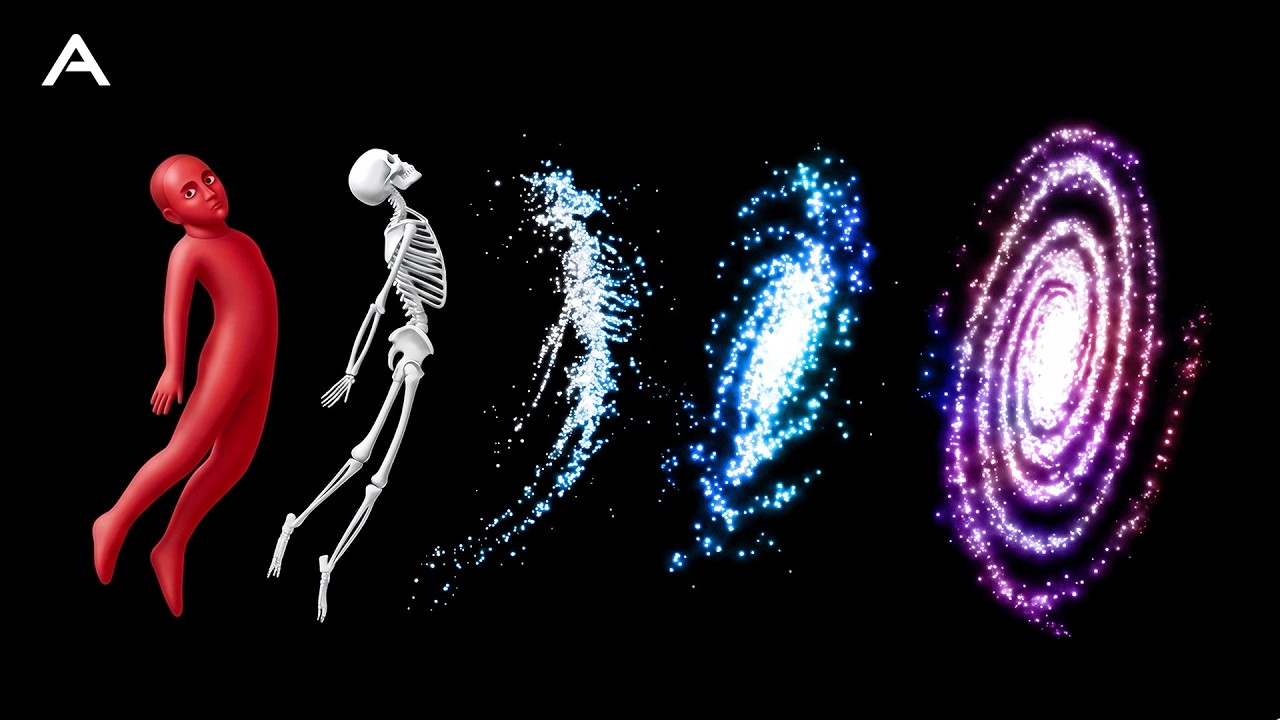
"It Changes You" Controversial Trainer on Ancient Tool to Unlock Human Potential | Ido Portal
Ido Portal, the movement teacher who trained Conor McGregor and now works with Christian McCaffrey, spends two and a half hours with Danny Jones taking apart most of what the fitness world sells. He argues against flow state as a goal, against belly breathing, against stretching a stubbornly tight hamstring, against modern postural yoga as anything ancient, and against genetics as the interesting question. In their place he puts one word, practice, defined so widely it swallows religion, evolution and daily life, and one skill, observing yourself without trying to change anything. He also describes what he actually does with NFL players: connective tissue work, peripheral vision drills, blindfolded spatial mapping on a tennis court, Borges and mathematics, and daily seated meditation.
Published Jul 24, 20262:29:10 video86 min readAdded Aug 8, 2026Open on YouTube →
At a glance
Ido Portal has spent thirty years teaching a thing he refuses to let anyone name properly. The internet calls him a movement coach, the guy who did the strange park work with Conor McGregor and now spends offseasons with Christian McCaffrey. Across two and a half hours with Danny Jones, he takes that label apart along with most of the rest of the fitness industry's vocabulary.
The through line is that almost everything sold as a solution is a single isolated component pulled out of a much larger system, and that the isolation is the problem. Flow state, he argues, is a partial description of something better and has a real downside nobody talks about. Belly breathing created more issues than it solved. Stretching a hamstring that will not open is a way to buy yourself a lower back injury three years from now. Modern postural yoga is not ancient. The genetics question is the wrong question. Fitness, movement and meditation are all words that have been emptied out.
What he puts in their place is one very old word, practice, stretched until it covers evolution, religion, parenting and the walk to the corner store, plus one very unglamorous skill: observing yourself without trying to change anything. He is explicit that this will not sell, because what sells has to be sexy and this is not.
The other half of the conversation is concrete and specific about what he actually does with elite athletes: connective tissue and joint capsule work borrowed from rock climbing and ballet, peripheral vision drills where you have to trust a blur instead of looking at it, blindfolded spatial mapping on a tennis court, forbidding any expression of frustration, reading Jorge Luis Borges together, doing mathematics, and daily hardcore seated meditation with no movement at all.
The isolation problem, and why 1 + 1 + 1 = 17
Danny opens by admitting he first encountered Ido through the McGregor footage and had no idea what he was watching. It looked like voodoo sorcery in a park. So what is it that a player like Christian McCaffrey is trying to get?
Ido's answer starts nowhere near the answer. He says we have isolated components, categorized them, separated them further and further in an attempt to improve things, and in doing so we built "very tiny little worlds within bigger universes" that are supposed to substitute for real solutions to movement problems, health issues, performance issues. Strength and conditioning is one of those little worlds. So is a concept like flexibility.
Then the line that sets up the whole episode: when you take those isolated components and put them back together, "1 + 1 + 1 equals 17." There is far more in the system than the parts you named.
So there have always been voices working a different way. Not an approach based on knowing, he says, but approaches based on not knowing, built to address the X quantities, the unknown components. That requires a different set of eyes and different tools, and it is much harder to read from the outside. Hence the rain dance impression.
But underneath, he insists, it obeys the same law any coach would recognize: specific adaptation to the imposed demand. The only question is how to construct the scenario that addresses the real need. How do you make the mind change its organization? How do you address connective tissue? How do you work on rhythmicality? People shout "relax" at a skateboarder, he says, but there are no real tools, no smart tools, to actually produce that. Building those tools is the job.
Figure 1. Ido's stack, in his own order. The athlete is supported by the general mover, the mover by the person, and underneath the person is something he prefers to call essence because the word does not try to pin it down. In Hebrew, he notes, the word used is wind, the same image the Tibetans use for an inner wind. Conventional training operates entirely on the outer ring.
Asked how he became this, Danny offers the usual template: everyone on the fringe got there through catastrophe, an injury, some dramatic break. Ido allows that partly, but offers another possibility. Sometimes it is not catastrophe, it is freshness. A new flavor arrives. Not something already on your map, not gradual understanding, but a critical mass, a phase shift, a jump.
For him it was some combination: events and orientations in childhood, then mostly those aha moments, the leap that occurs when certain aspects of your life align. He names three that have to arrive together: alignment, readiness, and openness. Openness is the critical one, because without it you keep trying to improve things with the same tools forever.
He is careful here, and it is worth noting since the rest of the episode is heavy on demolition: he is not one to abandon good tools. The fringe side is what made him popular and is probably why he is sitting in this chair, but he still uses a lot of very simple, old school, trusted methods. The other side, the popular side, is about how you scratch an itch that sits so deep in the system that you cannot put a finger on it from the surface.
Why flow state is not the destination
Danny tries the natural bridge: those aha moments, that is flow state, right? Training and preparation meeting execution, everything clicking, no effort, being in the zone.
"I'm not a big fan of the flow state."
Danny guesses it is a commercialization complaint. Ido says no, sometimes good things are commercialized for good reason and he does not want to push back for the wrong reasons. His objection is structural. Flow is a part of something deeper and more powerful, and taken on its own it has a serious downside, because flow is immersive.
Immersion automizes. It makes things automatic and mechanical, and that is exactly why they work. They become instinctive, reactionary. He quotes his own old formulation and then rejects it: "I train the body until the body cannot go wrong. Not until the body goes right. Until the body cannot go wrong. I've used this in the past." Now he wants the opposite. He wants the body to be able to go wrong, because that is what preserves choice. He does not want to automize completely, does not want to remove himself from the equation, does not want to become so immersed in the movie that he forgets he is here watching the movie.
So he wants a double arrow. One arrow is the immersive arrow of flow, pointing into the task. The second arrow points back at himself, in what he calls the watchful tower. That second arrow is what lets the effects fuse into deeper layers, not just into the body and not just into performance.
Figure 2. The distinction the whole episode turns on. Ido is not against absorption in the task, he is against absorption that consumes the observer. The second arrow, back onto yourself, is what he calls the watchful tower, and he is emphatic that it is not internal commentary ("Danny is now going down the ramp"), which he calls a distraction.
Danny pushes with the obvious counterexample. Athletes are optimized to complete one simple task. Michael Jordan shooting a thousand baskets from one spot, then a thousand from another, making it automatic so no thought is involved.
Ido's reply is that at that level, everybody throws a thousand hoops. "But Steph is Steph." Hard work is the entry point, not the differentiator. Occasionally someone is so gifted that they barely work hard and still arrive, but hard work alone is not enough, and that is exactly why you cannot get there by automizing. "On the highest level, when you really want to transform something, you need to become a different person in order to do that."
Which brings him to the most uncomfortable sentence in the episode. "I am kind of in the business of assassination. I am not there to support something. I am there first to kill something that something else can be born." He applies the same process to himself, and thinks it is beautiful, because the current construct is also a glass ceiling.
So inside that same basketball practice you can insert elements that stop you from going through the motions. Be there, doing it, in your watchful tower, every rep. Danny asks whether watchful tower means a third person view of yourself. One way to look at it, Ido says, but definitely not the commentary. And the empty mind everyone chases is trickier than it sounds, because sometimes the empty mind takes you out of the tower, out of listening mode.
Then he turns it on the interview itself. Even now, sitting here, Danny is fluctuating in and out of that tower. It is not continuous. It comes and goes. Danny has decent skill at it. "But I've seen much worse." He notes that for a podcaster this presence is the core professional skill, and that he has recorded podcasts all over the world with people who simply do not have it, whose success rests on something else entirely.
The tower is not achieved by telling yourself to be here. It is a returning and a widening, opening your presence past the small limited view into the body, out into the room, and further, until it contains the whole scenario. I am here, going down the ramp. Not those words. The presence.
Danny asks the obvious question: why is that better? Ido answers with a question. Who drove here today? Was it you? Do you remember shifting the gears?
"I don't remember anything about the drive, to be honest."
"There you go. So it was not you."
"I've stood behind world champions and nobody's home"
After the break, Ido returns to that thought and sharpens it into the episode's most quotable claim.
"I've stood behind world champions and I tell you, nobody's home. Nobody's home."
Danny asks what that means. "It's a robot," Ido says. A robot doing those things. They cannot fail. They are so good that the robot has been trained not to fail, and then they can even report on it, talk about it convincingly. And then the turn: everybody talks about AI now, but that is the AI. "The reason why AI is AI [is] because what created the AI is the AI already to begin with." You do not need to look far to verify this. It is in the way of being, and it can be checked by examining your own life day in and day out.
Which is why he does what he does. Practice. He keeps returning to the ancient word, practicum, and calls it the most important thing we are here to do. There is nothing else. Then, flatly: "Life is not for living."
Danny takes it somewhere personal. For most of his young life he did no sophisticated training, just basic compound movements in the gym alongside surfing and skateboarding, and it had no benefit. No technique, no muscle balancing, no stretching. Later he would abandon a whole routine and take up something completely alien. Most recently Nsima Inyang showed him a set of things he had never done, and he dropped everything else for them. What struck him was the feeling of being a complete rookie, not understanding what he was doing and pushing through anyway. Novelty, neuroplasticity, something invigorating.
Ido's response is the first hard turn of the conversation. "It's one reason, but it's still as corrupted as any other reason," because you are standing in a place trying to get something from it. Danny protests that this is how America thinks. You need some dopamine.
Yes, Ido says, and you will get all those things. In the back pocket. As a side effect. But it is not good to orient yourself directly at them, because they really are side effects and should be appreciated as such.
Then he answers the actual question. He spent the majority of his life doing exactly what Danny describes. This is why he tells people that if you watched his day to day practice you would not be impressed. He has spent decades being the beginner and has almost always abandoned things he is good at, the moment he reached them. He does not repeat his skateboard tricks from age sixteen. He can do one arm handstands and does not do them day to day, because he can do them. The pleasure, the likes and dislikes, that is a game he has watched play out, and it does not end in pleasure. His compressed version: "here's the dopamine game, right? So the worst thing is to get an easy dopamine."
The deeper reason is about specialists. Society pushes a narrow scoop: get really good at one thing and you will be rewarded, whether that is a successful podcast, a business, or an athletic career. "But then as a person, you lose more and more the more you go into that place." That is the honest reason to go wide and out of your comfort zone, and it does not come from the corrupted place of collecting rewards for it.
Practice has no reason, and everything is already practicing
Danny asks for confirmation: practice should not have a reason behind it? No reason?
None, Ido says, because practice is the default state of things. It is also known by many other names. One of them is evolution by natural selection. "The word evolution is practice. It is a way of becoming." Planets become planets through practice. Everything practices. It is a concept far deeper than a training session.
Neuroplasticity, he points out, gets discussed as though it were a discrete phenomenon that starts and stops. It is on all the time. What about muscle fibers, connective tissue? Right now you are adapting to sitting in that chair, and he knows it is painful. (Danny notes that this is why Mark Bell and Nsima stand and keep balls under their feet while podcasting. Ido: "that's ideal.")
So the move is to recognize that this is already happening through you, and then align your life with it. That is what he means by becoming a practitioner: seeing yourself not as a finished product but as something in constant transformation, and applying the needed pressures and stresses so you can grow, without corrupting the whole thing by shoving it in a chosen direction. Danny already named those pressures in his own question, novelty, unknown, difficulty. Ido agrees they produce good effects and will continue to. His point is only that there is something more important than the effects.
Danny observes that this runs directly against Western culture, where every element of society is selling something, where a gym or a supplement or a program to fix your lower back is all consumerism, where Arnold Schwarzenegger, muscle cars, fast food and American football are the template.
Ido wants to be positive here, and pushes back on his own behalf. A lot has been corrupted, yes. But there are still places in our lives, and there always were and always will be, that are motivated by something else, or better, not motivated by anything. An expression. A certain kindness. Even a sense of remorse when there is no kindness at all.
De-ambition yourself
Even in the NFL, at the highest of the highest level, when you climb all the way up there, you discover you need to de-ambition yourself.
That is his word, and he repeats it. The best of the best, the ones who are really free, are above the game. They grew up in the game and now they have swallowed the game. Not always. Sometimes the great are distorted and simply play the game better than everyone else. But sometimes you get a Messi.
"Different character, huh? Doesn't look like that winner that we know. But he's such a winner that he eats all the winners." Ido's own boyhood idol was Diego Maradona, and he says you still cannot argue with the greatness of Messi, because there is a different component there, and there have always been such figures.
The physics of it, in his framing: when you are really strong in the deep sense of the word, you do not need to push. "It's easy. You open the window, the air comes in. You don't pump the air in."
Borges, mathematics and power cleans: what he actually does with McCaffrey
Because the ideas are complex, some athletes he works with get given texts. He names Christian McCaffrey specifically. Difficult texts. Ancient texts. Sometimes both. The week of this recording they had read Jorge Luis Borges, the Argentine author, "a text that will make you, after one page, your head hurts a bit." Two weeks earlier they had done mathematics. (Danny mishears it as meth. Ido, deadpan: "That's one way to do it. That's another practice, right? It can bring some things for sure.")
Then the correction that keeps the whole thing honest. When a video clip presents the Borges and the mathematics, it presents it as though that is what they do. It is a small component of twelve hour days, most of which nobody bothers to show, because the reading is sexy and different and the rest is not. They also do power cleans. Strength and conditioning. They go to the field. They think hard about recovery. And they meditate every day, hardcore, sitting still, no movement, for long periods.
All of it aimed at transforming something in a person who is already at the top, entering his tenth season, from a family of legends, arguably the best to have done it, and still searching.
Danny imagines the first conversation must have been strange. "Bingo. You got it exactly right. It's very similar to this conversation." He has had it once or twice before. What is distinctive is that with some people there is a push away, almost a sense of "stay away from this guy, it's dangerous." And Ido agrees there is a genuine risk in being close to it, though not to him personally. It is the assassination. It is the practice itself, and he will not sacrifice the practice to make the conversation easier, so the conversation starts there. Many people let it go in one ear and out the other, "not realizing what they have met. Who they have met. Not me. Not me, but I'm talking about something that is moving through that me thing."
With Christian it was different: a combination of intelligences, observation and honesty that produced an almost immediate "okay, I got you, we're dropping this, we're dropping this, let's go." Ido saw real power in that, in a man effectively saying go ahead with the assassination, "like going to the dentist and it's like, no anesthesia, go in."
Danny raises the obvious hazard: what if I do all this with Ido and decide I do not want to play football anymore?
Part of it, Ido says. And then he is careful to bound it. He would not speak in anyone's name, and it is not the point. You have kids, you do not need to get rid of your kids. You do not have kids, you do not need to make kids. Football is an excellent platform to work on yourself. But yes, there were days of so much discovery and fun that football took a distance, and he made sure to bring it back, guarding against too much distance from his own side as well as Christian's, because both of them cared about it.
The swap, and the things nobody in the NFL trains
His illustration of what freshness looks like operationally: "I'll take the skateboarder, I'll make them play football. I'll take the footballer, I'll put him on a skateboard." And he knows how that gets read. What will that help him? "You don't get it. You're looking at it from the wrong perspective."
The system needs to be reopened, reinvigorated. You are not going to lose a special edge that took years to build; that edge is easy to maintain and is not what is at risk. His challenge to the doubters is blunt: in your tenth NFL season, do you think you are going to improve your speed? It is possible to do something, but even if you do, what does that buy you compared to everything else available? Sometimes the best move is exactly what Danny described from his own life, going to shoshin, the Japanese beginner's mind, and observing something there.
But not only that. They are not abandoning the tried methods: maintaining and boosting, protecting the skeleton, bulletproofing it. And they have worked on two things he says nobody in the NFL trains:
Pressurization. Pressure in the body. "Which is something that nobody practices in the NFL, or at least I don't know anyone."
Rhythmicality. A huge thing on the playing field. Christian plays piano and has a music background, so he understood immediately why it mattered.
Which pulls in sound. Ido says his boxing coach used to turn his head while they worked the heavy bags and shout "I can't hear the music." Danny confirms the same thing exists in skateboarding: sit with your eyes closed and you will know when someone of a high level is skating, purely by the sound. Ido's point is that these are trainable. Some people are effectively deaf to that channel, and you can develop it rather than shrugging that they were born without it.
The spiritual journey nobody says out loud
Danny raises the thing he finds tragic about the NFL: guys are in it so long, take enormous damage to body and brain, then leave and lose their meaning.
Ido says he is hitting it, and offers two occasions from years of work with athletes that he remembers as special, and he notes first that athletes are not the only people he works with.
The first was a top European footballer who had played for Barcelona. Ido's first question on meeting him was what do you want to do. The answer: "I want to enjoy the game again." Ido shook his hand and said let's go.
The second was Christian, who told him before hiring him that it is not about winning. "It's a spiritual journey. It's not about the NFL. It's not about this. Maybe I get injured the first game." And, as Ido notes, he has been injured before, so he knows exactly what he is saying.
That already touches the layers underneath. The athlete, the mover, the person. He is a parent. He is a person in the world, and we do not address those things at all. Ido's line on that: "we don't have license for parenthood, and we're a product of people who didn't have license for parenthood." This is a missing practice.
Which is where he plants his claim about religion. All religions represent practice. It is not merely a belief in some doctrine; there are always practices involved. Fasting. Not speaking certain words. Not doing certain things. The same is true of spiritual traditions, of martial arts systems, of yogic systems. They are all practicum. "The word practice encompasses all of this. It's a huge word. It's almost the word life. It's a word bigger than religion, because it contains the world of religion." And then the sentence that explains why he is on a podcast at all: "for me that was why I do what I do. If I found something better I would have done that."
The daily work: connective tissue, cross pollination, and air sense
Danny drills down. What are the physical specifics? Is there one thing every day, or is every day different?
Both. Some components get addressed daily because the practice demands it. The example he gives is connective tissue work. Not muscular work directly, but the question of how you thicken connective tissue, joint capsules, tendon, fascia. How do you really build those structures up. These are weird practices, he says, not well known in the West, and the West keeps trying to bend strength and conditioning into that job when strength and conditioning is not really suited to it.
His example of the mismatch is isometrics. People do isometric holds because they have heard about the effect on tendons. And yes, holding a position under load without moving dynamically does have an effect on connective tissue. But it is still sets and reps and time under tension. It is still shaped by the original state of mind of a strength and conditioning coach.
His alternative was to go wider, and the result is a set of transfers between worlds that do not normally talk:
from rock climbing to the ballet dancers
from the ballet dancers to the fighters
from the fighters to the football players
and between all of that and somatics
At the same time, he is explicit that strength and conditioning still has to be programmed and that he programs it. They do power work. They use a variety of tools. "You cannot build someone's explosiveness, for example, for football, without weights. You need it. It's not going to happen by doing pistol squats, calisthenics." You have to load the posterior chain, develop at high speed, be able to handle very fast eccentrics, very fast negatives.
He extends that to skateboarders, who he says are horribly prepared for what they do, by design. They just do it because they are so committed. He loves skateboarders and always has. They are artists, and they sacrifice a lot of their bodies to a professionalism that does not exist in their sport yet, though it is starting.
Air sense
Skateboarders bring up a quality Ido says he mentions often and that is rarely discussed in the West: air sense, the ability to perceive where you are in space while flying through the air. He was asked about it a few weeks earlier on Andrew Huberman's podcast, where they also talked a lot about skateboarding (Huberman is a skateboarder). Elite skateboarders have a keen sensation of exactly where they are.
Ido worked as an acrobat for a period, and describes the failure mode precisely. A person can be very coordinated and look great as long as they touch the ground, and the moment they are in the air they are "rolling down the windows." You see it on trampoline, on big ramps, in skateboarding.
The point is that it is trainable, and he lists the tools currently used: gymnastics pits and foam pits at the bottom of big ramps, trampoline work, and spotted string work borrowed from the circus, the suspension rigs and harnesses. "There is always a way to develop, and not just kind of saying I don't have that."
Peripheral vision: learning to trust the blur
Danny brings up receivers doing strange drills, bouncing balls off walls, working peripheral vision, trying to hold simultaneous zones of awareness. Ido confirms they do a lot of it. In recent weeks he had also been working with Christian's brother Luke McCaffrey, a wide receiver for Washington, and vision was a huge part of it: dominant eye and non dominant side, closing one eye, implements that occlude parts of the visual field.
Then he adds a mechanical detail most people would never guess. When he moves his neck left and right and his eyes are saccading across the horizon, the smoothness of the eye movement dictates the smoothness of the neck movement. "So essentially you can't be smooth if your eyes are not smooth." Training the eyes is not only training them to see, it is training them not to be jumpy.
Danny asks whether that is even possible, since eyes seem to stick on things. Ido's answer is a trick anyone can run: look out of a car or train window, and instead of tracking the landscape, shift focus to details on the glass. Hold your fingers up and open them slightly so you see the outside through the gap, but keep watching the edge of your fingers, and the eyes stay smooth. It is focused vision that keeps locking up. Open up and something else becomes available.
Danny offers his own observation, that Michael Jordan, Tom Brady and Kelly Slater all seem to have eyes that point outwards, especially in action shots. (They pull up images on screen and go back and forth about whether you can actually see it in a photo; Ido is politely unconvinced that it is visible from the outside.)
His substantive point is different, and it is the best practical idea in this stretch of the conversation. What he usually encounters is not a lack of peripheral vision. It is an inability to trust it. You revert to focused vision because you did not trust the smudge you saw. So he builds scenarios that teach the opposite: that is a blur, that is a stain, learn that it is enough. Do not focus on it, because focusing is too late and too slow. Peripheral vision is quicker and far more sensitive in low light.
Then he runs the drill live. He holds up fingers and tells Danny to keep his eyes on his face and report the numbers. Danny reads "four, three, three" on one hand, then "one," then corrects to "two and three." Ido admits he tricked him slightly, but the extraction worked, and the interesting part is what Danny felt: limbic friction, the pull to move the eyes to find out. That is the thing being trained away. In a military situation, a hostage situation, or a high speed football game, being able to trust the blur and say "that's three" without moving your eyes is an edge.
Spatial mapping, blindfolded
The related drill goes further. Ido sometimes asks a person to map a scenario with a single glimpse, after which the scenario is taken away and they have to operate inside it. A few weeks before the recording he did it on a tennis court: he threw three tennis balls, let them come to rest, then blindfolded the athlete and sent him to pick them up across an open court.
Danny calls it memory. Ido corrects him. It is not memory, it is mapping. Spatial mapping. When he walked into the hangar lounge earlier, that space still exists inside him now. He knows how to get out, where the door is, where the toilet is. The whole environment is constructed and simulated by us without our noticing.
And the same is true of the body. There are schemas, simulations of ourselves. There is peripersonal space, a sphere larger than the body itself. There are spatial schemas and even social schemas, so you also know roughly where you sit in society. All of these simulations combine into the thing we call us. The blindfold drill is not a memory test, it is a resolution test: let us see how detailed your simulation is. Christian's version was, in Ido's telling, remarkably accurate. Eight steps, bend down, pick up the ball. Four steps right.
Genetics is the wrong question
Danny asks the natural follow up. How much of that ability is genetic and how much is trained? Is there a ceiling?
Ido's first move is to point at what Danny left out. Maybe it is natural to be born with. "And what about growing up as a McCaffrey? Right? Did you forget that?" How else do you explain a whole family of McCaffreys in the NFL? And within that family, Christian is the shortest, and looks different from his father and brothers, and still made it work.
What Ido sees there is not genetics but cultivation. The environment. The practice you grew up inside. Playing baseball, playing basketball, playing football with a father who was obsessed. On top of which, yes, there is a good genetic pool.
But he says plainly that he does not like the genetics question, "because I feel it moves us away from practice." He would rather ask how shall I practice to improve. The genetics question instead routes you into comparison: can I make it as a professional skateboarder or not.
Then he makes the argument he clearly cares most about, and it starts as a trap. A kid is born with polio and wants to be a gymnast. Can he? Danny gives the encouraging answer, if he worked hard enough. "No. No. You're wrong. It's impossible." With paralyzed legs, gymnastics is not available. Neither is it available, he adds later, to someone whose elbow does not fully straighten. You will not get anywhere.
So what happens? That kid becomes one of the greatest breakdancers in the world, because his legs are lighter, and he does tricks nobody else can do, and he makes more money than any Olympic gymnast. "Happens every day." There are already a million of them, and YouTube is how they get seen: legs atrophied, crutches, and then so light that he leans into his hands and his legs float.
This is why he objects to what he calls the standardization of humans, which we have watched go badly in history and which is still running inside professional and Olympic sport. His blunt version: "You got to be born to the right parents and in the right skin color to be in the 100 meter final in the Olympics. It's just the reality." Okay, so what if you were not? Then you get phenomena like skateboarding, parkour and breakdancing, where there is not one way, where there is an art and an openness to it.
Danny adds that limiting factors often motivate people, and brings up a completely blind skateboarder he follows who rides a huge halfpipe and brings his cane onto the ramp with him. They search for him on screen, land on somebody else riding a twelve foot vert ramp (Danny names Anthony Ferraro and Brett Deu while trying to remember), and Ido watches him feel the coping with his stick like a blind man's cane and says look at the confidence, the speed he moves to the edge.
"This is what I'm saying. So for me, this is a lot more about movement and our humanity coming back. And now you can even make a living from it." Instagram and YouTube, he notes, are the positive side of these things.
Danny raises the flip side: maybe if that skater were not blind he would not be so motivated. Ido turns it into a question rather than an answer. Do we need that? Or can we do our best without it?
Find what you suck at
Danny tells his own version. Before starting the podcast he had never spoken in front of a camera. He was a cinematographer shooting videos and documentaries, making things look good visually, and had never thought about completing a sentence on his own with people listening and judging how smart or dumb he sounded. When they started in 2016 and 2017 he could barely form a sentence. He had not read much. He was ignorant of history and of most subjects. Learning, having more conversations, trying to actually connect with people has been a crazy learning experience. "And I'm still terrible at it."
Ido loves it, and reframes it in one line: "you're using the podcast instead of being used by it," which he says is what he usually sees. And it is not about the success of the podcast. The core question is what you take with you from here. You will not do this forever, and even if you do, what do you take from it? That doing should be a practice. "It is a practice already. It's just about recognizing it."
Then his actual offering, and the reason this chapter exists:
"Don't find what you're good at and do that. That's cool. Everybody knows that. But my offering is find what you suck at, because there you have a lot more for you."
Not for what society puts you under. He extends it into something raw about being praised. People come and tell him you are great, you did this, you affected me this way. "I feel nothing. I feel nothing. This doesn't touch me." Where am I in this? And he applies the same acid to the framing of himself as the world's greatest expert in human movement: "if I am, what do you know about it? You need to be an expert yourself to know if I'm an expert or not." He calls it a lie that everyone keeps joining: Nsima introduces me, so I am lifted by Nsima, then the next person brings me in, and so on.
That opens the most personal admission in the episode. Danny observes that the people who brag about getting the most girls or beating anyone up are usually the opposite. Ido agrees and turns it on his own field. The ones who end up in martial arts, like him, are weak. His father never went to martial arts because he was strong, because he was confident, because he had fist fights and did not need it. "I felt weak. So I found myself in martial arts." Most fighters are that way: abused, bullied, and it keeps repeating.
But the recognition on the other side is that you do not have to keep pursuing it once you understand it. It was part of your journey and you can put it down. Same for feeling dumb: people pursue whole careers in mathematics or physics off one experience in primary school where everyone else got it and they did not, and now they are dumb for the rest of their lives.
Danny extends it to academia, where he sees a built in competitiveness, everyone wanting to be smarter than the next one, climbing a shallow hierarchy. All ego. And he takes the shot at his own sport: he was told jiu jitsu makes you lose your ego, that you learn a sixteen year old can take you out and you are helpless. "I get in it. All those guys have the biggest egos."
Ido is visibly relieved to hear it said. He says he can count on one hand the times he has worked with a fighter who actually uses fighting as a practice for themselves, a genuine spiritual journey. The samurai clips, the beautiful quotes, he calls that the biggest crime. Not because fighting for showmanship or for a sense of strength over others is unforgivable, but because claiming it is a spiritual journey when it plainly is not is a lie everyone can see through.
He extends it to the belt system, which he compares to Scientology and to a cult: you get this belt and then this belt, which is what keeps you in the room. Danny notes that people in Brazilian jiu jitsu stay three or four years past the point they would have quit just to get the black belt, and then quit as soon as they get it. Four years sold for a piece of cloth. And it is not just jiu jitsu, or martial arts, it is everywhere.
Ido's version of the realization: "I'm playing other people's games." Danny had earlier called it unplugging from the matrix; Ido says this is a different matrix, an outer one rather than the inner one, and the outer one is clear once you see it. Which produces his job description: "it's almost the job, the obligation of the practitioner to be a renegade."
The state of mind of a practitioner: secret games
Danny says a hard jiu jitsu session makes the rest of his day better, that it lifts him, that it spills into cardio and mood and everything else, and he half apologizes for that being the wrong way to look at it. Then he relays something Nsima told him about rolling: he competes against himself by seeing how long he can go without breathing through his mouth. Do whatever you can do, but focus only on that, and see if you can outlast the other guy. A competition against yourself rather than a strength or technique contest.
Ido calls it beautiful and very much in line with how he does things. When he was rolling he used counts: instead of a mouth rule, maintain a breath count you are not allowed to break, four seconds in, four seconds out, while someone is on top of you. He recommends starting with a lighter partner.
Then the part that makes it a practice rather than a gimmick: "You know what? I tell you something else. Don't tell the other person. Don't tell anyone. Don't do charity and then tell anyone. Even more for yourself. Keep some things just for yourself."
Danny extends the idea to football. Instead of measuring the run by six or seven points, measure it by how many breaths you take between the fifty and the one. Ido loves it, and says this is exactly the state of mind of a practitioner. He is already running one in the interview: there are certain expressions he does not wish to appear, certain expressions of negativity he does not want present or in charge, whether he is tired or his stomach is queasy.
He gives Danny a live example. Don't frown. Danny does it a lot, he says, though not in a frowning way, more as an expression of wanting to understand. You can play with that.
And then the version he imposes on athletes, which is the most transferable thing in the episode. American athletes, he says, have this habit of calling themselves a dumbass out loud when they fail. So one of the first rules he sets: "I don't want to see an expression of frustration. My job is to make you frustrated. Your job, don't show me any expression of frustration." That is a task in itself, and doing it produces growth, release and development, not directly in the corrupted way of becoming a better athlete, but deeper.
Posture and emotion are glued together
Danny notes how strange it is that a physiological change in the face or posture changes mood. "They are glued together," Ido says, and demonstrates:
Inflate your chest, keep breathing, hold the position, and try to locate humility inside. It is very hard.
Collapse your shoulders down, slouch, and try to locate confidence. Same problem.
Look down. Same.
They are fused. Of course they can be uncoupled again, posture from emotion from state. But the coupling can also be used. When you get hit in boxing, put on a small smile. Not for him, for yourself, to calm yourself down. "The moment you soften here and the corners of your eyes and the corners of your mouth stretch towards the ears, even the pre smile, immediately something changes inside."
Breathwork is oversimplified
Danny asks about nose breathing versus mouth breathing, belly breathing, synchronizing breath with movement, exhaling on effort.
Ido's answer is that there is some good material in there and a lot of nonsense bundled with it, and the reason is that the nonsense is easy to conceptualize. Thirty second Instagram clip, breathe through the nose, chest breathing creates panic. He identifies the lineage precisely for Danny, who is part of the jiu jitsu world: this trickled down from Rickson Gracie. "I know where they come from."
His counterargument is evolutionary and simple. The breath is extremely versatile, for a good reason. We should be able to adapt breathing to whatever we are doing, including this conversation, where his breath is running in line with speech rather than stopping to gasp. If we go into a sprint or a fight, it changes again. "So guess what? If breathing through the mouth was bad, evolution wouldn't have allowed that to be. There's a time for it."
What is worth practicing is noticing. You may be breathing through your mouth all the time, and that is where the advice comes from. Nose breathing helps. The yogic traditions have extensive practice with it, alternate nostrils, bringing air through different cavities. But if you look deeper, breath is not really about the physical breath. The ancient word for breathwork, pranayama, does not really mention breath at all. It is about prana, which he tells Danny is the same word as chi.
On belly breathing he is unusually direct: it "created more issues than helped." Extremely oversimplified, and it starts from a displacement, a breaking of proper posture. The diaphragm is the primary breathing apparatus, and when everything works and the diaphragm sits in a natural scenario, the posture maintains a certain relationship between rib cage and pelvis, and you do not push the abdominal wall out and in. Belly breathing is an attempt to move the diaphragm that actually creates a distortion. It has a place, but it has been flattened.
He is also not a fan of the mouth resistance devices sold for strengthening the diaphragm. His replacement, which he gave Nsima when asked for a breathing practice, costs nothing: buy a watering hose, put one end into a bucket of water, take the other end and blow bubbles. An old method. Do it for a period of time. From there, he says, Nsima went off into cyclical breath and the more esoteric material.
On the bracing question, Danny's understanding is that exhaling during effort protects the spine. Ido's correction: if you breathe out too much you deflate the support. It is a partial exhale while maintaining pressurization. "Imagine now you need to lift the fridge. It's not going to work."
The summary line, and it is the general principle of the whole episode applied to one topic: even elite athletes often do not know how to breathe well for the scenario, and there is no right way, only a right way per the scenario. Sitting in stillness to meditate is one kind of breathing. Talking on a podcast for two hours is another. Lifting heavy loads is another. Having somebody's knee on your belly is another.
Where he learned all of this
Danny asks whether it was old yogic texts, mentors, or self teaching. All of the above.
He has been reading widely from a young age, east and west, philosophy included. He names his teacher David Malca, a yogi, as a big influence who sent him down the path. Then he travelled: China, India, Europe, Russia many times, gathering pieces. He also started teaching very young, and at the time of the recording he is celebrating thirty years of teaching. Teaching early forced the study, because he did not know what he was doing and had to bring something.
IsraelChildhood martial arts, entered from weakness rather than strength. His teacher David Malca, a yogi, opens the door to the rest.
BrazilSeventeen years of capoeira, the Afro Brazilian martial art he calls "a whole cultural six hundred year old weird phenomenon." Also the shamanism of South America and Candomblé, the Afro Brazilian religion. He speaks fluent Portuguese.
ChinaResearch through his martial arts background, with friends in a variety of places, hunting what he calls "a lot of weird practices there."
IndiaStudy trips, later reinforced by working as a movement designer for Bollywood, which bought him access to places and people he could not otherwise reach.
RussiaMultiple visits studying the Soviet methods.
EuropeA lot of time in Germany, plus the old methods out of France, Swedish gymnastics, and the Western esoteric systems including hermetics.
IndonesiaThe most recent and, he says, currently the most fascinating place on the planet for him. Expeditions to ancient peoples, trance states without psychedelics, and practitioners who escaped the Chinese Cultural Revolution. He goes every year.
Figure 3. The sources Ido names in this conversation, arranged by place rather than by year, which is how he tells it. The pattern is deliberate: he moves practices between worlds that do not talk to each other, which is also how rock climbing methods end up in a ballet studio and end up again in an NFL offseason.
Movement design for movies. Danny has never heard the term, so Ido explains it. Everybody knows how Superman flies, but if you have a new character, who decides how he flies, or how he manipulates something? In the film he worked on, the character manipulates fire. Who is responsible for how that character manipulates fire? Not the actor. Actors originally came out of physical theater, grounded in physicality, and the craft drifted toward face, expression and vocalization and away from the body. So movement design means designing the motion of the character: first the movement concepts, then training the actors and taking care of their bodies, and the work touches the stunt people and the directors too. He worked with some of the biggest names in India, people who cannot walk down the street.
Indonesia: trance states without drugs
Asked which culture shocked him most or changed his perspective most, he answers without hesitating: Indonesia, in recent years, and he believes it is currently the most fascinating place on the planet, still full of unknowns. He did an expedition to ancient peoples there and stayed with them. New life forms are still being discovered. The religions and dialects are strange combinations.
And then the detail he clearly finds most interesting: "there is a lot of trance states, not a lot of psychedelics." Trance without drugs. It can be facilitated in all sorts of ways, but the odd thing there is that it happens very naturally, without much needed. "It just kicks in." He describes it as a powerful place with powerful people still connected to something, where you feel the flavor underneath the surface even in ordinary people. Some of it descends from ancient kingdoms that spanned what is now India and Thailand, and some of it arrived with practitioners who escaped the Cultural Revolution in China. He goes back every year.
Danny asks the broader question. Is there something about those places, the Amazon or Indonesia, versus New York City? He suspects the electrical grid, the buildings, the WiFi and the screens dull the senses, and that people who go to such places come back reporting broadened perception and a kind of native intuition.
Ido agrees, and then corrects the mechanism, which is the important part. First, sometimes it is about the place itself, not the facilitator. (He takes a swipe in passing at "the weekend ayahuasca ceremonies in Miami.") There is vibration, emanation, space, smell.
Second, and more importantly, it is not a jailbreak. Not the hard change we expect. "I went there, nothing happened." Ido's response: you didn't go there. And going there means desensitizing, in the sense of undoing the desensitization you arrived with.
His illustration: "I can't taste the tomato. I'm eating McDonald's. So the tomato is perceived plastic flavor. Tomatoes are sweet. People cannot feel the taste of a tomato." Once you step away and gain a bit of distance, "you start to hear the whispers around." It begins as something very small, a touch you do not notice is there, and then it gains momentum, "and then the real demons come out."
This is why he takes people to those places to practice, running events there, and why he does it with athletes too. An athlete with serious issues who cannot change gets flown somewhere. Private jets, whatever is needed. "Put every resource you can behind it. We're coming back different." Danny's summary is exact: you fly on a private jet and arrive into hell.
The desert, and why cities feel like a prison
Danny sketches the rainforest version: walking barefoot through South America surrounded by millions of heartbeats, from insects to monkeys to jaguars, knowing there are eyeballs on you at 360 degrees, reading the wind, the bird patterns, the insect sound, the river. And the concept of a workout becomes ridiculous. What are you going to do, climb a tree, swim the Amazon?
Ido flips the scenario to the opposite extreme and gets the same result. The desert. "What's the feeling in desert? You're drowning." Open space, no water, and yet the sensation is of being underwater, suffocating, claustrophobic while being wide open.
There is a personal lineage here. His grandfather came from North Africa and was a Berber, one of the desert peoples, and Ido reaches for Dune to describe them: like the Fremen. Different people, special people, a different connection. And then the mechanical observation that ties it back to the vision work: in the dunes the eyes cannot focus, so you go into a peripheral state.
Which brings the argument home. "We have built constructed the cities and now they are our prison." The cement jungle imprisons us, and we are not supposed to see these straight lines. People talk about taking drugs to see geometric shapes; Ido's counter is that you can simply change the geometry around you by going into nature, and the state of mind changes immediately, along with the use of the eyes.
Figure 4. Ido's claim about environment and vision, stated in his own numbers. Walking in the jungle you are peripheral most of the time; something draws attention, you look, you see it is a bird, you go back to peripheral. In the city the ratio is inverted. This is the same channel he trains deliberately with the finger drill and the occluders, arrived at from the opposite direction.
Danny's analogy for the difference: touching the world with your palms rather than your fingertips. Ido calls it beautiful, and then makes the claim that pushes the argument into anatomy. This straight line geometry has invaded our anatomy. Our movement forms are now these straight lines.
The yoga lie
He goes straight at yoga. How can this be an ancient practice? Look at the poses. "Nothing looks like this in traditional cultures. Look at the dances in Africa. Look at the shapes."
"That is a lie. That is not an ancient practice."
When you investigate deeply, he says, you find that modern postural yoga is not the ancient yoga. It was fabricated for the Westerner who came in, heavily influenced by Swedish gymnastics and by the English presence in India. He points readers at a specific book: Yoga Body by Mark Singleton, which he says goes into it and "breaks a lot of illusions for people about how ancient that modern postural yoga that we often pursue" actually is.
And it is not just yoga. Even the skateboard is a bit too linear. The board itself is not linear, but it has to communicate with straight ground, and straight ground does not exist in nature. So does the human foot. Recent years, he notes, have brought better attempts to work against that.
The word "natural" is meaningless
Danny counters, reasonably, that all of this is natural in the big picture: this is human, this is evolution, the first technology was fire and now we have space lasers.
Ido agrees so completely that he demolishes the word. "The problem is with the word natural, which means absolute nonsense. Everything is natural." Viruses being genetically manipulated in labs? Natural. And so he refuses the label people keep hanging on him: "I'm often confused with this word, natural movement guy. No, that's not what I do." The word is meaningless, dangerous, "a word of snobs."
His replacement principle is the sharpest sentence in the episode: "In order to go beyond, you must go through." He is not the guy going back to nature. He loves skateboarding. He is only noting the constraint it was designed around.
Surfing is not skateboarding: control versus letting go of control
People place surfing and skateboarding next to each other, Ido says, and they are very different. Different movement, different state of mind.
He had just met a big wave surfer while working with Christian, a young friend he names as Luca Padua, who was taken in by Laird Hamilton after Laird saw him surfing at around thirteen, and who came to train with them. Watching him work alongside a professional soccer player and a football player, Ido says the archetypal animal was visibly different in each. And big wave surfing, he adds, is completely different again from surfing.
Danny takes it back to the professionalism point. Some of the best professional surfers in history, in their primes, were in their early twenties getting hammered every night, staying up, waking still drunk, slamming a beer and going out to win a contest. "They're not jocks. They're not athletes." Getting barreled with three feet of water between you and razor sharp reef, with the crowd screaming when you come out, is a drug.
Which surfaces the thing they had not yet named: danger. Sacrifice. A life or death thing. And that produces a completely different state of mind:
"The sports person is a person of control. That person is often a person who is able to let go of control."
In sport you generally find people who can control the environment. In the ocean you cannot. So it becomes "a different way to control: by letting go of the control, you gain a certain control." No two waves are the same, so you adapt to the environment rather than imposing on it.
That lands them on adaptation. Danny recalls a guest who studied a sea people in Indonesia who live on boats, spearfish, and hold their breath for something like ten minutes, and who she believes are evolving in real time: enormously enlarged spleens, wide feet. Ido contrasts them with the Sherpas of Tibet, whose adaptation runs through red blood cells instead. Two different mechanisms, both producing abnormal oxygen capacity.
And he ties it back to the argument he has been making all episode: they evolved by different practices. Which is why people misjudge what he does from outside. They see a practice through the lens of one discipline, from the position of strength and conditioning, and conclude it will do nothing. What they do not realize is that "it's a practice for the skin, or it's a practice for the neurology." The adaptation is aimed somewhere else entirely. He sees a split in the world between real seeking for depth and a side that believes it is doing that while approaching from the superficial.
Why you should not stretch that hamstring
After the break, Danny brings his own problem: his hamstrings are super tight, and Ido has said it can be bad to loosen them.
It can be, Ido says, and lays out the logic. When someone reports very tight hamstrings that will not loosen despite constant stretching, that is a can of worms you do not want to open by forcing and repeating. Why are the hamstrings tight? That is an investigation. Usually it is some kind of protective mechanism kicking in to keep you safe, guarding something else, maybe the back.
Then the admission that gives the advice its weight: "in the past I've jailbroken some things and regretted it." On himself, and on others. He connects the mistake directly to motivation and work ethic. The harder a worker you are, the more dangerous this is.
He is not saying never stretch. He is saying that if they do not respond easily and remain very tight, that is a signal to go around rather than attack head on.
Danny has tried everything: foam rollers, sitting on tennis balls under the hamstring with enough weight that it feels like a knife going in, every stretch, yoga. It runs from the glute all the way down, and if he moves in a specific way, bending to tie his shoes, he feels it badly. He calls it a huge limiting factor in everything.
Ido lists causes people never consider. Yes, you are what you do often, so posture and gait matter. But there are more primary things:
Breathing. "Every breath might be responsible for your tight hamstrings," which means twenty thousand plus times a day, including while sleeping.
Digestion. Gut issues can create all kinds of downstream strangeness.
Emotional states and looping thoughts. Constantly present, unnoticed, building tension.
Practice is 24/7
Danny remembers a clip where Ido described walking through a crowded street and refusing to touch anyone. Hong Kong, Ido says, not Tokyo. It was not acrobatics; it was exactly the secret game he described earlier. He had to get down that street every day, it is packed, and the task was simply to not touch anyone, which is very difficult there, so you end up contorting in all kinds of ways.
The point is the distinction between the official practice, where you set up a room and enter it, and the unofficial one that can happen right now under the table, or over lunch, or in the minute before a meeting. "Eventually practice is 24/7. That understanding is potent."
His other everyday example is stairs: whenever you have the chance to climb stairs, place your foot no deeper than the seam of your toes on the edge of the step, so you press with the toes and the rest of the foot hovers, which strengthens that connection.
Danny volunteers that he has bad bunions inherited from his mother, cannot spread his toes well, and constantly compensates, consciously trying to point his feet forward while walking. Ido notes, unprompted, that the structure of Danny's thumbs is very unique, and that noticing such things is his job, so the analysis of how Danny walks has already been running.
There is a lot you can do about it, he says. But the awareness of trying to walk straight is not going to be enough. In most cases it is not. Why is it not straight?
The power of self observation, and the instruction not to change anything
This is the center of the episode, and the instruction is counterintuitive enough that Ido has to say it three times before Danny believes he means it.
Instead of straightening your feet, just pay attention to your walk. Don't change anything. Every time you walk, simply take the observer seat. "You'd be surprised if you actually do that for a while." He adds, unusually for him, a claim about audience: this would give more than most of the world is ready to understand, and for those who do understand it, it would be gold.
Danny checks: no conscious attempt to change, just notice what you naturally do? Correct. And it is true for a lot more than walking, including how we talk and how we treat others.
The reason is not just that attention produces insight, though it does. The attempt to change is another distortion. We believe we have made a solution. But you obviously do not walk straight even though you have been trying to straighten. The hamstrings do not open even though you are foam rolling and stretching. "The harder you go into this, the worse it will become."
Danny asks the obvious thing. So what is the answer? Is there no answer?
"No, there is an answer. We don't know it. And in order to know it, we must first observe." It takes maturity, and a place inside you. Just watch. Things will come to you, and they are not coming yet because you are trying to force a change.
He connects it to psychedelics, and this is a rare positive note in an episode otherwise sceptical of shortcuts: much of what works there is watching, not changing. Just a moment of hey, look what's going on here. And that can be cultivated. You do not need psychedelics; you can do it in any moment. It is simply not something we are educated toward. "Sit up straight, chew with your mouth closed. This didn't help anyone's posture any time anywhere in history. It only brought tension."
Posture is a capacity, not a position
He points at himself slouching in the chair and calls it a perfect posture. "Posture is not an external position. Posture is a capacity, is an organizational capacity. It's like a candle flame. You're not going to stop the candle flame and tell it, no, now you're in the right spot."
His body is alive, so he can sit like that with no issue, and he can also sit bolt upright for twelve hours a day in meditation retreats without moving and have no issue there either. The meditation posture is not better or worse. The question is how you gain the capacity, and the first step is the watchful tower.
The seatbone experiment
Then he runs a live experiment on Danny, and it is the best demonstration in the episode.
You are seated right now. You know that. But you have not observed it. Those are two different things. "Knowing is a switch that we flipped in the past and it stayed flipped." I know I am in a chair, but that does not mean I observe I am in a chair.
So: without moving, which seatbone receives more weight, the left or the right?
"It's equal."
"Is it equal?"
"Pretty equal."
"Impossible."
Ido tells him to investigate deeper, not to move, not to change anything, just to see whether there is a little more anywhere. Danny tries and says it honestly feels equal. Ido says he does not want to be gratified, and explains why equal is physically impossible: "you're a sack of liquid on a spinning rock around the sun." Coriolis effect, centrifugal and centripetal forces, gravity, everything moving, and the body soft. "So if you tell me equal, you tell me from knowing. And when I ask you to observe, I ask you pay close attention."
Danny tries again. "My left butt cheek is a bit lower than the right." Then, asked which shoulder is lower without moving or changing: "my right, I think."
"Okay, that's the beginning. And when you observe this, when you did this little moment, something starts to change. It's a magic that you cannot do by equalizing your shoulders" when you have not even observed which shoulder is lower.
He knows how this sells. "It's not sexy. It will be for the select few at the moment that are willing to. It's equal opportunities. Everyone is invited. But it's not easy to do. Our lives took us somewhere else." Tell me what to do. What shall I do for my hamstrings?
And here he makes the boldest claim in the interview, offered as a joke and then immediately not a joke. He could open Danny's hamstrings today. Danny asks the price, and Ido says he is more expensive than fifty thousand dollars, and then: "I will open them, but I will open a can of worms. And in three months or three years after opening them, you will have a terrible injury in your lower back. And this is not connected in your brain. Oh, I met this amazing teacher and he really helped me with my hamstrings. You don't even connect it."
What he offers instead is observation, and practices that are not trying to push you in a direction or put you in a position. "It's an open scenario in which you have to handle yourself. You have to find yourself within those constraints."
The hanging challenge, and why sensing is releasing
Danny says he needs curveballs thrown at him, and tells the story of his first baby. Hours awake at night holding a crying infant, and then extreme lower back and sciatic pain, almost unbearable to get out of bed, in his mid to late twenties. He started paying very close attention: how he was standing, how tight his glutes were, where his scapula sat. He watched videos on scapular movement and learned scapular pull ups, where nothing flexes except the scapula.
"It probably came from me," Ido says, and it is not a boast so much as a piece of history. Years ago he created the hanging challenge. He did not invent hanging, but it was not popular, and then it went viral, Joe Rogan and everyone started doing it, and it spread like wildfire. He received hundreds and then thousands of thank you letters from people who had been scheduled for surgery. One of those pieces was the active hang, which the fitness world now calls the scapular pull up. "And that is very potent. Another example of a practice, the right practice."
Danny adds that the frustrating part is that you feel no benefit while doing it. It just feels weird and you have to trust that it is good.
Ido closes the loop back to the baby. Beautiful, he says, and he means it: the baby gave him a practice. He notes the physiology too, that on long nights the spinal discs are more dried out and you wake in the middle of the night in half asleep states, which is exactly when people get injured.
Then he states the principle that makes the whole observation argument mechanical rather than mystical:
"Observing something, sensing something, is almost the same as releasing something, releasing tension from that thing. There are two faces of the same thing."
Which is why the seatbone answer told him something diagnostic. If Danny cannot sense the asymmetry that must physically be there, that suggests a large amount of tension around the pelvis, which Danny had already reported independently. So how do you soften it? By sensing it. The reverse of what everyone tries.
His illustration of the dose: if he forced Danny to pay attention to his left shoulder for twenty minutes with eyes closed, guided, in a good state, "you'll be shocked, absolutely shocked to find out what will happen with your shoulder." We do not have the concentration for it, so it feels weak to us. You cannot even feel what it is doing. But it did it.
And then the line that explains why he thinks this is losing:
"All the best things in life are moving away from us. The delicate things that are powerful to transform our lives, we desensitized ourselves. So all the beautiful tools are moving away from us. These ideas are not going to be popular. What is popular has to be sexy, strong like this. And I've manipulated in the past. I can take my shirt off, show my six pack, do a handstand, lift a heavy weight, talk the talk."
PEDs, the Enhanced Games, and the dependence trap
Danny asks about performance enhancing drugs, noting that a lot of NFL players take them and get exemptions, and that any top level athlete in any sport is presumably on something.
Ido asks whether he saw the Enhanced Games. Danny heard about it but did not watch. Did you hear about the results?
They were poor. Everyone expected world records to fall left and right, and it did not happen. One record went in the swimming pool, and Ido says even that was arguable.
"What does it tell you about our records? Our current records already?"
Danny gets there: they were already enhanced. "They were just better at hiding it." Ido runs the logic out. We caught Ben Johnson and stripped his record. We caught many other athletes. What about the ones we did not catch? Did we catch everyone? If the records are already enhanced, how are you going to break the records, participate in the game, do any of this? It is forced. Danny brings up Lance Armstrong, where stripping him meant you would have to strip the next twenty in line.
Then Ido connects it back to his demolition of the word natural. People have been manipulating their physiology with substances since the beginning of written history. It is connected to us; there is no separation. What is food, if not a manipulation?
The bigger target is the purity claim that hides underneath: "I don't want to be dependent on this."
"You're depending on air. You're depending on food. You're depending on a smile. You're depending on human contact. It's ridiculous. We've lost sight of it. At the same time, don't use it as an excuse. Take responsibility."
He is honest that he has run the experiment himself. He has gone off caffeine many times for one process or another. He drinks it twice a day and has since around sixteen. At a certain point he thought he did not want to depend on it, and what he found out was that you do not depend on this, you depend on that. You go to the next thing. Eventually you see it is a childish thought.
Danny still likes the exercise: take a week off nicotine or caffeine or energy drinks when you go on vacation. Ido agrees it is a great practice. His condition is only that you do not confuse it with having become a person who does not depend. "That's the illusion. Great practice. Go off of nicotine, go off of caffeine. But don't think your shit doesn't stink."
And the empirical claim behind it: what happens to people who go off nicotine? They develop a million other addictions, almost immediately. More caffeine. Food, and weight gain. "It's a replacement. It's not a deep change."
Which leads to his correction of his own past. Danny describes the purist who drinks only distilled water and eats only wild game and turns his nose up at everyone else. "The we versus us thing," Ido says, and then, "that's also been my error many years. Them versus we." Even when you are already living the change you want to see, it was an error not to say we, not to take the deeper responsibility.
"We're not different. We're all addicted. It's part of the human condition. We depend. We're all manipulators. We're all judging. All we do is judge."
He includes his own nervous system in it: placing a hand on the table, it is judging, comparing what it expects to what is arriving. "We're not better. So an awareness to that is the only thing that we can bring. So it's we. It's not them and us."
Supplements, and the one rule that governs them
Does he like supplements? "I love supplements. I love supplements when they're supplementing."
His framing is that the practitioner deserves to supplement. If you are out there practicing, working on yourself, use supplementation if it assists. But it is a slippery slope, a deep investigation, and there are no general recommendations beyond a few very basic things.
Asked for specific cheats, his answer is deliberately unglamorous. Minerals. "It's simple. Nothing sexy."
He will also use nicotine sometimes, though it is not a common thing for him. And the rule that decides it is not the substance but the intention: "I take never for just feeling good." He is not using nicotine to do this podcast, because this is easy for him and it is not his practice. But when he goes into deep practice and feels the assistance would let him practice deeper, he will use it. Not as an excuse to practice, and not as something to rely on. Under that constraint, he says, it can be a great supplement, and he tells Danny that using it for a long form conversation, where staying focused is genuinely hard, makes sense on the same logic.
Suffering consciously: the third possibility
Danny says he has experimented with enough supplements, diets and routines that he can usually tell on waking exactly what he will need to get through the day. Some days water and a walk are enough for a full cup of energy. Some days it is espresso, energy drinks and nicotine pouches. We are chemical bags in constant flux, never one static state.
Ido asks a better question. Have you had days where you woke up without the energy, did not use the assistance, and it turned out to be a good day?
"Only when I didn't have access to them, though. I never chose I'm going to raw dog today."
Ido calls that honest and nice to say, and then says it is not important, because the point is Danny has a foot in the door. Because there is a third possibility most people never consider:
I am full of energy and do not need much.
I am not full of energy, so I must have assistance.
I do not have energy, I am not going to use assistance, and I find another way.
That third one is the investigation. That is the observation. Explore the shitty state you are in, "because that shitty state is not much different than the good state. Really, it is not that different. When you really observe, when you really pay attention, you're not afraid of it anymore. The fear of the fear is larger than the fear itself." Danny names it: the anxiousness of I cannot go through this day, I am drained. Ido calls it a placebo, "a self licking ice cream cone."
He is not saying never use nicotine. He is saying don't suffer through it for nothing. Suffer consciously. And then he gives the actual procedure, which is the most usable technique in the whole conversation:
What is this, that you do not feel well now? What is that thing? Pay attention.
Is it in the stomach? The chest? Where is it?
Where is the fatigue? Is it a muscular tension?
Take it down to the components, to the physical components. What can you tell me about it?
Is it a contraction inside your stomach? A pressure in the chest? A taste in the mouth?
"When you do this game and you observe and you pay attention, you start to open it. And what do you discover? It disappears many times."
Danny recognizes the pattern immediately. Wake up a little short on sleep, think I am probably going to be in a bad mood today, and it becomes a self fulfilling prophecy, instead of exploring what exactly it is.
And Ido closes the circle back to the first chapter of the episode. Going into it distances you from it, because you are watching rather than immersed. You wanted the flow state; the problem is that flow state also means being immersed in the bad stuff. "Because we mechanicalize and automize the good stuff, we also mechanicalize and automize the bad stuff." We do not know how to observe or be present, so bad moods drag us in and we become the bad mood. "It's so weird. You feel so horrible yet you don't even feel that. You don't observe that. So it's more the feeling of the feeling of the feeling."
He borrows a line from Sam Harris: "I can't bear the pain. You're already bearing it." So as you are screaming that you cannot bear it, stop for a moment. Pay attention. Take a moment of silence, take a walk, and ask what is this here in my stomach right now that I feel.
Meditation has been distorted, and practice should have no reason
Is this a skill you get from meditation? For Ido it is all one thing, practice, and meditation is one flavor of it. Seated meditation is a big part of his own practice. But sitting and observing produces one skill, and a restaurant with your partner demands a different one, so he prefers to practice in many ways.
Then the word itself: "the word meditation is meaningless these days. It has been abused." There are many things inside it: concentration practices, focus practices, embodiment practices. He lines it up with his other casualties. Movement is meaningless. Fitness is meaningless. Fit for what? Fit for skateboarding sometimes means drinking hard liquor and smoking, because that is what the artistic behavior needs. All these words are distorted. He still thinks seated practice is potent, as it always was, but that many bridging practices are needed, in many flavors of being present.
Danny brings the conversation somewhere Ido says he has never heard before. So many of the most renowned artists, musicians and writers were heavily on drugs at the peak of their creativity, and there is something similar in what Ido does with athletes: it knocks them off their normal pattern of thinking. Athletes are not going to go to drugs because they are too worried about their bodies, and their sports are regulated, but a painter or a rock guitarist is not. "You're kind of like a psychedelic for athletes."
Ido says it is a perspective he has not looked at, and picks up the piece he recognizes: the rigidity is the killer. The mechanicality, the automatism. "This thing that is a very important theme in our lives. Not just to do, not just to be successful. Who is doing? How am I doing?" It is not a means to an end.
"That's why I said practice should not have a reason. Now you understand. Picasso didn't do what he did for..." and the thought needs no ending. It is pure, and that purity is what represents choice.
Which produces his last argument, and it is a theological one. One of the things tricking us is the idea that you reap what you sow.
"No, no, that's a lie. Tell that to the three year old who got cancer. How does that sit with our reality? Come on. Oversimplified, childish, immature, damaging."
Sometimes you reap what you sow and sometimes you do not, and he reaches for the Bible: evil men shall sometimes receive all the treasures of the world and the saint the opposite. Why? "So you can actually choose. So your choice is pure. Because if you chose to receive X, Y, Z, you're distorted again."
Then he tells on himself, and it is the most vulnerable moment in the interview. He is not the health guy and not the longevity guy. He has damaged his health. "You can see my face. I have spent my life in the sun, in the wind, in the salt water." He damaged himself in discovery and in practice, and did not discover what a moisturizer was until he was forty something, and could not care less, because he did not want to pursue this for a reward.
And then the sequence, which is the cleanest statement of his whole philosophy:
He found he was practicing to have a beautiful body. So he took that away from himself.
Then he practiced to move beautifully. People said what beautiful movement you have. So he took that away, and stopped moving beautifully.
Then he moved for health. So he took that away too.
"So it becomes for me. No reason. No reason. Not even that for me is not really a reason. It's something beyond. And I think this is important, that we have this sacred thing in ourselves, in our lives, that is not damaged by the goals, the desires, what are we going to get."
Danny wraps it there, and asks where people can find him. Ido's answer is the only joke he makes at his own expense all episode: "They can find me. It's easy. My name is unique. Probably the only one on Earth."
The ledger: what he agrees with, and where he breaks
Across two and a half hours he takes apart roughly a dozen pieces of received fitness wisdom. It is worth laying them side by side, because the pattern is consistent: he almost never says the popular idea is wrong from nothing, he says it is a real thing that got flattened into a slogan and then sold.
Topic
The version you have heard
What Ido argues
Flow state
The peak state. Get absorbed, lose yourself, perform without thinking.
partial Real, but immersive, and immersion automizes. Keep a second arrow on yourself in the watchful tower. Contains flow, but is more than flow.
Hard work
Outwork everybody and you win.
agrees, then moves on "Hard work is the entry point." Everyone at that level throws a thousand hoops. Transformation requires becoming a different person.
Genetics
Talent sets a ceiling; find out what yours is.
wrong question It moves us away from practice and into comparison. Cultivation and environment do more work than the pedigree suggests.
Nose vs mouth breathing
Nose good, mouth bad, belly breathe.
oversimplified The breath is versatile by design. "If breathing through the mouth was bad, evolution wouldn't have allowed that to be." Belly breathing "created more issues than helped."
Tight hamstrings
Stretch, foam roll, repeat until they open.
actively risky Tightness is usually protective. Force it open and the bill arrives elsewhere, months or years later, and you will never connect the two.
Posture
Sit up straight, shoulders back, hold the correct position.
category error "Posture is a capacity, an organizational capacity." Slouching in a chair is fine if the body is alive. Corrective nagging "only brought tension."
Modern yoga
An ancient practice preserved for thousands of years.
rejects "That is a lie." Modern postural yoga was substantially fabricated for the Westerner, shaped by Swedish gymnastics and the British in India.
"Natural" movement
Return to how the body was designed to move.
rejects the word "Everything is natural." A meaningless and dangerous word, "a word of snobs." His rule instead: "In order to go beyond, you must go through."
PEDs and records
Clean records are the benchmark; enhancement is cheating.
reframes The Enhanced Games barely dented existing records, which tells you what those records already were. And dependence is not optional: air, food, a smile.
Supplements
Stacks, protocols, optimization.
conditional yes "I love supplements when they're supplementing." Minerals. Nicotine occasionally, but only to practice deeper, never to feel good.
Meditation
A defined practice with a defined posture.
word is empty "Meditation is meaningless these days." He does hours of seated practice daily, and still says the label covers too many different things to be useful.
Self improvement
Notice the flaw, then fix it.
inverts it Observe without changing anything. "The attempt to change is another distortion." Sensing something and releasing it are two faces of the same thing.
Figure 5. Every row in this table is a position Ido states explicitly in the conversation. Note what is not here: he never rejects strength and conditioning, weights, power cleans, or hard physical work. He programs all of it. The objection is always to the isolated component being sold as the whole answer.
Key takeaways
Flow is a component, not a destination. Immersion automizes, and automation removes choice. Keep a second arrow pointed back at yourself while you are absorbed in the task.
Hard work is the entry fee at the top, not the differentiator. Everybody at that level shoots the thousand baskets. The remaining gap is who is present while doing it.
Practice is the frame for everything. It swallows evolution, religion, parenting, and the walk down a crowded street. And it should have no reason behind it, because a reason corrupts the choice.
Find what you suck at. Society rewards the narrow specialist, "but then as a person, you lose more and more the more you go into that place."
The genetics question routes you away from practice. Ask how shall I practice to improve, not whether you were built for it. The polio kid does not become a gymnast; he becomes the best breakdancer alive.
Peripheral vision usually is not missing, it is untrusted. Train yourself to act on the blur instead of turning to focus on it, because focusing is too slow.
Tightness is often protection. Forcing a stubborn hamstring open can buy a lower back injury three years later that you will never connect back to the fix.
Observe, do not correct. Trying to change is itself a distortion, and observing something is close to the same act as releasing it.
Knowing and observing are different. You know you are sitting. Which seatbone carries more weight? "Impossible" that it is equal, because you are a sack of liquid on a spinning rock.
There is a third option on a bad day. Not full energy, not chemical assistance, but investigating the bad state until it comes apart into components and often dissolves. Suffer consciously.
Nobody escapes dependence. Coming off nicotine or caffeine is a good practice and is not the same as becoming a person who does not depend. "It's we. It's not them and us."
Where it stands
Because this page rebuilds the conversation in its own frame, it is worth separating what is well established from what is Ido's own read, near the end rather than at the door.
On solid ground. The critique of modern postural yoga's claimed antiquity is mainstream scholarship, not a fringe position; Mark Singleton's Yoga Body, the book Ido names, is the standard academic reference for it. The observation that historical doping was widespread enough to contaminate record books is uncontroversial in sports history. Posture as a dynamic capacity rather than a fixed correct position matches where physiotherapy has been moving for two decades, as does the finding that "sit up straight" cueing does not deliver what it promises. Peripheral vision being faster and more sensitive in low light than foveal vision is basic visual physiology, and vision training for anticipation is standard practice in elite sport. That protective muscle guarding exists, and that aggressively stretching into it can be counterproductive, is a recognized clinical idea.
His own synthesis, offered as such. The watchful tower, the double arrow, the layered model of athlete, mover, person and essence, and the claim that "practice" is a category containing evolution and religion are Ido's own framework rather than anything established. He does not present them as science and does not cite studies for them.
Where he is stating a strong claim without evidence in the conversation. Two in particular. First, that opening a protectively tight hamstring produces a serious injury on a three month to three year delay: that is a specific causal prediction, and he offers only his own clinical experience for it. Second, that world champions are effectively robots with nobody home; that is an interpretive judgement about other people's inner states, and it is unfalsifiable as stated. Both are worth hearing and neither is testable from the chair.
What he never claims. He does not sell a program, does not claim a method name, does not promise outcomes, and repeatedly refuses the expert framing offered to him. He also says outright that the most valuable material here will not be popular, "because what is popular has to be sexy," which is an unusual thing for someone in his business to say on a podcast with this reach.
Chapters
0:00 The millionaire athlete approach to wellness
4:47 Freshness and removing the mask of athletes
8:29 Downside of "flow state"
17:43 World champions are robots
22:06 Become a practitioner
28:17 You need to de-ambition yourself
30:41 Why Ido makes Christian McCaffrey read and do math
38:36 The spiritual journey of pro athletes
41:43 Daily strength and conditioning practices
47:17 Peripheral vision training
55:58 Genetic ability vs. trained ability
1:04:22 Doing what you suck
1:13:27 The state of mind of a practitioner
1:17:01 Breathwork is oversimplified
1:25:57 Movement design for Bollywood movies
1:28:34 Indonesian "trance states" without drugs
1:35:44 Psychological effects of desert training
1:38:02 The Yoga lie
1:40:40 Surfing vs. skateboarding vs. sports
1:45:59 Why you shouldn't stretch
1:53:05 The power of self-observation
2:01:34 The active hanging challenge
2:06:31 PEDs and the Enhanced Games
2:13:25 Ido's view on supplements
2:16:31 Suffering consciously
2:21:11 Meditation has been distorted
Notable quotes
"You take them 1 + 1 + 1 equals 17. You actually discover that there is a lot of other stuff that comes into the picture."
Ido Portal, 2:18
"I'm not a big fan of the flow state."
Ido Portal, 8:57
"I train the body until the body cannot go wrong. Not until the body goes right... I want the body to be able to go wrong. I want to maintain the choice."
Ido Portal, 10:01
"I am kind of in the business of assassination. I am not there to support something. I am there first to kill something that something else can be born."
Ido Portal, 12:53
"Who drove here today, Danny? Was it you? Do you remember the shifting of the gear?" ... "I don't remember anything about the drive, to be honest." ... "There you go. So it was not you."
Ido Portal and Danny Jones, 16:36
"I've stood behind world champions and I tell you, nobody's home. Nobody's home."
Ido Portal, 17:43
"Practice, this ancient word, practicum, is the most important thing we are here to do. There is nothing else. Life is not for living."
Ido Portal, 18:26
"The word evolution is practice. It is a way of becoming. Everything, the planets become planets through practice. Everything practices."
Ido Portal, 22:12
"You need to de-ambition yourself."
Ido Portal, 28:30
"When you're really strong in the deep essence of the word, do you need to ambition yourself? Do you need to push? No. It's easy. You open the window, the air comes in. You don't pump the air in."
Ido Portal, 30:25
"We've read this week Jorge Luis Borges, an Argentine author, a text that will make you after one page your head hurts a bit. Or we did math."
Ido Portal, 31:03
"He told me before hiring me, it's not about winning for me. It's a spiritual journey. It's not about the NFL."
Ido Portal, 39:23
"We don't have license for parenthood. And we're a product of people who didn't have license for parenthood. This is a missing practice."
Ido Portal, 39:59
"You cannot build someone's explosiveness, for example, for football, without weights. You need it. It's not going to happen by doing pistol squats, calisthenics."
Ido Portal, 43:32
"Essentially you can't be smooth if your eyes are not smooth."
Ido Portal, 48:46
"What I encounter often is not a lack of peripheral vision. It is an inability to trust it."
Ido Portal, 50:25
"This kid becomes the greatest break dancer in the world because his legs are lighter a little bit... and he makes millions more than any gymnast does in the Olympics."
Ido Portal, 58:27
"You got to be born to the right parents and in the right skin color to be in the 100 meter final in the Olympics. It's just the reality."
Ido Portal, 1:00:15
"Don't find what you're good at and do that. That's cool. Everybody knows that. But my offering is find what you suck at, because there you have a lot more for you."
Ido Portal, 1:06:03
"It's almost the job, the obligation of the practitioner to be a renegade."
Ido Portal, 1:11:59
"Don't do charity and then tell anyone. Even more for yourself. Keep some things just for yourself."
Ido Portal, 1:13:56
"My job is to make you frustrated. Your job, don't show me any expression of frustration."
Ido Portal, 1:15:25
"If breathing through the mouth was bad, evolution wouldn't have allowed that to be. There's a time for it."
Ido Portal, 1:18:39
"Buy a watering hose and put the edge of the green hose in a bucket of water. Take the other edge and make bubbles. It's old method."
Ido Portal, 1:21:15
"When I say breathe well, there is no right way. There is a right way per the scenario."
Ido Portal, 1:23:15
"There is a lot of trance states, not a lot of psychedelics."
Ido Portal, 1:29:10
"I went there, nothing happened. You didn't go there. To go there, you have to go there."
Ido Portal, 1:32:36
"I can't taste the tomato. I'm eating McDonald's. So the tomato is perceived plastic flavor. Tomatoes are sweet. People cannot feel the taste of a tomato."
Ido Portal, 1:32:43
"We have built constructed the cities and now they are our prison."
Ido Portal, 1:36:41
"Yoga. How can this be an ancient practice? Look at the poses. Nothing looks like this in traditional cultures... That is a lie."
Ido Portal, 1:38:20
"The problem is with the word natural, which means absolute [nonsense]. Everything is natural... It's a word of snobs."
Ido Portal, 1:39:58
"In order to go beyond, you must go through."
Ido Portal, 1:40:00
"The sports person is a person of control. That person is often a person who is able to let go of control."
Ido Portal, 1:42:59
"In the past I've jailbroken some things and regretted it."
Ido Portal, 1:46:49
"Eventually practice is 24/7. That understanding is potent."
Ido Portal, 1:50:37
"A lot of the things that are happening in the day to day, to bring awareness to them is powerful. But immediately to try to change them, not as powerful."
Ido Portal, 1:53:12
"Posture is not an external position. Posture is a capacity, is an organizational capacity. It's like a candle flame."
Ido Portal, 1:56:20
"The reason why I said it's impossible to be equal physically, you're a sack of liquid on a spinning rock around the sun."
Ido Portal, 1:58:52
"I will open them, but I will open a can of worms. And in three months or three years after opening them, you will have a terrible injury in your lower back. And this is not connected in your brain."
Ido Portal, 2:00:37
"It's years ago I created this hanging challenge. I didn't invent hanging but it was not popular and then it went viral... I received thousands of thank you letters of people who were scheduled for surgery."
Ido Portal, 2:02:53
"Observing something, sensing something, is almost the same as releasing something, releasing tension from that thing. There are two faces of the same thing."
Ido Portal, 2:04:35
"All the best things in life are moving away from us. The delicate things that are powerful to transform our lives, we desensitized ourselves... What is popular has to be sexy."
Ido Portal, 2:06:01
"They expected world records to be broken right and left. No, it didn't happen... What does it tell you about our current records already?"
Ido Portal, 2:07:42
"You're depending on air. You're depending on food. You're depending on a smile. You're depending on human contact... At the same time, don't use it as an excuse. Take responsibility."
Ido Portal, 2:09:10
"We're not different. We're all addicted. It's part of the human condition. We depend. We're all manipulators. We're all judging."
Ido Portal, 2:12:57
"I love supplements. I love supplements when they're supplementing."
Ido Portal, 2:13:30
"I take never for just feeling good."
Ido Portal, 2:14:37
"There is a third possibility. I don't have energy and I'm not going to use assistance and I find another way. That's the investigation. That's the observation."
Ido Portal, 2:17:19
"The fear of the fear is larger than the fear itself."
Ido Portal, 2:18:00
"Don't suffer through it for nothing. Suffer consciously."
Ido Portal, 2:18:32
"As Sam Harris once said, I can't bear the pain. You're already bearing it."
Ido Portal, 2:20:44
"Fitness, meaningless. Fit for what? Fit for skateboard? That means drinking hard liquor sometimes and smoking."
Ido Portal, 2:22:21
"You reap what you sow. No, no, that's a lie. Tell that to the three-year-old who got cancer."
Ido Portal, 2:26:09
"I've damaged my health... I didn't discover what is a moisturizer until I was 40 something."
Ido Portal, 2:27:19
"So it becomes for me. No reason. No reason... And I think this is important that we have this sacred thing in ourselves, in our lives, that is not damaged by the goals."
Ido Portal, 2:27:55
"You're kind of like a psychedelic for athletes."
Danny Jones, 2:25:13
Resources mentioned
People
Ido Portal, the guest. Movement teacher, thirty years of teaching as of this recording.
========================================
[music]
Thanks for coming, Eido.
>> Thank you. And shout out to uh Ensema
for hooking us up. I watched your
podcast with Ensema and Mark Bell. Very
fascinating stuff. And I I remember the
first time I saw you um was when you
were doing some of that workout stuff
with Conor McGregor way back in the day.
And uh you know, it looked like you guys
were doing some sort of voodoo sorcery
in the park. I wasn't sure what I was
watching, but now you're you're doing
work with Christian McCaffrey, um, and
like lots of big, you know, athletes and
stuff like that. So, um, what is it
about
you or your your practice that people
like Christian McCaffrey are are looking
to gain from or learn?
>> Um,
first, thank you for having me.
>> My pleasure. Yeah, it's um I think we've
isolated components,
categorize,
separate more and more and more in an
attempt to improve things. So we've
created these
very tiny little worlds within bigger
universes
that are supposed to replace or give
solutions for movement problems, health
issues, performance issues.
So one of those is like the world of
strength and conditioning or a concept
like flexibility.
These are little isolated components and
often when you take them 1 + 1 + 1
equals 17. You actually discover that
there is a lot of other stuff that comes
into the picture.
>> Mhm.
>> So there were always voices that uh
tried to use a different approach. Not
an approach based on knowing but
approach approaches approaches that are
based on not knowing
and try to address those X quantities
those unknown components unknown
aspects.
>> It requires of course a different set of
eyes, different types of tools
and they are less easily perceived from
the outside.
Yeah. It's not clear. What are you
doing?
>> Yeah. What is that voodoo by your work?
>> What is that?
>> A rain dance.
>> Yeah.
>> But it but it works with the same
approach specific adaptation to the
imposed demand only how to create that
scenario
>> that addresses the real needs there. How
can I how can I make um the mind change
its organiz organization?
How can I address connective tissue? How
can I work on rhythmicality?
People are mentioning those things or or
people shout relax.
You know,
you watch some skateboarder or or
someone performing and they shout relax.
But there are no real tools or smart
tools to achieve that.
>> And that is part of the work and part of
the
part of the tools that I try to offer. H
>> how did this all begin for you? Like h
how did you become who you are today?
Was there certain things that happened
like in your early life that led you to
this? like most people that I've met who
are,
you know, like on the cutting edge of of
something
that's, you know, maybe not mainstream
but could be very very beneficial.
um or or like it it seems like just to
me like my ignorant perspective on
everything is that like this is a very
sort of extremely fringe
type of working out exercise movement
all this stuff right for someone who's
not initiated at least and whenever I've
met people like that it it's something
something like huge has happened in
their life whether it be an inj some
some some sort of catastrophic injury
or something that's really like
had a dramatic perspective change for
them that led them to it. Did anything
like that ever happen for you?
>> I guess I guess so in in some ways, but
um I'll also offer another
possibility.
Sometimes it doesn't have to be a
catastrophic thing, but there is a
moment of freshness.
freshness. When you get a a new flavor,
when something comes in and all of a
sudden
not something that is on the map, not a
gradual understanding, but a critical
mess, a phase shift, a jump.
>> So for me, maybe it was a combination of
those things. The first thing was maybe
some events in childhood or or some
orientations.
But then mostly what I see is these
moments of aha that that leap that that
jump that occurs because certain aspects
align in your life. A certain readiness
is there and a certain openness.
All three come together. The openness is
a a critical component as you understand
why we keep doing
trying to improve things through the
same tools all the time.
>> Yeah. It's it's not
I'm not one to abandon good tools. So
the fringe side of things is what made
me popular or what why maybe I'm here.
But you'd be surprised that I still use
a lot of very simple old school trusted
methods.
>> Mhm. But also the other side which of
course gained popularity is how can we
scratch that itch when it's so deep in
the system when I can't on the surface
place my finger on it and I want to
address in the person in the mover
>> in the athlete
inside deep inside those layers because
the athlete layer is just it's supported
by the the mover as the general mover
>> and then underneath there is even wider
that person and underneath there are
even deeper things. Yeah. Beyond the
personality, beyond the mask, beyond all
these constructs. So
>> you mean like their inner psyche?
>> Mo maybe those are words that you can
use for it. But maybe maybe underneath
even the psyche underneath the the
organization. Yeah. The you know the
word personality originates from the
word mask persona.
>> It is a mask. So that organization
is not the deepest layer. Yeah. And
there [clears throat] has always been
attempts to to go underneath.
May perhaps another word for it and
there are many many different words
right that to try or maybe a word that I
really like is essence because it
doesn't try to hit something and and to
pin it down a soul a spirit we in Hebrew
we use the word wind which is also used
in Tibet by the Tibetans. So an inner
wind right the soul and and is one thing
but then we have this inner wind thing.
So
the in order to reach deep into those
places which are sometimes the limiting
factors
you need you need scenarios you need
different set of tools you need aha
moments you need
>> clicking things.
Yeah, those aha moments, those are those
are what you get in flow states, right?
Would you would you uh would you
consider that what you experience when
you're in a flow state and when you have
that aha moment when sort of like
training and preparation and discipline
meets up with like proper execution and
everything just seems to click. Like
that's what people feel like when
there's no effort. It's just like you're
in the zone.
I'm not a big fan of the flow state.
>> [laughter]
>> I I know it's a popular thing
>> too commercialized.
>> No, no. [clears throat]
Sometimes, you know, good things are
commercialized for a good reason and I
don't want to to push to push back
against it from the wrong reasons.
>> Mhm. But um
I think it is a part of something,
a part of a more a deeper and even more
powerful state because the flow state
often times become immersive
which sounds like a good thing,
>> right?
>> But actually it has also some serious um
downside.
>> How so?
This immersive thing automizes
something.
It makes things automatic,
mechanicalized. And that's why they
work. They're instinctive.
>> They're reactionary.
>> I train the body until the body cannot
go wrong. Not until the body goes right.
Until the body cannot go wrong. I've
used this in the past.
I I want the body to be able to go
wrong.
>> I want to maintain the choice. I don't
want to automize it completely. I don't
want to remove myself from the equation.
I don't want to become immersed in the
movie
>> until I forget that I am here watching
the movie.
So I want to maintain a double arrow.
One is that immersive arrow of flow, but
another one on me
in the watchful tower.
And that goes deeper into the effects
and kind of fuses effects in in deeper
layers in me, not only in my body, not
only on the performance side of things.
>> Interesting. Well, when I think about
athletes, if I think about, you know, a
football player or a basketball player,
they want to be optimized for completing
one very simple task, right? Like, for a
basketball player, it's getting the ball
in the hoop. And, you know, you hear
stories about Michael Jordan going out
and and shooting a thousand different
baskets from one spot on the court,
trying to figure that out, and like then
doing it again from another spot on the
court, right? and they want to make that
like an automatic flow type thing where
there's no there's no thought that's put
into it. It's just something that's
baked into their their mind and their
body. So here they threw a bunch of
stuff inside.
>> Yes.
>> But but as the more time passes, the
more we can improve and watch and see
this doesn't belong here. Wait, for
example, everybody throws a thousand
hoops on that level.
But Steph is Steph.
>> Right.
>> It It's not anymore about hard work.
Hard work is the entry point. Come on.
>> Everybody works hard. If or you're not
there. Yes. From time to time you have
someone so gifted that they even don't
work hard and they somehow reach up
there. But hard work is not enough.
And that takes us back to that thing.
You're not going to just automize it.
You're not just going to stand there and
practice until the body cannot go wrong.
You got to change your presence, who you
are. [snorts] On the highest level, when
you really want to transform something,
you need to become a different person in
order to do that.
And that is a very interesting moment
for me especially when working with
people because I am kind of in the
business of assassination.
I am not there to support something. I
am there first to kill something that
something else can be born.
>> Right? which is also the process that I
try to apply with myself and I think it
is the most beautiful process because
this current construct
is also a a glass ceiling.
So in the practice for example of
shooting those uh those baskets you can
insert all kinds of elements to not just
go through the motions.
>> But to be there
doing it
in your watchful tower every rep
like a when you say in the watchful you
mean like like a third per a third
person type view of yourself doing it.
It's one way to look at it.
>> It's definitely I don't mean the
commentary.
Danny is now going down the ramp.
That is just a distraction. And hence
you mentioned
they shoot the hoops until they don't
think the the empty mind.
>> Yes. But that empty mind is now a little
bit more tricky, more complex because
sometimes the empty mind takes you off
from that watchful tower, that listening
mode. So even now when we're sitting
together,
you're fluctuating in and out of that
watchful tower.
It's not a continuous thing.
It comes, it goes, and you have good
skill there,
but I've seen much worse, [laughter]
let's say, right? It's funny in in the
business of podcasts where you're this
is a very important skill for you guys,
but often and I recorded podcasts all
over the world, you the person is not
skillful.
>> It's based on something else. how they
build their
>> their cathedral
>> their cathedral. Yeah, you have good
listening skills but you can improve
them
>> and they are so this fluctuation this
presence is not a commentary and you
cannot pull yourself now to the current
moment by telling yourself be here or
the shooting of the hoops will not be
done in that way better but there is a
returning a widening
Almost like you're opening up your
presence beyond your li little limited
view into the body and beyond into the
room and maybe beyond to contain the
whole scenario. I am here
>> going down the ramp
>> not the words that I use
>> but the presence and you've had these
moments
>> everybody had these moments and that is
something that has to be cultivated with
the practice of shooting hoops going
down down the ramps playing football or
whatever
>> and it's a quality that is not flow
alone it contains flow but it's more
than that.
>> It contains flow, but it's more than
flow. It's an awareness. You have to
maintain the awareness of the
>> It's another state.
>> We shouldn't call it flow. And it has
the flow component of being
absorbed in the task. Absorbing into the
task, but without losing yourself.
>> So, it's also
>> why is that better?
Because that is actually you and
anything else is some kind of a robot.
Who drove here today, Danny?
>> Was it you?
>> Do you remember the the the shifting of
the gear?
>> I don't remember anything about the
drive to be honest.
>> There you go. So, it was not you.
>> And this is the critical thing that we
have to realize. If you enjoy watching
our show on Spotify or YouTube and you
want to be more involved, I encourage
you to please come check out our Patreon
community. Not only does our Patreon
community get every episode you see on
YouTube early, fully uncensored, and
adree, but we're also doing Patreon
exclusive episodes, as well as live
Q&As's, and you can get your personal
questions answered by our guests every
single week. For me, being able to
collaborate and communicate back and
forth with our Patreon community every
week has been huge. And this is my way
of saying thank you for the cost of a
cup of coffee a month. Now, back to the
show.
>> I've stood behind world champions
and I tell you, nobody's home.
Nobody's home.
>> What do you mean nobody's home?
It's a robot.
>> Really?
>> It's a It's a robot do doing those
things. They cannot fail. They're so
good that the robot have been trained
not to fail and then they can even
report on it. They can talk about it.
You
nowadays everybody talks about AI.
But that's the AI.
>> That's the that's the reason why AI is
AI because what created the AI is the AI
already to begin with. And we don't need
to look far away. It's in the way of
being. It can be verified by examining
your life day in and day out.
>> And
hence it brings me to what I do. Pra p
practice. Practis this ancient word
practicum is the most important thing we
are here to do. There is nothing else.
Life is not for living. I feel way more
enthusiastic
and excited when I try to get out of my
comfort zone with anything. Um, not just
not just workouts, right? Like like for
most of my young life, I did I didn't
really do any sort of sophisticated
training at all. I just did basic
compound movements in the gym um along
with all of my physical activities that
I constantly did like surfing and
skateboarding and stuff like that. and
it had no benefit. I never really
learned about proper technique, proper
movements, any sort of like muscle
balancing or stretching or any any kind
of stuff like that. And then but as I
got older and I started to learn learn
new new things, I would at one point I
would quit doing that kind of stuff and
I would start doing a whole another
routine or a whole a whole another
um series of workouts every single week
on a whole different schedule completely
alien to what I used to do. And then
recently when I had Ensema here, Ensema
showed me a whole bunch of new things
that I had never seen nor practiced in
my life. And when I abandoned everything
else that I had been doing previously in
my life, I started doing all these new
tricks that in Sema Inyang for people
that don't know who I'm talking about,
he's um on the Mark Bell podcast. He
showed me all this other um this new
stuff that I've never done before. I
started doing that and it was like the
the feeling of just being com a complete
rookie at something and not really
understanding what you're doing but
doing it in anyway and pushing through
it. There's something to that like the
novelty of it or the building of the
whatever like neuroplasticity is
happening in your brain. something about
it is
invigorating. I don't know what it is,
but do you notice that? Is that
something that uh you focus on and you
why you think that it's important to
sort of be spread wide with everything
you do?
Erh, it's one reason, but it's still as
corrupted as any other reason in
[laughter]
because you you are you're standing in a
place trying to get something from it.
>> Right. So, it's it's not my game. That's
that's that's not my thing. It's not
>> that's the way we think about it here in
America.
>> I know. [laughter]
I know. I know.
>> You need some dopamine.
>> Well, you know, we do. We do. and and
we're going to get all those things in
the back pocket
>> as a side effect.
>> But it's not good to orient ourselves
>> directly there,
>> To to go to go immediately to that
because some of those things are really
side effects. They are really side
effects and we should appreciate them as
such. So all your report is great and
>> I'm not going to take it away with what
I'm offering what I'm I'm talking about.
But let me answer your question because
that that wasn't
>> so first I spend the majority of my life
doing exactly what you describe. Hence I
tell people if you watch me practice in
my dayto-day you wouldn't you wouldn't
be impressed.
I've I've spent decades being the
beginner
and I've almost always abandoned things
I'm good at. The moment I reached them I
didn't have any more interest to repeat.
I'm not repeating my skateboard tricks
from 16 years old. I went I moved on. I
can do one arm handstands, but I don't
do them in the dayto-day.
>> Mhm. Cuz I can do them.
Uh because the pleasure, the likes or
the dislikes, ah [clears throat] that's
a game that I've seen where it goes and
it doesn't go to pleasure
>> as it is, you know, like it's
>> So [snorts] here's the dopamine game,
right? like you want you want dopamine.
So the worst thing is to get an easy
dopamine,
>> right? Like you don't want that. So it's
the same
>> but it goes deeper deeper deeper.
>> Then the other thing is
specialists
um
the this narrow scoop that society is
pushing towards. If you can really
become good at something,
you'll be rewarded
whether it's a successful podcast or a
business or an athlete. But then as a
person, you lose more and more the more
you go into that place.
>> So that is the other reason. It's a
deeper reason to do what you offered to
engage in new ways of examining things
and and go out of your comfort zone etc.
And that is not coming from the
corrupted place of receiving these
rewards for it.
>> If I become more wide, then I shall
receive these rewards.
>> Practice should not have a reason behind
it.
>> No reason.
>> No, it is
the default. Everything practices. It's
also known by many other words like the
word evolution by natural selection.
The the word evolution is practice.
It is a way of becoming.
>> It is everything the planets become
planets through practice. Everything
practices. It's a concept much deeper.
Maybe you brought the
>> well for no for for no
no no no no end goal
>> correct
>> just it's part of
>> it it is it is something to recognize
that is happening through us as well our
cells are practicing right now we are at
practice you talk about neuroplasticity
what do you think is going on right now
>> neuroplasticity we kind of mention it as
if it's a unique phenomenon now it
starts now it ends
>> right
>> no it's all the time there What about
muscle fibers, connective tissue? Right
now, you are adapting to sitting in that
chair.
>> I know it's painful,
>> right? Like
>> trying to undo it all the time.
>> Yeah, we all do.
>> That's why Mark and and Sema, they stand
and they have they put like all kinds of
different like balls and stuff under
their feet while they're doing their
podcast and they're constantly
stretching and [sighs]
>> yeah,
>> that's ideal.
Um so so in essence it's more something
to recognize and then to align with in
your life to what we call to become a
practitioner
>> to become a practitioner to view
yourself not as a finished product as a
[snorts] something in constant
transformation and evolution in certain
growth not to corrupt it by pushing it
in this direction pushing it in that
direction.
um and apply the needed pressures and
stress so you can grow. And you've
pointed that in your question saying
when I apply these pressures to myself
>> like novelty,
unknown,
difficulty, then I get all these good
effects. And I said, you're right.
>> But the the idea is not to get just
these good effects. You will continue to
get them and more. But there is
something even more important than that.
This is the only way. My way or the
highway. It's not my way.
>> It's someone else that says the absolute
that says my way.
>> Right. What you're saying is so in uh
counterintuitive to western culture and
how we do things, right? Especially if
you know any practitioner of any sport
or any everyday person they they
typically they want to strive for
something right and typically you know
in every single element of our society
something is trying to be sold and it's
all based on consumerism right
everything is is a product everyone is
trying to whether it just be a gym or
whether it be some sort of supplement or
whether it be some sort of you know
special workout program to fix your
lower back, right? So, like what you're
doing, it seems to be just a breakaway
from everything that Western society's
adapted to, you know, where Arnold
Schwarzenegger, muscle cars, fast food,
you know, that kind of stuff. And this
is like a huge departure from that. So,
it's very interesting. I also to throw
in to that list American football. And
it's just very fascinating how, you
know, um, some of these guys like
Christian McCaffrey are, uh, you know,
trying to learn from you and and learn
from what you do.
>> I I want to I want to be positive and
and to to give you something very
positive to to give a little space for
this quality that is already present in
our lives. And and it is present. You're
right. A lot of it has been
>> corrupted in this way.
But there are still places in our life
and always were and always will be that
are motivated by something else or shall
I say not motivated by anything
>> whether it's an expression whether it's
a certain kindness that is there whether
it is a remorse even if there is no
kindness at all a sense of remorse
whether it is something like this or
that. So even with NFL and with the
demands the highest of the highest level
when you reach when you climb up there
you realize
you need to dembition
yourself
>> in some dembition
>> dembition yourself in some ways to to to
prevent this issue
>> and and that has been my experience. H
>> the best of the best the ones who are
really free
>> they are above the game
>> they made the game
>> they're they grew up in the game but now
they are swallow the game
>> right like and there is such examples
then they they find a different quality
not always not always sometimes the
great are you know distorted and and and
just play the game better than everyone
else but sometimes you got to
>> you got to messy a Leo Messi.
>> Different character, huh?
Doesn't look like that winner that we
know,
>> But he's such a winner that he eats all
the winners that even my my biggest idol
growing up in in football, in soccer was
Diego Armando Maradona,
>> the greatest. But one cannot argue with
the greatness of Messi
>> because there is something else a
different component and and there
there's always been such figures and
that comes from a place beyond because
really when you're really strong in the
deep essence of the word do you need to
ambition yourself do you need to push no
it's easy you open the window the air
comes in You don't pump the air in.
>> You have that freedom. You have that
capacity. Some athletes that I've I've
had the pleasure to work with because of
the complexity of the ideas. For
example, I'll take a Christian
>> and we will read texts together.
>> What kind of texts?
>> Difficult text.
>> Ancient texts.
>> H sometimes difficult texts.
>> Difficult. Like for example, we've read
this this week Horge Luis Bores, an
Argentine author,
>> a text that will make you after one page
your your head hurts a bit and
>> or or we will or we will we did math.
>> Yeah. Two weeks ago we did some math
work.
>> I thought you said you did meth
not with an E.
>> That's one way to do it.
>> Yeah, that's another practice, right? It
can bring some things for sure.
>> Yeah, for sure. Yeah.
>> So, some complex mathematics.
>> Yeah. Some some some mathematics uh to
to to to make a point to come across.
Now again when the video is presenting
it, it presents it as if this is what we
do
>> out of 12hour days of practice.
>> Wow.
>> Which nobody puts in.
This is a small component but it's it's
popular. It's sexy. It's different. So
people, but we also do the power cleans,
>> the strength and conditioning, we go to
the field, but how much can you do that,
right? Recoveries like so, so we do a
lot of other things. Um, we do we
meditate every day hardcore sitting
still, no movement.
>> For long periods of time. And these all
of these things are coming together to
transform something in a person who is
already at the top at entering the 10th
season. Come from a family of legends.
>> And and and he's, you know, perhaps, you
know, one of the best if not the best to
to have done it. And um
>> Yeah. And that's that's the place where
he's at and he's searching. So it's a
very interesting work. If you I wish you
would have come to visit and to to drop
by and to to see a little bit of the
work. Then you would have a better idea,
but people maybe have now some kind of a
idea.
>> Well, I can imagine what the first
conversation with you guys must have
been like. I I had to imagine it must
have been similar to this conversation
because most I feel like you know bingle
football players, they want to gain an
edge, right? like what what can I gain
from consulting with you or working with
you every day for months during the
offseason? Right.
>> Bingo. You got it exactly right. It's
very similar to this conversation. I've
had this conversation once or twice
before. It's it's but what is unique is
some people there is a push away. There
is almost like a sense of like stay away
from this guy.
>> It's dangerous. And it's not
personally me either, but it is that
assassination.
>> And there is definitely a risk of being
close to that thing.
>> You're like a psychedelic drug.
>> Maybe maybe in some way it's not me. It
is the practice itself. It is a genuine
practice and I am not willing to
sacrifice that. So I make sure it's
there. So the conversation starts like
that. And many times people will like
come out of one ear go to the other ear
or ah interesting things
>> not realizing what they have met who
they have met not me
>> not me but I'm talking about something
that is moving through that that that me
thing
>> and with Christian he has that special
combination of intelligences
and observation
and honesty
that he was almost immediately that was
very impressive was like, "Okay, I got
you.
>> We're dropping this. We're dropping
this.
>> I'm with Yeah. Like I'm going to Let's
go. Let's go.
>> And the threat was like that's that's
why I saw real power in the guys like
assassination. Sure, go ahead." You know
like going to the dentist and it's like
no anesthesia go in
>> right right
>> that thing like beyond
>> like what if I start doing all this
stuff with eido and I decide I don't
want to do football anymore
>> part of it
>> you know
>> part of it and you know what
>> I wouldn't speak by anyone's name and
and
>> it's not the point I don't want anyone
you have kids you don't need to get rid
of your kids you don't have kids you
don't need to make kids I tell people
it's not you don't need to live. It's an
excellent platform to work on yourself.
But definitely there were days we were
having so much discovery and fun
>> that
football took a distance
>> and then I made sure to bring it back
>> to not get too much distance from my
side as well not only from his side and
both of us cared about it
>> because there is nothing wrong with it.
Of course there is freshness there is
something new.
I'll take the skateboarder. I'll make
them play football. I'll take the
footballer. I'll put him on a
skateboard.
>> Right?
>> And that would be misunderstood. It's
like, what will that help him?
>> You don't get it. You still don't get
>> Right? You're looking at it from the
wrong perspective.
>> You need to reopen the system. You need
to reinvigorate it. You're not going to
lose an edge, a special edge. It's easy
to maintain after so much time.
>> So that is not at risk.
What do you think in the 10th season in
the NFL you're going to improve your
speed?
It's possible to do something, but even
if you do, what's that going to give you
when there is so much more that you can
get in other ways?
>> So sometimes the best thing to do is
what you offered, what you've reported
from your own experience to go to the
shin, the beginner mindset, that
Japanese perspective, and to observe
there something. But it's not the only
things that we will do. And we're not
going to abandon
good old tried methods, maintaining and
boosting things, protecting the
skeleton,
>> bulletproofing it, working. We we've
done a lot of work on pressurization,
pressure in the body, which is something
that nobody practices in the NFL
>> or or I don't at least I don't know
anyone. We've worked on rhythmicality,
which is a huge thing on the playing
field.
Christian [snorts] is also like plays
the piano and he has some background in
music. So he was very quickly able to
understand how important it is.
>> You know skateboarding it is important
even there you know
>> this feeling of where you are on
>> sounds are very important.
>> Sounds are extremely important. You know
my boxing coach used to turn his head
around while we're working on the heavy
bags and shout I can't hear the music.
>> Yes. Right.
>> You have the same with skateboarding.
You can sit with your eyes closed and
you will recognize
>> when someone of a high level is there
>> by the sounds
>> 100%.
>> So these things can be trained and can
be worked at and sometimes people are
kind of deaf.
>> They're missing that skill and you can
enhance it
>> cuz we know that that guy is talented in
it. But what about developing it when
it's not there,
>> right? Yeah. 100%. And you know, I would
imagine that this stuff would be not
only like incredible for his performance
and his movement and his athletics like
on the football field during his career,
but also ex broadening his horizon, his
horizons for when he does retire
football, you know, because most people
the the tragic thing about the NFL is
that a lot of these guys, they're in
there for so long, they get incredible
damage to their body and to their brain,
and then they leave football and they've
kind of lost their meaning. They kind of
like lose their way. You know what I
mean?
>> Beautiful. Be you you bring some you
bring an insight from your place which
is beautiful and you're hitting it.
Bingo. Bingo. Bingo. There were two
occasions over the years that I remember
that were special working with athletes
specifically. It's not the only thing
that I do. I don't just work with
athletes.
One was when I came to work with a very
known football soccer European football
player
>> the top of the game played in Barcelona
and I asked him what do you want to do
first question when we met and he said I
want to enjoy the game again that was
one occasion I remember and I shook his
hand said let's go
>> second is with Christian
where he told me before hiring me
uh it's not about
winning for me.
It's a spiritual journey.
It's not about the NFL. It's not about
this. Maybe I get injured the first
game.
>> And you know, and he's been injured
before and he knows. So,
>> so it's exactly what you said. It's it's
already touching things underneath.
>> Yeah. the athlete, the mover, the
person, and it's important for our
lives. He's a parent. He's he's a he's
>> Yeah. He's a person in this world, and
we are not addressing those things. We
don't we don't have license for
parenthood.
>> And we're a product of, you know, people
who didn't have license for parenthood.
And
>> this is a missing practice. All
religions tried to, all religions
represents practice. This is what they
offer. It's not just a belief in X Y Z
but there is always practices involved
like fasting
>> like not speaking certain words like not
doing certain things right those are
representative practices also spiritual
traditions also various systems various
martial arts various yogic systems
they're all practicum the word practice
encompasses all of this it's a huge word
it's almost the word life
>> it's it's a huge word it's a a word
bigger than religion
>> even so because it contains the world of
religion so for me that was why I do
what I do if I found something better I
would have done that
>> yeah it's like you're helping these guys
unplug from the matrix right it's like a
it's like a big perspective shift to not
just want to optimize something simple
something two-dimensional but you're
just really expanding it into something
that's on a whole another level. So like
to drill down specifically on like like
more of the specific things that you
guys are working. I said you guys were
like reading hard texts, philosophical
stuff, maybe doing hard math problems
like like when it comes down to like
physicality stuff like what types of
things do you like to work on in regards
to that? Or like are there any kind of
like for example is there one thing you
do every single day or is every day
something different?
>> Both. There are the components which are
daily addressed because of the demands
of the specific practice like for
example certain
connective tissue work that we do
>> you know not not so much muscular work
directly but like how do you thicken
connective tissue joint capsules tendon
fascia all this stuff how do you really
build these guys up so this is like a
daily thing that we've been doing weird
practices that are not known so much in
you know in the
>> in the west here and we we're trying to
take
strength and conditioning and bend it
into that reality but in reality it's
not that suitable for it. So like people
try to do for example isometric holds
mentioning the effect over tendons you
know isometrics
>> uh
>> statics when you hold a position under
load you're not moving
>> dynamically
>> so that yeah it's true that it has
certain effect over the connective
tissue but this is also still sets and
reps and time under tension it's it's
affected by the original state of mind
of a strength and conditioning coach M
>> and I I went a bit wider and so able to
bring practices from rock climbing to
the ballet dancers, from the ballet
dancers to the fighters, from the
fighters to the football players
>> and move this stuff between somatics and
between. So this is an example of a
daily thing that is needed.
>> Strength and conditioning needs to be
programmed. That's part of what I do.
Mhm.
>> We do power work, strength and
conditioning. We use a variety of tools
for that. You cannot build someone's
explosiveness, for example, for football
without weights,
>> You need it.
>> It's not going to happen by doing, you
know, pistol squats, calisthenics. You
you need to load the posterior chain.
You need to develop you need to develop
>> in high speed duration. You need to be
able to deal with very fast eccentrics,
very fast negatives.
>> Also, skateboarders, by the way.
>> Which are horribly prepared for what
they do. They just
>> by design.
>> Yeah. They just do it cuz they're so And
that's why I love skateboarders and
always did. They're artists, but they
also sacrifice a lot of their bodies
because of that lack of professionality
that is not there yet. It starts.
>> Yeah, it is. It is. By the way, I kind
of meet a lot of skateboarders.
Hubberman is one.
>> And so we had on the the latest podcast
that I recorded a few weeks ago. We
talked a lot about skateboarding.
>> And we he asked me a question about a
weird quality that I I mention often
that is not so often mentioned here
called air sense.
The ability to perceive where you are in
space when you're flying through the
air. M
>> and you know that like those elite
skateboarders, they have this keen
sensation of where they are.
>> I don't know how how far you went in in
your practice with skateboarding.
>> Did you do high ramps and
>> I didn't do much ramp stuff. I mainly
did like jumping off of huge uh loading
docks and down staircases and stuff like
that. And now that I'm older, I'm doing
more of just like that thing out there,
that mini ramp, because I just, you
know, the big what stopped me was
injuries. I I probably sprained my ankle
a dozen times and uh that's
>> So that's So you know a thing or two
about this air sense.
>> Yeah. Or [clears throat] lack thereof.
>> Yeah. Sometimes. Yeah. I was also I I
was working as an acrobat, you know, for
a length of time. I mean, so there is
this quality which you sometimes you
cannot predict. Like a person is very
coordinated,
>> looks great as long as they touch the
ground.
>> That the moment they're in the air
>> rolling down the windows, you know,
>> like whoa, where am I?
>> You can see it on trampoline work. You
can see it in in big ramps, in
skateboard, and you So this is a quality
that how do you how do we develop it?
And you can develop it. There are
practices to work on it to enhance it.
For example, nowadays skateboarders work
a lot with pits, with gymnastics pits,
>> big ramps into gymnastics pits, foam
pits,
>> foam pits,
>> and and all kinds of tools. Trampoline
work is very useful. There is even
spotted string work like from the world
of circus where you have these strings
like suspending you and certain
harnesses.
>> Um
>> Yeah. So the there is a way in there is
always a way to develop and not just
kind of saying I don't have that. So I I
gravitated towards you know a different
part of the practice because I couldn't
do it.
>> There is a way to do it.
>> Mhm. Yeah. 100% man. Um and I think I
think probably vision has a lot to do do
with it as well.
>> Huge. You know, I mean, I've seen stuff
that, you know, other like super high
level athletes, like football players,
specifically the the receivers, the guys
who catch the ball, like they do all
kinds of crazy work with, you know, like
bouncing balls off walls and catching
them and like working with peripheral
vision, trying to do things where they
can like do um simultaneous zones of
awareness where they they're trying to
pay attention to what's happening out
here while focusing on what's happening
here and like doing like
>> We're doing a lot of this stuff as well.
>> Oh, really?
>> Yeah. Yeah. Yeah. Also this last weeks
we've had also a Christian brother Luke
who is a wide receiver for Washington
and so we did a lot of this stuff and
yeah this is very important huge part of
it the use of the eyesh
the use of peripheral vision
>> dominant eye and and also working on the
non-dominant side
>> closing an eye and trying to do
>> yeah or or having certain implements
that are closing parts
>> of your vision. vision or field of
vision. There is all kinds of
>> I feel like that's such a fundamental
part of everything that you do when you
move is your vision and how you how you
picture yourself in the world.
>> You're very correct. Even when when I'm
moving my neck right and left and my
eyes are cading moving on the horizon,
the quality of this the smoothness of
the eye movement will dictate the
smoothness of my neck movement
>> really.
>> So essentially you can't be smooth if
your eyes are not smooth. So, it's not
just training the eyes to see, it's
training to the eyes to be very smooth,
not to be jumpy.
>> Is that possible?
>> Of course,
>> to to move across and not cuz I feel
like your eyes stick on things the whole
way.
>> But and what happens if you when you're
staring out of a window of a car or a
train
>> and and you can shift your eyes to the
details on the window. So, if I'm
watching my fingers and I'm opening them
slightly to see the outside and you're
moving it, but you're watching the edge
of your fingers, you'll be able to keep
them smooth.
>> So, it's more the focused vision that
keeps locking up.
>> But when you open up, you can
>> you can gain a different
>> You know what I've always noticed about
like incredible athletes like for
example Michael Jordan or Tom Brady
specifically, they have a a very wide
vision. like their eyes are almost
always pointed outwards. I don't know if
you've ever looked at their faces. Like
find a photo of Michael Jordan
uh like his like a picture of his face
on the court or even Tom Brady like when
he's playing football. If you look at
their eyes like they have like a crazy
peripheral peripheral vision like you I
mean I would imagine how that would be
super helpful especially in basketball
to have like the full court vision to
see where be aware of like everything at
one point.
>> But I always found that very interesting
about those guys in particular. Also,
Kelly Slater, same same thing with him.
>> Mhm. Interesting.
>> The use of the peripheral is a lot about
also to be able to trust it.
>> What I what I what I encounter often is
not a lack of peripheral vision. It is
an inability to trust it. So, you use
your focus vision because you didn't
trust that stain that you saw,
>> To react to it,
>> right? So I I educate and create
scenarios in which
trust it go for it.
>> That is a blur. That is a stain. Learn
that it's enough.
>> Don't focus on it because that will be
too late. It's too slow. The peripheral
vision is much quicker, much more
sensitive to low light conditions.
>> And even if you look in my eyes and
don't move your eyes from my face,
>> can you tell me what numbers do I have
up there? I believe you have a
four, three, three on your right hand.
>> Okay.
>> And I think you have one on your other
hand. I look at it.
>> Two. You have two and three.
>> So, and I tricked you here a little bit,
right? You did but but it's still so you
can train to be able to pull that
information even from the peripheral
without moving your eyes. But you felt
there was a limbic friction, right? It's
like
>> you didn't you wanted to move your eyes
to find out.
>> So it's about learning to trust it.
>> It's so hard to It's a hard thing to
train too. I feel like
>> just we just trained it
>> and and you and you were able to to to
say it's three. So in reality, if you
are in a military situation, hostage
situation, or you're in a high speed
football game
and you can trust that blur and say
that's three and not move your eyes, you
have an edge,
>> right? 100%.
>> You found a photo of Michael Jordan,
bro?
>> Yeah. I mean, I his eyes look normal to
be honest.
>> Not on the court like playing. Oh, I
don't know. I guess you I guess you just
have to see a video
>> like just like the way his eyes react.
>> I don't necessarily think that you will
see it from outside. Yes, there is. His
eyes are not straight on.
>> You can't it take certain photos you
really notice it.
>> Yeah, but I don't think that it's
necessarily connected to the peripheral
vision. But it's interesting that that
you
>> look at Tom Brady. Look at a closeup of
Tom Brady. Um just type in type in Tom
Brady.
>> Tom Brady eyes. Try that. Yeah. Yeah.
Okay. Eyes.
Try to find I mean look. Go up. Go up.
Look at that one. No. No. The GQ one on
the top. Up. Up. Middle. Right there.
No. Not that one. Go back. Down. To the
left. Very far left. Underneath the one
of him in the red shirt.
>> GQ.
>> No. No. No. To the left. Left. Left.
Left. Left. Left. Right there. Yes.
>> Punch it on that. Yeah. I mean, you
can't.
>> There is. Yeah,
>> you can kind of see like he's got a
wide, you see it more when he's playing
football when he's like on when he has
his helmet on and he's like on the
field,
>> but like you know if you have a guy
running that way, a guy running that way
moving in different angles and they all
have defenders on them, you kind of like
have to be trained to be able to
>> do what I just tried to do. See the
three and the and the one and the two.
>> Yeah. Or catching balls from, you know,
or sticks or we do it with a variety of
things. Or
>> or sometimes I I do something else. I
ask the person to map with a with a
glimpse one glimpse you have to map the
scenario then it's taken away from you
>> and now you have to do it. So, for
example, I did it a few weeks ago where
I
we were in a tennis court and I threw
three tennis balls and they stopped in
certain positions on the court and I
say, "Look, now blindfolded him. Go pick
them up in a whole open tennis court."
>> like by memory.
>> Yeah. It's not by memory. It's by
mapping. Spatial mapping. Like when I
entered this room for example,
>> I was in the
>> lounge in the in the in the how you call
it the
>> the lounge. Yeah,
>> the lounge. The the hanger.
>> Mh.
>> This hanger it still exists inside of me
now.
>> It's mapped. Yes. I I know how to get
out. I know where the door is. I know
where the toilet is.
>> So this whole thing is actually
constructed simulated by us without us
even noticing.
And similarly
our body is also constructed inside of
us. There is these schemas simulations
of ourselves the perpersonal space which
is even a bigger sphere not just my body
and spatial
schemas and even social schemas. So you
kind of know where you are in society.
>> Right. like culturally and all these
simulations are like coming together in
our in us.
>> Oh yeah.
>> To create the us the the
>> Yeah. 100%. That's very interesting.
>> So you can work and and you can so by
placing this it's not just memory but
it's let's see how detailed your
simulation is. I put the balls and then
go pick them up and it was amazing.
There was like eight steps bends down
picks the ball.
>> Yeah. four steps to the right. This was
Christian who did it.
>> Yeah, Christian tuck and and so it was
it was very accurate compared to other
people. Yeah. I don't remember exactly
the the scenario that we did, but that
was something like that. How much do you
think people like him or people like
Connor or whoever the person might be,
whoever the super athlete might be on
their level, how much of that ability
that you're describing is genetic versus
trained or how much how much of it is is
trainable or is there like a limit?
Because with him, it just seems like a
natural a natural thing he was born
with.
>> It's a natural thing to be born with
maybe. And what about growing growing up
as a Mcaffrey,
>> right? Did you forget that?
>> Yeah, I did forget that.
>> So, so you know what? How can all these
McCaffries
be in the NFL?
>> What? All them won the genetic lottery.
For example, he's the shortest of the
family.
>> Is he really?
>> And he looks different than everyone
else. He still made it work.
>> He doesn't look like
>> Does he really look different?
>> Yeah, he looks different. Interesting.
He's very different to his dad or his
brothers.
>> And they're all a bit different. You
know what I see there more? Like I told
you, it's not so much in the genetics or
in the body. It's in the cultivation.
It's in the environment. It's in the
practice which you grew up in. Playing
baseball, basketball,
>> playing football with a dad who was
obsessed. Yeah.
>> Right. Like with these things and he
told me crazy stories about growing up
there. And on top of it, of course,
there is a good genetic pool there.
you know they they're also gifted in
that regard. I don't like the genetic
question so much
>> because I feel it moves us away from
practice. Instead I prefer to ask how
shall I practice to improve not is this
genetic or not genetic that goes to the
comparison can I make it as a
professional skateboarder or not.
>> Here is my beef and here is why I like
skateboarding or parkour or break
dancing.
Some kid is born somewhere with a polio
disease, but he wants to be a gymnast.
Can he be a gymnast?
>> Um, I guess if he really tried hard and
worked hard at it.
>> No. No.
>> You're wrong.
>> It's impossible.
Gymnastics he cannot do.
>> Why is that?
>> Because he has polio disease. His leg.
>> You can cure polio, right?
You you cannot you cannot cure. I'm
talking about the situation where his
legs are paralyzed. Yeah. He has like a
certain paralysis, right? No, he cannot
do.
>> He cannot do gymnastics.
What happens now? This kid becomes the
greatest break dancer in the world
because his legs are lighter a little
bit and he does these crazy tricks.
You've seen them.
>> And he makes millions more than any
gymnast does in the Olympics. Yeah.
>> Happens every day. Yeah, you got to find
this guy.
>> It's like Yeah, there is a million of
them these days already. He uses YouTube
paralyzed. Yeah, just like you know the
legs are atrophied. They're with
crutches, but then they're so light. He
leans into his hands, his legs are
floating.
>> Wow. So why do I don't like the
standardization
of humans which we've saw where it goes
in the in in our history that is still
happening in professional sports Olympic
sports.
>> You got to be born to the right parents
and in the right skin color to be in the
100 meter final in the Olympics.
>> It's just just the reality. So okay what
if I wasn't
>> so then there is these new phenomenons
like skateboarding where you can find a
way
>> it's not one way there is an art to it
there is an openness to it
>> and also limiting factors I feel like
motivate people to do things
>> also
>> and I love that
>> instead of being blocked you're never
going to do gymnastics
>> because your legs are you know or your
elbow does not straighten, you cannot do
gymnastics,
>> You can, you know, you know people that
cannot fully lock the elbow, you cannot
do gymnastics.
You're not going to get anywhere.
There's this guy I follow on Instagram.
I can't remember his name right now,
Steve. You're going to have to look him
up. He's a blind skateboarder.
Completely blind. And he rips harder
than anyone I know on a skateboard. He
rides a halfpipe, a huge halfpipe. And
he
>> he [snorts] does things I couldn't
fathom doing.
>> Completely. It's incredible. And he even
brings the stick with him on the ramp.
>> I love it. This is what I'm saying. So
for me, this is a lot more about
movement and our humanity coming back.
And now you can even make a [ __ ]
living from it.
>> In with Instagram and with YouTube. And
that's the positive side of these
things.
>> Mhm. Um,
>> is it a Dan the Man? There's
>> this guy. This guy skates a halfpipe. Go
to his page, but it's also great what he
did.
>> Yeah, this is definitely cool.
>> There's There's Anthony Ferraro, Brett
Deu.
>> Just type in uh Just type in blind
skateboarder halfpipe.
[clears throat]
See what comes up. That might be him on
the second. Yeah, right there with the
hel putting the helmet on. That might be
him. Click on that. Yeah.
I'm not sure if this is him or not.
>> H
You saw how he felt that edge there?
>> Yeah. Yeah.
>> He uses it like a stick. Like blind man
stick.
>> That's a giant vert ramp, too. That's
like a 12t vert ramp he's on.
>> Whoa, man.
Look at the confidence. The speed he
moves to the edge.
>> Incredible.
This isn't the guy I was talking about.
The the guy I was talking about is
somebody different. But that's still
super impressive
to be able to do something like that.
And that's what I'm saying. You know,
maybe if this guy wasn't blind, he
wouldn't be so motiv, you know, he
probably would, but there's a there's a
good chance if he wasn't blind, he
wouldn't be making videos of himself
skating a vert ramp. You know, if he was
naturally given, if he was born with
this ability just to be good at doing
this, he might not take it so seriously
or he might not be that interested in
it,
>> right? Which is something else to
examine.
>> Do we need that
>> or or can we do our best without that?
>> Mhm. Yeah. Totally. Before I started
this podcast, I had never talked in
front of a camera or never done anything
like this at all. Like I was uh I was
just a a cinematographer shooting videos
and documentaries and trying to make
things look cool visually,
editing stuff and shooting stuff. Never
once thought about
completing a sentence on my own, you
know, and having people like listen to
me and like judge me for how smart or
dumb I sound. And then like when we
started doing this in 2016 2017,
I could barely form a sentence,
you know? I had probably I hadn't done
much reading. I I didn't I was ignorant
to so much about history to so many
different subjects and then like
starting to learn stuff and starting to
have more conversations with people and
trying to actually connect with people
and have a flowing conversation. It's
been like a a crazy learning experience
and I'm still I'm still terrible at it.
It's it's um you know it's a lot like
the whole nature of this conversation
like starting things that you have never
tried and that you're awful at and
trying to develop that stuff and and
it's and it's also things that you're
naturally not good at.
>> I love it. I I think in essence you're
using the situation. You're
[clears throat] you're you're using the
podcast
>> instead of being used by it which I
often is what I see. and and and it's
not just about the success of the
podcast. This is the core thing. What
are you going to take on with you from
here? You're not going to do this
forever.
>> So, what are you going to take from
this? And even if you do this forever,
what do you take from here? From that
doing that should be a practice.
>> It should it is a practice already. It's
just about recognizing it.
>> And the second thing is there is a lot
more.
Don't find what you're good at and do
that.
That's cool. Everybody knows that. But
my offering is find what you suck at
>> because there you have a lot more
>> for you. Not for what society
put you in under that thing. It's like,
oh, he's great,
>> but what does he care? People, you know,
people come and tell me like,
>> oh, you're great. Oh, you did this. You
affected me in this way. I feel nothing.
I feel nothing.
>> This hasn't this doesn't touch me
>> Of course.
Well, where am I in this? Where am I?
You're great. You're great. You can do
this. You can do that. You have no idea.
Sometimes people, you know, present me
in a podcast. The greatest experts about
the the greatest expert in human
movement or whatever. And if I am, what
do you know about it? you need to be an
expert yourself to know if I'm an expert
or not.
>> Right? So it's a it's this lie that we
keep joining in as like you lift me okay
you nima introduced me so I'm here and
now I'm lifted by you and then the next
person brings me in and yeah the people
that try to do that kind of stuff are
are the ones that are trying to
compensate for a lack of something that
internally [clears throat]
you know
>> I agree I agree the the people that I
always say like the people who brag
about getting the most girls or the
people that brag about being able to
beat anybody up are the ones that are
the opposite is probably true, you know.
>> Beautiful. And that's why I often see in
fighters,
the ones who end up in martial arts like
me are weak.
My father,
he never went to martial art because he
was strong.
>> He was confident. He had fist fights. He
had this. and he didn't need to go to
martial. I felt weak.
>> So I found myself in martial arts.
>> Most of these fighters are that way.
>> They come from a place of being abused,
being bullied. It's a common thing that
keeps repeating.
>> But then the other recognition is I
don't have to pursue this anymore
>> to be able to understand it. Okay, it
was part of my journey
>> but I don't need to continue to pursue
it or feeling dumb. So people pursue,
you know, crazy careers in mathematics,
in physics, in whatever.
>> From one experience in primary grade
where they couldn't get it and everybody
else got it and now they're dumb for the
rest of their life.
Yeah, that's another thing that goes
into, you know, that's baked into our
culture, too, is just the like academia
and science and and, you know, all of
these scientific pursuits. There is this
built-in competitiveness to it where
they all want to be smarter than the
other one and they all want to beat them
on the hierarchy and they're just like
in this very very shallow like
two-dimensional
game that they're playing. It's all it
all boils down to the same thing. It's
all ego. I feel like at some level for
most of this stuff, even for like
jiu-jitsu, like when I started doing
jiu-jitsu,
>> I was, you know, I always heard these
stories like, oh, you know, you kind of
like lose your ego. You realize that
you're helpless and it's like, you know,
that anyone can take you out. Anyone can
take you down. Even a kid who a
16-year-old can do this to you and and
you're you're helpless. And I'm like, oh
wow, interesting. I get in it. All those
guys have the biggest egos.
>> Oh my god. [laughter]
I'm gl I'm so happy you say it because I
often need to I need to I'm I'm Look,
I've never I've never seen well, not
never, but I don't need to take my shoes
off to count the number of times
working with a fighter who actually uses
fighting as a practice for themselves, a
spiritual journey. It's often mentioned
in all these beautiful clips, the
samurai and the one. It's like [ __ ]
[ __ ] It's [laughter] this is this
is the biggest crime
because it's not it's okay if you keep
silent and you you just do your thing
and maybe you know you're corrupted in
that way and you fight to be a showman.
You fight for the sense of strength over
others
>> but then to claim it's a spiritual
journey. Come on. It's not a spiritual
journey for you. It's clear to everyone
who you are.
>> The persona, the ego, the pursuit, etc.
And you know
>> even the belt system you know the belt
system as a whole
>> of course of course. Yeah. And if you
look back at the belt system you know
where you know how it evolved and you
know also the need to give you that to
pull you in. You get this belt and then
this belt and then this belt. So there
is like Scientology. It's like a cult.
>> Yeah. Yeah. And stay longer. You you're
going to get you're going to get the
black belt soon. Yeah.
>> So like some people in BJJ they stay for
like 3 4 years beyond the point that
they would have quit just to get the
black belt.
>> It's such a common thing and then they
get the black belt they quit.
>> So it's like you just sold four years of
your life is like for what? Ridiculous.
This happens everywhere. It's not BJJ.
It's not just martial arts. It's
everywhere.
>> You're being pulled by these forces and
it's not about you. It's not about us.
Yeah.
>> So for me it was a big thing of like
wait what is it for me here?
>> You're great you're great or working on
stage and seeing the audience or you
know or
>> or being popular or making the money or
whatever it was. I was like there is
nothing here for me. I'm left with
nothing. I'm playing other people's
games. You said before the matrix but
this is another matrix.
It's not the mat, you know, it's not the
the inner matrix, but it it is an outer
matrix which is clear.
>> So, it's almost the job,
>> the obligation of the practitioner to be
a renegade. I like it because it
enhances other parts of my life. You
know, if I do like a a hard jiu-jitsu
session and it really kills me, the rest
of my day feels so much better and I I I
I'm uplifted. And you know, this might
be, you know, the wrong way of looking
at it, but for me it's useful because it
puts me in a great mood. It makes me
feel like I did something. And,
you know, it it enhances different
things like it enhances cardio. Um, I I
feel better after I do my cardio. And um
I don't know. I feel like things like
jiu-jitsu with things like uh not necess
not necessarily skating but definitely
podcasting different things like this
they they spread out into other aspects
of my life and they [snorts] they
enhance all those right it's not just
one specific uh lane that's mutually
exclusive to that thing which is what I
really like about it and I like like
when was here he was explaining to me a
bunch of things um with jiu-jitsu like
when it comes to breathing and all that
stuff and he's like he's like I like to
compete against myself in this way where
Like I go when I when I roll with
somebody, I try to go as long as I can
without breathing through my mouth and
just like see how long I can go. Don't
worry about anything else. Like do
whatever you can do and then just focus
on not breathing through your mouth and
see if you can last longer than that
guy. And it's just it's like a it's like
a competition against yourself, not
necessarily like this, you know,
strength or uh technique thing.
>> Beautiful. Very very much in line with
how I do things. when I was rolling and
we're using a lot of counts for example.
So instead of doing that with the mouth,
you can maintain a certain breath count
that you cannot break like 4 seconds
inhale, 4 seconds exhale.
>> Oh wow.
>> And oh my god. [laughter]
>> Yeah. But but but you'll be able to do
it with someone who is maybe lighter or
maybe you know and that's a great
practice. It's a great practice and you
and you get something for you.
>> You know what? I tell you something
else. Don't tell the other person.
Right?
>> Don't tell anyone.
>> Don't do charity and then tell anyone.
>> Even more for yourself. Keep some things
just for yourself.
>> Mhm. Yeah. And that's a cool way too to
get your mind off like that vibration
that like normal like
>> like this could be true for football or
martial arts or whatever. Like if you're
doing what you're doing, say let's just
say football, like my goal is to run the
ball across that line and get seven
points or six points, whatever it is.
Instead, if you can think about it like
my goal is to do this many breaths
between the 50 yard line and the one
yard line or something like that, and
you're you're now kind of measuring your
success based on something completely
different. I wonder what kind of effect
that would have, you know, the overall
picture.
>> I love it. Great great [laughter]
ideas. And this is exactly the the the
the state of mind of a practitioner.
>> Or even within this conversation right
now,
>> I'm already using a similar thing.
For example, there are certain
expressions
that I don't wish
to come about
or for example, a certain expression of
negativity.
>> That I don't wish it to be present. I
don't want it to control me. Maybe I'm
tired or my stomach is a bit queasy or
I want to be in charge here.
>> So, in this sense, you can practice it.
For example, don't frown.
>> You you do this a lot,
>> but not in a frowning way, in a in a in
an expression of wanting to understand,
right?
>> That you can you can play with it.
>> Yeah. You can try all kinds of things.
And the these are practices. These are
things when I work um with athletes here
in the US, they have this thing [ __ ]
dumbass to themselves.
>> You know that thing? Oh, yeah.
>> When they fail.
>> And I'm like, one of the first things
that I do here when I start to work with
someone, I don't want to see an
expression of frustration.
My job is to make you frustrated. Your
job, don't show me any expression of
frustration. Yeah, that's a task in
itself.
>> That's a task. And doing that, it's
exactly what you offered this amount of
breath until that line. It's like you
play a double game. And what happens?
Growth inside. Release
>> development all kinds of things. Not
just directly in the corrupted way I
become a better athlete, but much deeper
>> That's very interesting. And
associating. It's interesting what you
said about like frowning
or anything like that. It's very
interesting how different physiological
things you can do with your face or with
your body or with your posture can
affect your your mind and your mood.
>> They are glued together.
>> Try to inflate your chest. Try
>> inflate.
>> Yeah. Like me like like that position.
No, no, no. Keep breathing but just hold
this position. Try to locate humility
inside.
Right.
>> It's it's hard. It's not easy. It's not
easy to or if if you're if you're
collapsing down the shoulders and you
slaughter, try to try to locate
confidence.
>> They're attached.
>> Or if you look down
>> or if you look down, they're fused
together.
>> Of course, we can separate them again.
We can uncouple them,
>> the posture from the emotion, from the
state. But it's something that can be
used like when you get hit in fighting,
in boxing, you put on a smile, little
smile for yourself, not for him,
>> for yourself to calm yourself down. Cuz
the moment you soften here and the
corners of your eyes and the corners of
your mouth stretch towards the ears,
even the pre- smile, immediately
something changes inside.
>> It's very interesting how that works.
>> So this can be practiced. Those are
great observations that you have and I'm
sure that your ability to glimpse those
things and to make them intelligible for
yourself are a big part of your life and
the way that you do things
>> because it's not so often that I hear it
from people
>> how how much do you guys focus on
because I know I've heard a lot from
people like how breathing through the
nose is like very important and you
shouldn't breathe through your mouth And
um especially when it comes to like very
taxing physical activities that are like
cardiointensive
um how much do you guys focus on that?
And I know also like belly breathing
I've heard is like very important and
like with when when you're moving how
your breath should be synchronized with
your movements like for example exhaling
on effort and things like that.
>> So there is a bunch of stuff in here.
There is some good stuff but there is a
lot of [ __ ] as well like put
together there oversimplified stuff in
essence that
it's easy to conceptualize you know like
okay here you go 30 second clip on
Instagram breathe through the nose you
know or or chest breathing is like
creating panic all this stuff
>> and of course you're part of the BJJ
community so you've had that effect from
Rickson and trick trickling down and all
these mentions I know where they come
from
>> but
>> there is some truth there. There is also
>> the breath is extremely versatile
>> for a good reason.
We should be able to adapt the breathing
to whatever situation we do, including
this situation right now when I'm
talking to you and my breath is in line
with it. So I don't stop to
[sighs and gasps]
all of a sudden or if now we go into a
sprint or into a fight or whatever it
is. So guess what? If breathing through
the mouth was bad,
evolution wouldn't have allowed that
>> to be. Mhm.
>> There's a [snorts] time for it.
>> There's a time for it and there is a
time for everything. So it's
oversimplified
things that are and then we can practice
and you can notice you're breathing
through the mouth all the time and that
is where it comes from. M
>> and then to breathe through the nose
helps and you know one of the of course
in the yogic breathing there is a lot of
practice of that alternate nostrils
bringing the air from different cavities
>> from the mouth and eventually you know
if you really look deeper breath is not
about the physical breath breath is
about a different process altogether the
word for breath work the the ancient
word pranayyama
does not mention breath really. It is
about prana. You know what prana is,
>> What's prana?
>> Chi.
>> What?
>> You know the word chi
>> chi
>> energy.
>> Oh, chi
>> chi.
>> Yeah,
>> it's the same the same word.
>> So, um there is [snorts] so much
adaptability and and depth to breath
work. I think it is still in early
stages of understanding in the west. I I
didn't go to the western sources. so
much to learn this. I went more to the
eastern sources
>> where there is a a whole world there
that opens up. But it's useful for you
to pay attention to nose breathing,
mouth breathing, to pay attention to how
you manage it. Belly breathing
created for example is it created more
issues than helped
>> Yeah. extremely oversimplified thing
where there is already a displacement, a
breaking of the proper posture. The
diaphragm is the primary breath
apparatus. You know the diaphragm?
>> Mhm. Yeah. They make um they make things
that you can put in your mouth that you
can like adjust how hard it is to
breathe through your mouth and you like
and it's supposed to strengthen your
diaphragm like tools to do that.
>> Yeah. not a fan of those as well. But
yeah, there is a lot of methods to do
this. By the way, Nasim, I I gave him a
practice of breathing. Last time we met,
he asked me
>> and I told him, "You don't need those
implements. Buy a watering hose
and put the edge of the green hose in a
bucket of water. Take the other edge and
make bubbles.
It's old method. Blow bubbles into the
water.
>> Blow bubbles in the in the bucket. do it
for do it for a period of time
>> and then from that he started to go into
derid and all kinds of you know esoteric
sides of cyclical breath and there is a
lot there to discover.
>> Yeah. Um but anyway, so when everything
works well and the diaphragm is is in a
in a natural scenario, the posture
maintains a certain position, the the
rib cage, the pelvis,
>> and then you don't push the abdominal
wall out and in. And this belly
breathing is in an attempt to move the
diaphragm, but it's actually creates a
distortion. often times it has a place
but it has again over been
oversimplified. M
>> maybe what I'm saying will not be so
quickly and easily understood by people
but maybe it will open a path to
investigate further and
>> I advise
>> Yeah. Well, my my general understanding
of it was that um maybe not so much to
do with the diaphragm breathing, but
like when you are like moving heavy
loads that when you're to protect your
spine that if you breathe out when you
are putting in the effort it is safer or
>> if you breathe out too much you will
deflate that support. M.
>> So it's a breathe out to a certain
extent and maintaining pressurization.
Imagine [laughter]
>> now you need to lift the fridge.
>> Right. Right. Right.
>> It's not going to work.
>> So to breathe again it's oversimplified.
It's
>> and sometimes it's not so easily
understood and people make a until even
with elite level athletes I see that
they don't know how to breathe well as
per the scenario. When I say breathe
well, there is no right way. There is a
right way per the scenario.
>> If the scenario is to sit now in
stillness and meditate, there is a
certain breathing. If there is if I'm
here in a podcast talking for two hours,
there is a different type of breathing.
If I'm lifting heavy loads, different
type of breathing. If I if somebody's
knee on belly on me, different type of
breathing.
>> Mhm. Yeah, for sure.
So you you were talking about how you
just a minute ago how you studied like
eastern sources to learn a lot of this
stuff
where specific So were you reading like
like old yogi texts and stuff like this
to try to learn and digest some of this
stuff originally like did you have any
kind of mentors that taught you this?
Was it all selftaught? How much of it?
>> All all of the above.
>> Yeah. And I've been reading a lot from a
young age, different sources, from the
east, from the west, philosophy,
>> and also teachers that I've met along
the way. A big influence on me, my
teacher David, David Malca, who is a
yogi.
>> And um yeah, he sent me down the path of
a lot of this. and I went to China, I
went to India, I went in Europe, I was
in in Russia many times researching and
getting little pieces and
>> trying to understand more from a young
age and I've started also to teach very
young. I've I'm I'm celebrating I've
celebrated this year 30 years of
teaching.
>> So I've started early on and that was
also a big part because
>> I didn't know what I was doing. So I had
to bring I had to bring some some stuff
and I [snorts] so I devoted a lot of
time to study
>> not just to the practice.
>> Did you study like how many different
cultures have you looked into that are
doing this kind of stuff? Like is it
mainly like the eastern cultures or have
you looked into like different
>> everything everything that I could
including you know I spent many years in
Brazil.
I was I I I did capera for many years.
17 years I was capera, the afrobrazilian
martial art.
>> Okay,
>> that is a whole cultural 600year-old
weird phenomenon. So I I can speak
Portuguese fluently. I I spent many
years in Brazil studying that.
>> So that was one side. The South America,
the shamanism, the the this whole thing
was always there. you know, kandom ble
the religion there, the afrobrazilian
religion. And then I spend a lot of time
also in the east. I work closely.
I do also movement design for movies. So
I worked with Bollywood,
>> the Bollywood industry. So I've had the
>> the opportunity to be taken around and
to be shown and
>> movement design. I've never heard that.
>> Yeah. nowadays um you know you got a
character like you know some superhero.
>> So Superman everybody knows Superman but
you know how if you got a new character
h how does he fly? How does he
manipulate or for example the the movie
I worked with he is manipulating fire.
So who's who's responsible
for the how do that character
manipulates fire? The actor doesn't know
[ __ ] about this nowadays. They
originally actors came from physical
theater. It was first grounded in the
physicality but it became much more
about the face and expression and
vocalization and a lot less about the
body. So movement design is designing
the motion of the
>> So do you work with the actors of these
movies to do this stuff to get that
ingrained into their brains?
>> Yes. First we design the concept, the
movement concepts and then we train the
actors, take care of their bodies etc.
>> And and and also this also touches the
stunt people. It touches the directors.
I I worked with the some of the greatest
names in in India that are know people
who cannot walk on walk on the street
and was was amazing experience and that
gave me also access to
>> various things in the in the east.
>> I went to China. I come from martial
arts background. So I research a lot in
the martial arts and have a look and
have have the fortune of having friends
in a variety of places. So there is a
lot of weird practices there
>> in China.
>> In China I was in Russia multiple times
studying the the Soviet methods and I
spent a lot of time in Germany. In
Germany there is a whole host of things
in Europe. the old methods out of
France, Swedish gymnastics,
>> um, esoteric systems from the west,
hermetics, all kinds of things that over
the years just I'm I'm passionate about
this. So I think you as well, so from
seeing your little library out there.
>> Yeah. Out of all those cultures that you
that you spent time with, which one was
the most interesting to you? or which
one kind of maybe not the most
interesting, maybe that's the wrong
word. Which one kind of like shocked you
the most or like
changed your perspective the most?
>> Recently, in recent years, I've had the
chance to go to Indonesia.
>> And this is right now the most
fascinating thing. And I believe it is
the most fascinating place on the planet
for me right now which still contains so
many unknowns. I we did an expedition to
these ancient people there and stayed
with them. Um
there is a lot of new life forms that
are being discovered there still weird
practices
>> even the religion
various religions and various dialects
are very interesting weird combinations
there is a lot of trans states not a lot
of psychedelics funny
>> trans
>> yeah working with trans
>> how does that
uh
>> with no drugs.
>> Yeah, it's well it can be facilitated in
all kinds of ways but the weird thing
that it happens there very naturally
>> without much needed.
>> Wa.
>> Yeah, it just kicks in. That's why there
is no drugs and the it's it's just a
powerful place and and powerful people
still connected to something even the
common people you you still feel this
flavor underneath the surface all kinds
of things that also came out of these
ancient kingdoms that still were
together India Thailand and there is a
lot of stuff from the cultural
revolution from China that escaped
certain practitioners escaped.
>> So that is that has has been the latest
thing and I'm I'm there every year.
>> Do you think there's
do you think there's something different
like have you you've been to the Amazon
rainforest?
>> I have. like what you just explained
with Indonesia and the people there and
the type of states they can achieve and
even with people in the Amazon compared
to people who live in society over here
like compare that to New York City. Do
you think there's something
about being in those locations
surrounded by nature
that
maybe like opens up the human
possibilities even more like the senses
or
I feel like I've always felt like
there's what happens when you put people
in like this electrical electrical grid
surrounded by buildings and this you
know Wi-Fi and Whimos and you you know,
screens everywhere. I feel like there's
a li it it limits human potential in a
way that's kind of hard to
it's kind of hard to articulate exactly
how that happens, but I feel like
there's something that happens like
maybe it dulls our senses a little bit
more because I've heard stories of
people that go to like the way you just
described it to me. I've had many people
describe to me how when they go to
places like this, it kind of like it
broadens their senses where they can
they can sort of they can pull more out
of nature and they they kind of like
sense more. There's more of an like an
an native intuition that comes out of
them. 100%. And it's also very similar.
You're right about the Amazon and
Indonesia and these ancient cultures. If
I'll show I'll show you afterwards some
pictures and it's it looks very similar.
>> Mhm. And I think what is often not
understood about this process first you
go to you go to a certain place
sometimes it's about being in the place
forgive me for you know the weekend IA
ceremonies in Miami
>> you know but sometimes
you go to a place it's not only about
the shaman it's not about it's about the
place there There is vibration, there is
emanation, there is a space, there is a
smell.
>> And more importantly, it's not a
jailbreaking,
a hard change, which we sometimes
expect. I went there, nothing happened.
You didn't go there.
>> To go there, you have to go there. And
to go there means
desensitizing.
>> Yes. I can't taste the [ __ ] tomato.
I'm eating McDonald's.
So, the tomato is perceived plastic
flavor. Tomatoes are sweet.
>> People cannot feel the taste of a
tomato.
So once you step away from all this
stuff and you gain a bit of distance,
you start to hear the whispers around.
>> Yes. And that is so powerful that by the
mo it starts with something very small.
It's almost like a little touch in the
that you don't notice is there but it
gains momentum
>> and then the real demons come out and
it's a very powerful thing. So this is
something that happens and that's why I
take people into those places also to
practice.
>> So we we do these events
>> and we bring people into that because
it's part of the experience. It's part
of the change. I cannot reach a critical
mess.
>> Transforming something without sometimes
stepping out of this place. I do it also
with athletes.
>> I'll take an athlete like has serious
issues, cannot change, can take him, fly
somewhere.
>> You know, private jets, whatever is
needed.
Put every resource you can behind it.
We're coming back different.
>> Mhm. stripping away all these comforts,
all these little things, arriving there,
you fly on a private jet, but then
arriving there into hell, [laughter] you
know.
>> Yeah. But it's needed.
>> Yeah. And there's something to be said
about, you know, walking barefoot
through the forest in South America
surrounded by millions of heartbeats of
insects to the monkeys to the jaguars to
everything else knowing that there's
eyeballs on you 360. And you [snorts]
know just from like the patterns the way
the wind's blowing the patterns that the
birds are chirping in the way the
insects sound the way you know hearing
the river
and you know like something about that I
feel like it unlocks something deep
inside us that is kind of like it is
degraded when you're in a city you know
what I mean and you know I imagine it's
probably got to be it's it's going to be
way different and it's going to shape
Not just the way you think or like the
vibration that you're on, but it will
like shape your physical body trying to
move through an area like that as well.
You know, like trying to get a workout
in in the forest. Like what are you
going to do?
>> Are you going to climb a tree? Are you
going to swim through the Amazon River?
Are you going to
>> Yeah. The concept of a workout becomes
ridiculous all of a sudden or right
>> or but you know, you mentioned all this
environment, but at the same time
Switch the scenario. Desert.
>> And you'll also get a crazy
>> Yeah. Crazy experience.
>> What's the feeling in desert? You're
drowning.
>> That's weird. Like it's the open spaces,
lack of water. You feel like you're
underwater. You're suffocating. It's
claustrophobic. It's it's open.
>> It's and and and there is something
there. the people of the desert,
the bad winds, you know, the my
grandfather, he
he he's a Africa came from Africa, from
North Africa and he was a Berber that
that that desert people like the freeman
in Dune, you know.
>> Different people, special people,
different connection. The eyes cannot
focus dunes. So you go into this
peripheral state.
>> Wow. There is a Yeah. We We have built
constructed the cities
and now they are our prison.
>> We are in this
>> cement cement jungle that is
>> imprisoning us and we're not supposed to
see these straight lines.
>> They're barely straight lines. Imagine
the forms. People talk about taking
drugs and seeing all these shapes but
>> geometric stuff.
>> Yeah. Start just change the geometry
around you in nature. You immediately
change the state of mind. You
immediately change the state of the use
of the eyes. When you walk in the
jungle, you don't use focused vision 90%
of the time and 10% of the time use
peripheral vision like we do when we're
driving or something. It's exactly the
opposite. Most of the time you're
peripheral and then something draws your
attention like a movement there. You
watch, oh, it's a bird. Then you go back
to peripheral. You don't study every
leaf on the tree.
>> Right. Exactly.
>> So,
>> it's like touching it with your palms
versus your fingertips.
>> Beautiful. And what what I have observed
this invaded our anatomy.
>> Now, our movement forms are these
straight lines. Yoga. How can this be an
ancient practice? Look at the poses,
>> Nothing look like looks like this in
traditional cultures. Look at the dances
in Africa. Look at the shapes. Look,
>> that is a lie.
That is a lie. That is not an ancient
practice. And when you investigate deep,
you discover that's not the real yoga,
the ancient yoga. That was a yoga
fabricated for the westerner
>> who came in. It was affected a lot by
Swedish gymnastics and really and and
and the English being in India and and
all of this. There there are great
works. There is a book called the yoga
body that goes into this breaks a lot of
illusions for people about how ancient
>> that that modern postural yoga that we
often pursue.
>> That's interesting.
>> And this is in everything. This is in
everything that we do. Even the
skateboard
is a bit too linear.
The board itself, it's not linear,
right? But it is a bit too linear.
>> And late in in the recent years, there's
been better attempts
>> to not try to do that. Why the
skateboard is linear? Because it got to
communicate to a straight ground, which
doesn't exist in nature,
>> You barely have a situation where there
is a straight ground.
>> Mhm. Yeah, that's true.
>> The same for the human foot.
>> Mhm. Well, I mean like
it seems so unnatural, but
in the big picture, it is it's natural
in the sense that this is human. This is
evolution. This is, you know, the first
technology was fire and
now we have space lasers, correct?
Cities everywhere.
>> The problem is with the word natural,
which means absolute [ __ ] Everything is
natural.
>> Everything is natural.
>> Everything is natural. Y
>> this is natural.
>> Viruses being genetically manipulated in
labs. That's natural.
>> That's natural.
>> The word I'm not using this word. I'm
often confused with this word natural
movement guy. No, that's not what I do.
>> Because the word is meaningless and it's
dangerous word. It's a word of snobs.
>> In order to go beyond, you must go
through.
>> You're not going to go back. So, I'm not
the guy going back to nature. I love
skateboarding. But I just mentioned,
let's not forget also that side. It's
supposed to create some kind of an
interaction with a straight surface or
relatively smooth surface.
>> By the way, surfing is very different in
that regard. Many people place them very
close to each other, but they're very
different in many ways, as you know.
Also, movement wise, they're very
different. State of mindwise, they're
very different.
>> Yes. Surfers versus skaters. Very
different people. [laughter]
>> Yes. Well, there I mean there's a lot of
overlap in the people for sure, but the
the physical aspect of it is a
completely different thing for sure.
>> And there is an overlap because it's
kind of a way when there is no waves.
>> But there is also a very different
psychology.
>> Different psychology. Yeah.
>> I I just met a big a big wave surfer
working with Christian. He's a good
friend, Luca.
Um, Luca Padua, I believe his name. He's
a young kid. Leard Hamilton took him
took him in.
>> Saw him surfing when he was, you know,
young, 13 years old. Yeah.
>> And took him in and came to practice
with us.
>> That's a whole And big wave surfing is
completely different from surfing.
>> Yeah. [laughter] Totally. So that that
was so beautiful to see how he works the
state the animal the archetypical animal
compared to like football player.
>> Yeah. compared to another person was
there was a professional soccer player.
>> Yeah. And that's another thing about,
you know, going back to what we were
saying earlier in this conversation
about skateboarders compared to like NFL
players, right? There's like there's no
professionalism in it. Some of the best
professional surfers in the history of
the sport at their in their primes were
in their early 20s getting hammered
every night, staying up all night
partying on no sleep, getting up still
drunk, slamming a beer, going out and
winning a contest, you know, in like in,
you know,
>> they're not 15 foot.
>> They're not jocks. They're not athletes.
>> No, it's a drug. It's like surfing a
wave like like that and like getting
barreled on like a wave where there's
three feet of water between you and the
razor sharp reef below you and like
people in the crowd screaming when you
get spit out of that thing is a drug.
That's
>> I feel like you you we didn't talk about
yet the the danger
>> sacrifice. It's a life or death thing.
>> So it's it takes a totally different
state of mind. The sports person is a
person of control.
That person is often a person who is
able to let go of control.
>> It's more often in sports where you find
a person who can control the
environment. But when you go to the
ocean, you don't.
>> There's no control over it. No.
>> It's a different way to control by
letting go of the control. You gain a
certain control.
>> Yeah. It's definitely super different
when you have the when the environment
is in control and you just have to work
with it and do your best cuz there's
never there's no two waves that are the
same. I mean there are actually there I
mean there there's obviously depending
on where you go you can get very similar
waves but for the most part like
everything is different. Like there's
never two waves that are exactly the
same. So you kind of have to adapt to
the environment. And speaking of
adapting there was um which is kind of
like in line with what we've been
talking about. I had this woman on the
podcast a couple years ago who was
studying a culture, I believe in
Indonesia, of these sea people that they
live on the sea and they
>> on these boats
>> on these boats and pirates. They spear
fish. All they do is they hunt fish with
spears and they can hold their breath
for like I think it was 10 minutes.
>> They can go down with like 10 plus
minute breath holds to go down and catch
fish. and she believes she studied them
and she thinks they're evolving like in
real time. She found out that they have
like incredibly huge spleens and like
there's different traits like their feet
are very wide big like um which is a
very different adaptation than the
sherpas of Tibet who are climbing those
mountains and that that's very very
interesting. They have this red blood
cell adaptation and they have this
spleen adaptation but both of them have
a capacity with oxygen which is
abnormal.
>> So it's it's very interesting. Yeah.
>> Yeah. It is interesting to see how
there's different humans all over earth
that are so much different than each
other like adapting evolving in
different directions just
>> and evolving by different practices
which touches everything that we talked
before that often times people confuse.
They see from the outside a certain
practice that we do and they take it
from the perspective of one practice and
so for example from the place of
strength and conditioning and said this
will do nothing.
>> But then they don't realize it's a
practice for the skin
>> or it's a practice for the neurology.
>> So the adaptation goes somewhere totally
different. But the general public has
>> went down to these narrow attention
spans and narrow there is not even an
attempt to understand. So there is a
split almost in the world of
real seeking still of depth and
understanding and the other side which
thinks that they do it but actually
approach it from the superficial side.
>> Yes. Yeah. 100%. Hold that thought. I
got to pee real quick.
>> Go ahead. We'll be right back, folks. I
was just explaining to you how my
hamstrings are super tight, but you said
it's bad to loosen them.
>> It can be. It can be in the sense that
there is a reason when when people say
usually like my hamstrings are very
tight and I can't seem to loosen them
even though they're trying to stretch
them.
>> There's a can of worms there that you
don't want to open up by forcing
repeating just stretching. Why? Why the
hamstrings are tight? That's an
investigation. It's a big thing to
>> to look into, but
>> there is um usually it's related to some
kind of a protective mechanism that is
kicking in
>> to keep you safe,
>> right? To protect some other part maybe
like the back or something like this.
>> Correct. So in the past
um I've jailbreed some things and
regretted it.
>> Oh really? On yourself?
>> Yeah. On myself and also on others.
making the mistake. Yeah, making a
mistake like the especially with the
motivation and the work ethic and you
know the harder you are harder hard
worker this is dangerous.
>> So I'm not saying not to stretch them
but if you notice that they don't react
to your stretching so easily and they
are very tight
we we should go back you should go to
another path to to look at it
>> instead of just attacking it head on.
Correct.
>> Right. That makes sense. Yeah. I've
tried different things forever. It's
been years, but I've like tried with
sitting on or like uh
>> foam rollers and
>> not just foam rollers, but sitting on
like uh tennis balls like under my
hamstring and like putting a lot of
weight on it to where it's almost feels
like there's a knife sticking into it
and different things like that,
different stretches, yoga. I've tried it
all. And it's, you know, it's also like
glute all the way down the hamstring.
It's just like [sighs]
if I move too much,
I feel like my hamstrings is literally
going to explode.
>> If you move too much, what do you mean?
>> If if I move it in a specific way too
much, right? Like if I bend down and tie
my shoes, I feel it big time. And it's a
it's a huge limiting factor for me, I
feel like, in everything.
>> But yeah, I do need to explore that,
figure out what that is. I feel like um
and I've been told this too that like
everything from like the way you sit to
even the way you walk like the way you
just walk down the street has a uh a
huge effect on you know like the balance
of your muscles or how tight certain
muscles will be like in your legs or
different things like that.
>> Yeah, of course you you are what you do
often.
>> Mhm. Um this is part of it but there is
a even more primary things like
breathing
like every breath might be responsible
for your tight hamstrings
which means 20,000 plus times a day
>> even when you're sleeping you're so for
example the certain breathing mechanics
>> you know gut issues digestive issues can
can create all kinds of weird stuff
happening And um
yes, of course, you know, certain
emotional states.
>> Looping thoughts.
>> Repeating thought there. There is all
kinds of things we don't notice. They're
constantly there
>> and they build up a lot of tension and
issues in the body.
You were saying on um I forget what I
heard I saw a clip of you. You were
explaining how you were doing a practice
where you just decided to get up and
walk down a Was it in Tokyo? You decided
to walk down the street in Tokyo and not
touch another person. Hong Kong.
>> Hong Kong.
>> Similar.
>> You were just like like driving through
people like
>> acrobatics trying to
>> No, not acrobatics. It's just like what
you said before like you give yourself a
little task and nobody knows. So I was
just like making my way to this place.
>> Every day I had to go down. But it's
packed Hong Kong it's like you know
>> so and just try not to touch anyone
which is very difficult in Hong Kong
>> I bet.
>> So you you end up you know
>> contorting all different kinds of ways.
>> Yeah. [laughter]
>> And just to show people like practice
there is the official practice that gym
you set up a gym for yourself and it's a
room of practice. we enter the room. But
there is an unofficial practice that can
happen maybe now under the table or you
know when we're eating lunch or
>> you know just before a meeting or any
kind of thing because eventually
practice is 24/7.
>> that understanding is potent.
>> So you can you can put it into your
life. Um climbing stairs in certain
ways. So whenever you have an
opportunity to climb stairs, you do it
in a certain way. Like for example, not
putting your foot deeper than the seam
of your toes on the edge of the stair.
>> Like climbing with just your toes.
>> So you have to create this kind of a
platform, right? Like you can press with
your toes in
>> and then the rest of your foot is
hovering.
>> So it strengthens that that connection.
>> I'm gonna have to show you my toes after
this podcast. I got some [ __ ] up toes.
that really limits my my movement.
>> Is it because of injuries? Because of
>> No, I just have uh I think I I inherited
uh bunions from my mom. So, I have
really bad bunions on my feet. So, like
I don't have like a I'm not able to like
sprawl my toes out like very well. Mhm.
>> So, it inhibits the way and I have to
like constantly um compensate and think
about how I'm walking because I know
people like to talk like some people
like will walk duckfooted and that makes
makes it worse. Um have you ever seen
LeBron James' feet? my feet kind of look
like his except I don't play basketball.
And so I like conscious consciously have
to work worry about like I'm always
trying to like point my feet more
forward and trying to you know maintain
the proper posture and gate like when
I'm walking for the like the health of
my feet and so I can keep doing doing
[ __ ] when I get older.
>> It's it's there is a lot you can do
about it. First it's good that you have
all this awareness and understanding. I
notice also the structure of your thumbs
is very unique.
So all these things are good to realize
but there is also a lack
>> the structure of your thumbs
>> of your thumbs.
>> Yeah, I got [ __ ] crazy thumbs.
>> I know. I saw
>> that's my job to see those things. So I
immediately the analysis goes on how you
walk, how you you know.
>> So
there is a lot you can do about it. But
the awareness of trying to walk straight
is not always going to be enough. In
most cases it's not. Why is it not
straight?
>> And and that again that goes back and I
I'm creating more questions than
answers, but I'm I want to also give
something real.
yeah, a lot of a lot of the things that
are happening in the day today to bring
awareness to them is powerful
>> but immediately to try to change them
not as powerful. Hm.
>> Funny.
>> Trying to change them is not as
powerful.
>> Yes. Immediately to try to change them.
So for example with your walk,
>> try instead of straightening your feet
forward
>> just try to pay attention to your walk.
Don't change anything.
>> You'd be surprised if you actually do
that for a while. Every time you walk,
simply take the observer seat. M
>> don't change anything and try to would
give you more something that the world
maybe most of the world is not ready to
yet understand
for those who understand it would be
gold.
>> Interesting. So just not consciously
trying to make any changes just pay
attention to what you're naturally
doing. [clears throat]
>> Correct.
>> And you're saying
>> and this is true for a lot of other
things. Mhm.
>> how we talk or how we treat others. And
>> and you're saying we can you can gain
some sort of unique insight from this.
[snorts]
>> The insight is of course clear because
you are paying attention. But
>> there is more than that. The attempt to
change is another distortion. We think
now we have
>> we've changed. We made a solution. You
obviously see you don't walk straight.
Even though you've tried to straighten
>> The hamstrings do not open up.
>> You're foam rolling and stretching. The
harder you go into this, the worse it
will become.
>> Interesting.
So, what's the answer?
Is there no answer? Is that the answer?
>> No, there is an answer. We don't know
it. And in order to know it, we must
first observe.
>> Okay. We must first pay attention.
It takes a maturity. It takes a place
inside of you. Just watch. Things will
come to you.
>> Which these things are not coming yet
>> when when you're not in that state.
You're trying to force a change.
>> This is also part of what happens many
times in the positive side of using
psychedelics. There is a watching,
not a change yet, right? There just
there is just a moment of hey
look what's going on here
>> oh [ __ ]
>> it
>> gives you different perspective
>> and that can be cultivated you don't
need psychedelics you you can do it in
any moment
>> but it's not something that we are
promoted or educated sit up straight
chew with your mouth closed
this didn't help anyone's posture any
any time anywhere in history,
>> It only brought tension.
>> It's not a good posture. You see, I
slouch in the chair.
>> This is a perfect posture. There is no
issue with that. Posture is not an
external position.
Posture is a capacity, is an
organizational capacity. It's like a
candle flame. You're not going to stop
the candle flame and tell it, "No, now
you're in the right spot."
>> Right? My body is alive. So I can sit
like this with no issue
>> or as I do sometimes in retreats sit
upright for 12 hours a day in meditation
without moving
>> and there will be no issue as well.
>> So the posture of the meditation is not
necessarily better or worse.
But how do you gain that? Well, first
first step is to start to watch to keep
the watchful tower what we said before.
>> Uhhuh. Not just to become immersed in
every activity,
but to pay attention.
That's very interesting. So if you can
do that, pay attention and put
perspective on what you're naturally
doing without trying to force a change,
without trying to change the way you
are perceived. Just that will naturally
open up insights
that will
>> transform you,
>> transform the way you do those things.
Whether it be good, whether you think
it's good or bad, it's ultimately the
right thing.
Here, let's make an experiment.
>> Okay?
>> You are seated right now. That you know,
>> but you haven't observed it until now.
>> Those are two different things. Knowing
is a switch that we flipped in the past
and it stayed flipped. I know I'm in a
chair,
>> but it doesn't mean that I observe I'm
in a chair.
>> Even now when I tell you you observe in
a chair, pay attention which seatbone
receives more weight, the left or the
right seatbone.
>> It's equal.
>> Is it equal?
>> Pretty equal.
>> Impossible. [laughter]
Investigate deeper. Just take a moment.
Don't don't move. Don't do anything
different. Okay? Try to see if there is
a little bit more anywhere.
>> I want to say
ah man, it feels so equal.
>> Okay. Okay. I'm not I don't want you to
gratify me. The reason why I said it's
impossible to be equal physically,
you're a sack of liquid on a spinning
rock around the sun.
>> It's not going to be equal,
>> right? Corololis effect, centrifugal
forces, centripetal forces, gravity,
everything is moving and the cherry is
soft.
>> So if you tell me equal, you tell me
from knowing.
>> And when I ask you to observe, I ask you
pay close attention.
>> My left butt cheek is a bit lower than
the right.
>> Yeah. That's that's what I observe right
now
>> when I paid attention.
Or which shoulder of yours is lower
without moving without changing
>> my right.
>> I think
>> okay that's the beginning. And when you
observe this when you did this little
moment
>> something starts to change.
>> It's a magic that you cannot do by equal
your shoulder. Equalize your shoulders.
But you haven't even observed which
shoulder. Mhm.
>> So if you learn to do this and again
it's not sexy. It will be for the select
few at the moment that are willing to.
It's equal opportunities. Everyone is
invited. But it's not easy to do. Our
lives took us somewhere else. Tell me
what to do. How shall I see?
>> How shall I do? What shall I do for my
hamstrings?
>> How can I open up my hamstring?
>> Right. Right.
>> Okay. I help you to open up your
hamstring. I can open up your hamstrings
easily today.
>> Give me $50,000. [laughter]
>> Yeah. First, give me $50,000.
>> Well, I'm more expensive than that,
actually. But second,
I I will open them, but I will open a
can of worms,
>> right? And in three months or three
years after opening them, you will have
a terrible injury in your lower back.
>> And this is not connected
>> in your brain. Oh, I met this amazing I
met this amazing teacher
>> and he really helped me with my
hamstrings. You don't even connect it.
>> Mhm. But what I'm offering in terms of
observation and placing yourself in
certain practices which are not trying
to push you into a direction.
It's not trying to put you in a
position. It's not trying to make you do
this. It's open scenario in which you
have to handle yourself. You have to
find yourself within those constraints.
>> I feel like you need curve balls thrown
at you, too. I I the first time I ever
started to like pay attention to any of
this stuff was when I had my first baby
and I would have to stay up for hours
holding the baby at night cuz he would
cry and I was starting to have extreme
back pain in my lower back like sciatic
back pain to where it was almost
unbearable to get out of bed at one
point and I did not know what to do. I
was probably I was in like my mid late
20s and I was like I should not be
dealing with this right now. I'm way too
young for this. And uh I started paying
attention like very closely to how I was
standing, how tight my glutes were
flexed,
like how my scapula was. And that's I
started to I watched some videos on like
scapula movements and stuff like that. I
learned about the scapula pull-ups where
you just use your scapula. You don't
flex any muscles except for your
scapula. And like I learned
>> it probably came from me.
>> It probably did. It probably did.
>> It's like years ago I created this
hanging challenge.
>> Uhhuh.
>> Where I didn't invent hanging but it was
not popular and then it went viral. Joe
Rogue and everyone were starting to do
it and we started it spreads like
wildfire. I received hundreds
>> thousands of thank you letters of people
who were scheduled for surgery. So one
of them was this active hangs. We call
them scapular pull-ups.
>> And it wasn't popular. People were doing
pull-ups, but they were not doing much
hanging work.
>> And that is very potent. Another example
of a practice, the right practice.
>> Mhm. Yeah. I was focusing a lot on my
scapula and like the scapula pull-ups
with the hangs and as well like scapula
push-ups.
>> Great as well.
>> And um you know, like things that are
just so frustrating because you don't
feel it. You don't feel any benefit from
it. It's just like this feels so weird,
but it's got to be good. and um you know
a bunch of other little things like that
I did and then just like you know it's
kind of like
all making sense to me right now like
what you're saying because when you're
when I was holding the baby for so long
that forced me to have to focus on
>> beautiful
>> on like different little parts of my
body and like how they felt and where
they were
>> beautiful beautiful thing and I'm happy
that you you had the baby and that
you've had [laughter] and that that it
gave you it gave you a practice.
Especially long nights,
>> the discs are a bit more dried up. You
wake up in the middle of the night.
>> And then you're you're in all kinds of
half asleep, you know,
>> situations and then people often get
injured.
>> Mhm. And then the other side of all this
which is important to Mary is that
observing something, sensing something
is almost the same as releasing
something releasing tension from that
thing. There are two thing two faces of
the same thing. So when I ask you to pay
attention to your seatbones and you tell
me they're equal
>> and I know logically that they're not
equal, it makes me think that there is a
huge amount of tension around your
pelvis.
>> Which you already reported.
>> Which means you cannot even sense what's
going on there. How do we soften up?
>> By sensing.
>> By
>> the reverse.
>> Yeah. So as you will pay attention to
your left shoulder for example if I will
now force you to pay attention to the
left shoulder for a period of 20 minutes
I'll guide you with eyes closed and you
are and you will be in a good state
fueled with all the drinks you have
outside nicotine modafanil whatever you
need
>> and let's say you you 20 minutes really
go into it you'll be shocked absolutely
shocked to find out What will happen
with your shoulder?
>> What will what will it do to you? But
because we don't have the power, the
excess concentration.
>> It's it feels weak to us.
>> Like you said, I cannot even feel what
this is doing to me.
>> But it did.
>> All the best things in life are moving
away from us. The delicate things that
are powerful to transform our lives, we
desensitized ourselves. So all the
beautiful tools are moving away from us.
These ideas are not going to be popular.
What is popular has to be sexy, strong
like this. And I've manipulated in the
past. I can take my shirt off, show my
six-pack, do a handstand, lift a heavy
weight, talk the talk.
>> Mhm. But the beautiful fine things are
moving away from us. Potent things.
>> What What are your thoughts on
performance-enhancing drugs?
>> Cuz I know a lot of NFL players take it.
Um they specifically
>> Everybody takes
>> they get exemptions. Oh, of course. I
mean, any top level athlete in any
sport, I'm sure, is on some kind of
performance-enhancing drug. And there's
so many different ones, right? Like if
you're
>> Did you see the enhanced games? I heard
I didn't watch it but yeah I heard a lot
about it.
>> You heard about the the results?
>> No. They were poor.
>> They were poor.
>> Yeah. They expected you know world
records to be broken right and left. No,
it didn't happen
>> really. The guy didn't Michael's record
wasn't wasn't broken.
>> There was something one record was
broken in the swimming pool and even
that was you know like arguable. It's
what does it tell you?
>> Yeah. It doesn't doesn't do much. It it
does. But what does it tell you that if
if if now in the enhanced games
everybody's enhanced
>> and they're not, you know,
>> they're more jacked [laughter]
>> seemingly. But what does it tell you
about our records? Our current records
already?
>> I don't know. What does it tell us? That
they were they were already enhanced.
>> They were already [laughter] enhanced,
>> They were already enhanced.
>> They were just better at hiding it.
Let's say, okay, we caught Ben Johnson
right back in the day, sprinter, that he
was enhanced and he broke the record and
they took away the record from him cuz
he was enhanced. He was caught on roids.
>> Many other athletes, right?
>> What about those we didn't catch?
>> What? We caught everyone,
>> So, do you agree that some of the
records
>> were enhanced? If the records are
enhanced,
>> how are you going to break the records?
How are you going to participate in the
game? How are you going to do this? It's
forced.
>> I heard that with um with like how they
did that with Lance Armstrong. Like if
they did that to him, they had they had
to do that for the next 20 people in
line because they were all they were all
doing this stuff to some level.
>> Yeah. This stuff is a trap that we are
and and you know what
>> that's what we were talking about
earlier. Nature.
>> Correct. People have been doing this,
manipulating their physiology with with
drugs since the beginning of written
history.
>> It's connected to us. There is no
separation. What is food? Food is not a
manipulation.
I don't want to be dependent on this.
>> You're depending on air. You're
depending on food. You're depending on a
smile. You're depending on human
contact. It's ridiculous. We've lost
sight of it. At the same time, don't use
it as an excuse. Exactly.
>> Take responsibility.
>> But we are dependent here in life in
this reality. We depend on [ __ ]
>> everything.
>> We depend on each other. We depend on
>> Yeah. So I think it's a I think it's an
immature
it's a childish thing to to to to say
>> to condemn people for it
>> to condemn people and to say
>> I'm not going to you know I don't want
to be depend I like for example caffeine
I went many times off of caffeine for
this process for that process
>> and I only drink twice a day caffeine
>> but I drink it from a young age
relatively let's say 16 years old or
something not something uncommon Right.
>> And at the a certain point in time, I
thought I don't want to depend on this
and this
what do you find out? You don't depend
on this, you depend on that. You go to
the next thing.
>> Exactly.
>> You go to the next and eventually you
see it's it's it's just a childish
thought.
>> It's an interesting exercise though to
think things that you think you depend
on like coffee or things like that or
whatever it might be. Maybe it's
nicotine. Maybe it's energy drinks or or
whatever. If if you can try to
stop doing that stuff for like any
period of time. I mean, I'm sure it
depends on on person to person. I'm sure
people react differently to that kind of
stuff, but I feel like overall that's
probably a good thing. Like take a week
break. If you go on vacation, don't
bring your your uh nicotine pouches with
you or your cigarettes with you or
whatever that whatever that thing might
be. Um
>> my my thing is to to say great practice
but don't confuse it
>> with now being a person that does not
depend.
>> That's the illusion.
>> Great practice. Go off of nicotine, go
off of caffeine. But
>> don't don't think your [ __ ] doesn't
stink.
>> It's it's just a great practice for you
as a human being, but you're still
depending on something else. And you
know what? going off of this, you depend
more on something else. Almost
immediately.
>> Almost immediately. What happens to
people who go off nicotine?
>> They develop a million other addictions.
>> Do they really?
>> Of course. It's just changing the the
the the tools on the board.
>> You're just moving the tools on the
board. First they they try maybe with
more caffeine. Others food, they gain
weight. Go of nicotine, they gain
weight. It's a replacement. It's not a
deep change. A real change.
>> Mhm. So, it's a good practice to come
off of things. I'm not condemning that,
but I'm also not I don't think that it
is what it it's often promoted to be.
>> Yeah. Well, some people like to be
purists, you know, some people like to
say, you know, shun anyone who takes any
kind of like performance-enhancing drugs
or any kind of, you know, I don't drink
coffee. All I drink is water, purified
distilled water. And, uh, you know, I
only, you know, I only eat wild game and
that's it. I don't ever sip any alcohol.
I don't do any kind of that stuff. And
they kind of like turn their nose up to
people who do um
>> the the we versus us.
>> thing. Which that's also have been my
error many years.
>> Them
versus we.
>> Mhm. Even when you are already employing
the the change that you want to see in
the world,
>> it's still it was an error to to do that
and not to say we to take the deep
responsibility even when employing.
Yeah,
>> we're not different. We're all addicted.
>> It's part of the human condition.
>> We depend. We're all manipulators.
We're all judging. All we do is judge.
>> And I place my hand on here, my my
nervous system is judging and trying to
compare how will will it feel to the
actual thing that is incoming.
>> It's all part of it. We're not better
>> So an awareness to that
is the only thing that we can bring. So
it's we.
>> It's not them and us.
>> Yeah. For sure. Is there any is there
any kind of like supplements or anything
like that or any kind of things that you
like that you
>> I love supplements. I love supplements
when they're supplementing.
>> When they're supplementing if you have
like for me the practitioner deserves to
supplement.
>> If you are out there practicing,
>> doing working on yourself, use
supplementation if it's assisting. But
it's a slippery slope and can be tricky
at times. We have to find out what is
what and um it's a it's a deep
investigation. There is no general
recommendations to be made beyond a few
very basic things.
>> Is there any let me put it this way. Are
there any cheats you like to use to help
yourself with what you what you do? What
like what specific ones that you can
talk about?
>> Minerals.
>> Mhm. You know, it's simple. Not nothing
sexy.
>> I'll use nicotine.
>> Sometimes I'll I'll use it's a nice
thing. I'm not it's not a common thing
for me but I'll use it or
>> but I the the other component which I
always have is
>> I'm going to practice now.
>> I take never for just feeling good. Like
even for example now I don't use
nicotine
>> to do this podcast
but when I really go to my deep practice
>> you want some? I got some. [laughter]
when I'll go to my practice and if I
feel like I I will use this assistance
to help me practice deeper, I'll use it.
>> Not as an excuse to practice and not as
a relying thing.
>> And then it can be a great supplement.
So for you, for example, it makes sense
to use nicotine while doing this.
>> Mhm. If it helps you to get a better
conversation, a deeper, more meaningful
thing to support long form content like
this, it's not easy to to stay focused,
to stay so that makes sense. But for me,
this is not so much my practice. This is
easy for me.
>> Yeah. Yeah, for sure. I've had I've
experimented with so many different
things, like so many different
supplements, so many different like
diets, so many different like routines
and everything like to figure out like
the optimal way for me to do stuff. And
I I just love experimenting with that
kind of stuff to see how it affects my
body, to see how it affects my energy
levels and all that kind of stuff. The
same
>> and and I've I've been doing it for so
long, I can almost tell when I wake up
in the morning exactly what I'm going to
need to get through the day. You know
what I mean? Like depending on how much
sleep, depending on how I feel, I could
like literally like wake up, drink some
water, go for a walk, and like have a
full cup of energy for the whole day.
Some days I'll need like tons of
espresso, tons of energy drinks,
nicotine pouches, all that stuff. And um
you know, it's like like you said, you
know, we're we're not constant. We're
always in this like
>> fluctuation
>> flux, right? We're this bad. We're back
chemical bags and there's never one
static state. It's always different.
>> But but
>> it's just knowing where you are. But but
another question to ask is have you had
days where you woke up and you didn't
have that energy and you didn't use
those assistants, those supplements and
it turned out to be
a a good day.
>> So there is a
>> only when I didn't have access to him
though.
>> I never chose I'm going to I'm I'm going
to raw dog today. I never did that. that
that is that is honest and and nice of
you to say and also for the others to
hear but it's not important.
>> The point is you have a foot in the
door.
>> There is a third possibility.
>> Not one I'm full of energy. I don't need
much. Two, I'm not full of energy. I
have to have assistance. There is a
third possibility.
>> Mhm. I don't have energy and I'm not
going to use assistance and I find a way
another way.
>> That's the investigation. That's the
observation.
>> And when you
>> explore your shitty your shitty state
that you're in.
>> Yeah. Because because that shitty state
is not much different than the good
state. Really,
>> it is it is not that different. When you
really observe, when you really pay
attention, you're not afraid of it
anymore. The fear of the fear is larger
than it the fear itself.
>> It's it's the anxiousness of like I
can't go through this day.
>> I'm drained.
>> It's a placebo. It's a it's a it's a
self-licking ice cream cone.
>> Yeah. and and and there I don't say
never use nicotine or give you
>> but also sometimes try to engage in this
investigation. It will give you
>> great insights but
>> don't suffer through it for nothing.
Suffer consciously
>> in essence pay attention.
>> Observe.
For example, what is this
that you don't feel well now?
What is that thing that you don't feel
well? What is it? Pay attention. Is it a
something in the stomach? Is it in the
chest? Where is it?
>> Where is the fatigue? Is it a muscular
tension?
Take it down to the components to the
physical components. What can you tell
me about it?
>> Is it a contraction inside your stomach?
Is it a pressure in the chest? Is it a
taste in the mouth?
When you do this game and you observe
and you pay attention, you start to open
it and what do you discover? It
disappears many times.
I've never tried that.
>> Which is funny how we go through our
>> It's funny how how when you because it
is it is true for sure. If I wake up and
for example, I'm a little bit extra
sleepy, I could feel like, oh man, I
didn't get a lot of sleep. I'm probably
going to be in a shitty mood today. And
that will be a self-fulfilling prophecy.
>> Instead of exploring like, what exactly
is it?
>> What is that shitty mood? And when you
go into it, even to go into it, you
immediately distance yourself from it
because you're watching it. You don't
immerse. You want flow state.
>> What does it mean? You want the flow
state, but now you have the the other
problem flow state that you are immersed
in [ __ ]
>> Because we mechanicalize and automize
the good stuff. We also mechanicalize
and automize the bad stuff.
>> So now we only know we don't know how to
observe. We don't know [snorts] how to
be present. So it's it also drags us
into those shitty moods and we become
that shitty mood.
>> It's so weird. You feel so horrible yet
you don't even feel that. You don't
observe that.
So it's more the feeling of the feeling
of the feeling. It's something that
>> rolls away the the moment you go into
it. As Sam Harris once said, "I can't
bear the pain." You're already bearing
it. M
>> it's you as you're screaming I can't
bear the pain I'm in a shitty mood stop
for a moment pay attention take a moment
of silence take a walk what what is it
here in my stomach right now that I feel
and as you practice this more and more
you will be you will receive so much for
it
>> is this something you gain from is this
a a skill that you get from doing a lot
of meditation like being able to focus
on these things does it become easier
here the more you do it
>> it comes with the practice for me it's
all one thing practice
>> meditation is a flavor of the practice
where for example sitting medit seated
meditation
>> it yeah you can sit there and to observe
but what happens when you'll go
to a restaurant with your partner or
something then the skill will be
different
>> so I prefer to practice in many ways but
a big part of my practice is meditation
>> the seated seated practice as well.
>> The seated practice
>> seated practice like the word meditation
is meaningless these days. It has been
>> abused.
>> Okay, I see
>> it's there are many things inside all
kinds of practices, concentration
practices, focus practices, embodiment
practices. This is the word is
meaningless. It's like it's like the
word movement.
>> It's meaningless. Fitness meaningless.
Fit for what?
>> Fit for skateboard. Yeah,
>> that means drinking drinking hard liquor
sometimes and smoking you know so
sometimes that's what you need to for
for that artistic beh so fitness is
distorted all these words are distorted
>> so meditation is similar in that way I
think it is a very potent practice for
us these days as it always was but I
think there is there are many bridges
bridging practices that are needed in
many different flavors of being present.
>> Being in that presence.
>> It's very interesting. It's very
interesting cuz it's like it's
connecting a lot of dots for me in like
different realms or different [sighs]
different like skills or if you notice
like different talents too. Like for
example,
there's a lot of people who whether it
be in music or art, a lot of like the mo
the most
successful or like worldrenowned
artists or like thinkers or writers or
creative people in general.
A lot of them at their peaks were like
heavily on drugs. Whether it be alcohol,
psychedelics, cocaine, you name it. all
these people were blasted on drugs
during the peak of the their creativity
or whatever it is they're creating. It's
not really it's I don't think it's a
onetoone
to like movement and athletics and those
types of skills, but there's something
to be said that with what you're doing
with athletes is similar to what drugs
are doing to these people in the
creative arts. Sort of
>> interesting. I've never heard this
before. Interesting way to look at it
>> because it's interesting. Well, it's
getting them off like the it's getting
them off their their normal pattern of
thinking, right? These athletes these
athletes aren't going to go to drugs.
They're they're
>> They're too worried about their body.
They're too worrying about being fit.
some go, [clears throat] but yeah,
there's a price to it also,
>> right? But like there's no and it's
regulated also like these big sports uh
NFL and NBA and all those things like
but when when you're talking about
someone who's a a [ __ ] painter or a a
hip-hop artist or a rock and roll
musician, a guitarist, there's no that's
not regulated. These guys stay up all
night doing drugs and just pulling stuff
out of the air and putting it on paper
or putting it into music. And
there's something to be said about like
maybe that different way of thinking
about things and not putting it into
this like rigidized framework that most
people look at it in, you know, and
you're I feel like you're kind of like a
psychedelic for athletes. Edo is like a
psychedelic drug for athletes to take.
>> Wow. It's it's it's a it's a perspective
I haven't looked through like in in this
way not looked at myself.
>> Yeah. There is something about the
rigidity like like you've pointed out
that is like a killer the the
mechanicality the automatism
>> this thing that is a very very important
theme in our lives not just to do not
just to be successful. who is doing
>> yeah exactly
>> how I'm doing is
>> not to it's not an it's not a means to
an end right you know just like these
like when
>> that's why I said practice should not
have a reason now you understand Picasso
didn't do what he did for
>> exactly exactly
>> so it's pure and that represents choice
>> one of the things which are tricking us
you reap what you saw No, no,
that's a lie. Tell that to the
three-year-old who got cancer,
>> How does that sit with our reality? Come
on. Oversimplified,
childish, immature, damaging.
>> You don't reap what you sow. Sometimes
you reap what you sow. Other times you
don't. For this it is said in the Bible,
evil men shall receive all the treasures
of the world and the saint shall receive
the opposite sometimes.
>> Why?
>> So you can actually choose.
So your choice is pure
>> because if you chose to receive
>> XY Z, you're distorted again,
>> So the practice should not have a
reason. If the side effects come to you,
they come to you. For example, I've
worked with the human body and also with
health to a certain degree. I'm not the
health guy. I'm not the longevity guy.
I've damaged my health. I've you can see
my face. I have spent my life in the
sun, in the wind, in the salt water, in
the I've
I've damaged myself
>> in discovery and practice. I don't I
didn't discover what is a moisturizer
until I was 40 something. I [laughter] I
I don't I couldn't care less. I
I didn't want to pursue this for
X Y Z. So when I found myself I'm
practicing to have a beautiful body. I
took it away for myself.
Then I practiced to move beautifully.
>> I took away that for myself. I stopped
moving beautifully. People say, "Oh,
what a beautiful movement you have. What
a beautiful body you have. Okay. What a
beautiful movement you have. Took it
away. So I move for health. Took it
away.
>> So it becomes for me. No reason.
>> No reason. Not even that for me is not
really a reason. It's something beyond.
And I think this is important that we
have this sacred thing in ourselves in
our lives that is not damaged by the
>> goals. Yeah. Desires. What do we what
are we going to get?
>> You know what can you do for me? Yeah,
I think you're right. Very well said,
Edido. Thank you for doing this, man.
It's a great way to wrap this up. This
has been super fun. It
>> was fun. Thank you so much. I'm happy I
came.
>> I appreciate your time very much.
>> Thank you.
>> Is there any uh is there anything else
we can tell folks about how to learn
more about what you do, what you talk
about, or where to find you?
>> They can find me. It's easy. My name is
Unique. Probably the only one on Earth.
Yeah, [laughter] there there are a few
more, but yeah.
>> Perfect. All right, man. We'll uh I
think we'll you have like an Instagram.
We'll link that below. And if you have a
website, we'll link that below as well.
Um but thank you. I really appreciate
>> Thank you very much.
>> All right. Good night everybody.