youtube.nixfred.com nixfred.com
Creator

Spark

Science and technology documentary channel covering space, engineering, and the natural world.

2videos

← All videos

59:31
Spark

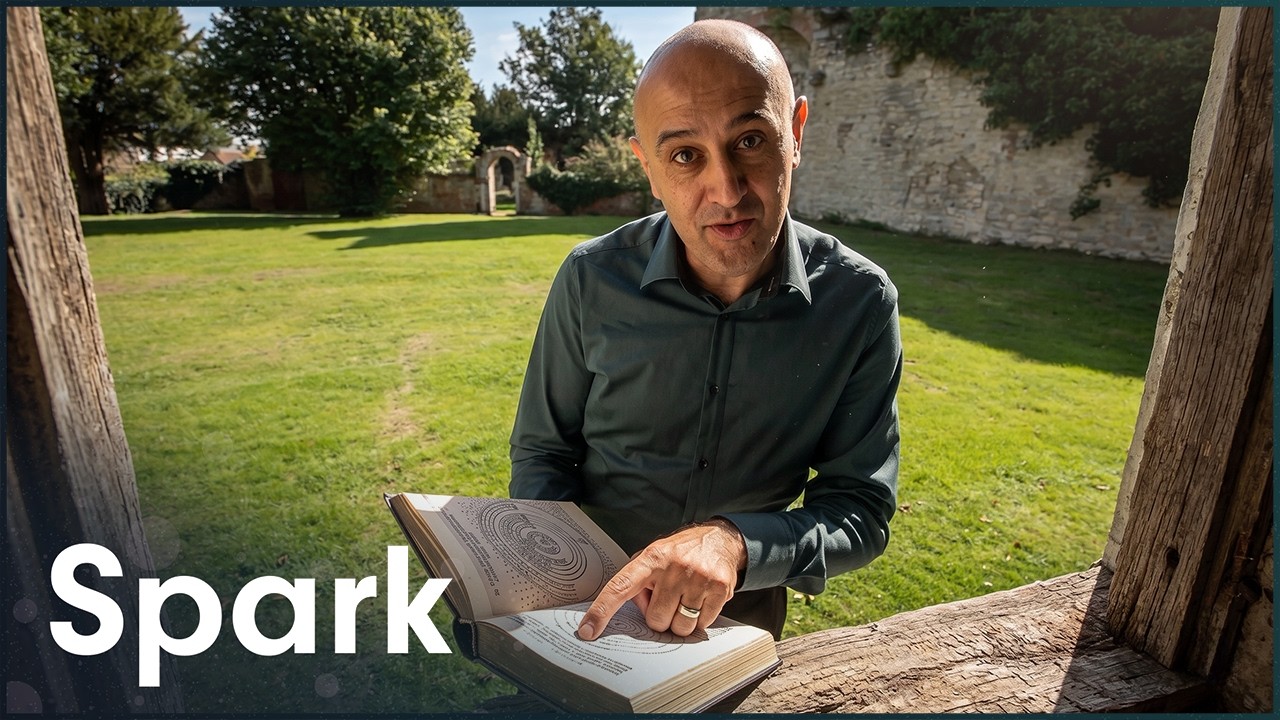
The Single Observation That Shattered 2,000 Years Of Science

Jim Al-Khalili presents part one of the documentary Everything and Nothing, tracing how a species stuck on one planet worked out the size, shape, and age of the whole universe. It starts with the supernova of 1572, a new star in heavens that were supposed to be unchanging, and with Thomas Digges, who responded four years later by redrawing Copernicus's diagram with the shell of fixed stars broken open and the stars scattered into infinite space. That single edit created a question nobody could answer for 400 years: if space is infinite and full of stars, why is the night sky dark? The film follows the answer through the Herschels grinding metal mirrors in Bath, Bessel's first parallax measurement and the wall it hits, Henrietta Leavitt's Cepheid yardstick, Hubble finding one blinking star in Andromeda, and then Euclid, Gauss, Riemann, and Einstein turning gravity into the shape of space. The resolution turns out to be the finite age of the universe, and the film closes on the 1998 supernova result, dark energy, and a sky that will keep emptying.
SciencePhysicsCultureApr 25, 2026
51:57
Spark

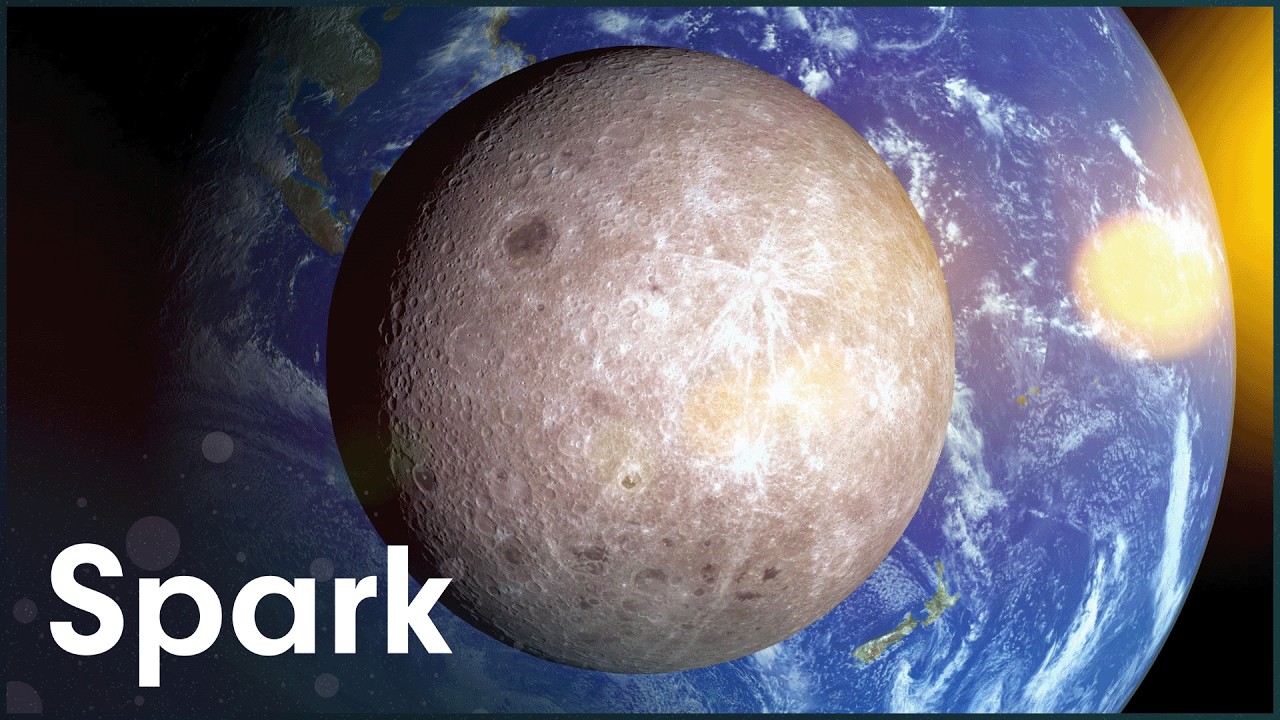
Why Is The Far Side Of The Moon So Different? | Science's Greatest Mysteries Episode 1

Spark's Science's Greatest Mysteries opens with the far side of the Moon, a hemisphere that looks nothing like the one we always see. Starting from Luna 3's shocking 1959 photographs, the film walks through the three great clues to the puzzle: the missing dark maria, the near side's KREEP chemistry from the Apollo rocks, and the GRAIL gravity map showing a crust about 30 kilometers thick on the near side and 50 kilometers on the far side. It then lays out three competing explanations that all begin with the giant impact that formed the Moon: uneven cooling next to a red hot young Earth, a second giant impact that flung the near side onto the far side, and a lost companion moon that merged with ours in a slow motion splat. It closes with the new evidence, frozen Apollo samples and China's Chang'e far side landings, that may finally settle which one is right.

SciencePhysicsApr 9, 2025